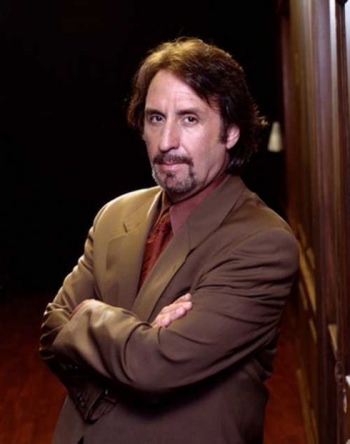
Wednesday, March 18, 2009

http://seattletimes.nwsource.com/art/photogallery/gen/grammys2002/jon.JPG
From The Daily Beast:
How Jon Stewart Went Bad
by Tucker Carlson

There is a virtual ban on criticism of him in the press.
Uncritical praise corrupts absolutely.

March 18, 2009 | 7:27am

Jon Stewart’s recent attack on CNBC’s Jim Cramer was so brilliantly performed, so smoothly produced and cruelly compelling, almost nobody noticed that it didn’t make sense. The climax came as Stewart put up a number of grainy clips of Cramer describing how to artificially (and unethically) depress a company’s stock price. The video was damning. Cramer looked sweaty.

Stewart summed up the significance of what Cramer had said on the tape: “You can draw a straight line from those shenanigans to the stuff that was being pulled at Bear and at AIG, and all this derivative-market stuff,” he said sternly.

I can still picture him standing outside the makeup room, gesticulating as the rest of us tried to figure out what he was talking about. It was one of the weirdest things I have ever seen.

Except that you can’t draw any such line. In the video, Cramer hadn’t mentioned derivates or securitized loans or credit-default swaps, or any of the other exotic financial instruments that caused the fall of AIG and the current recession. There’s no evidence that Jim Cramer had anything to do with any of that, and Stewart didn’t offer any.

Before Cramer could defend himself, Stewart moved on to a new charge: Cramer and his colleagues at CNBC had known that the financial sector was in imminent danger of collapse, but had pretended otherwise—a ruse that Stewart described as “disingenuous at best and criminal at worst.”

This was even more farther-fetched. A ratings-hungry TV network had the scoop of the decade but decided to sit on it? Why? In order to curry favor with soon-to-be-disgraced corporate executives? It didn’t make sense.

No matter. Cramer was almost incoherent by this point, cringing and apologetic. Stewart was becoming furious. “I understand you want to make finance interesting,” he said, “but it’s not a fucking game. And I, I, I—when I watch that, I can’t tell you how angry that makes me.”

Cynics might assume that the fury was a pose. Humor requires ironic detachment, and nobody as funny and sophisticated as Jon Stewart could possibly be getting that mad on TV over something so abstract. A fair assumption, but wrong. Stewart really was enraged. It was all entirely, strangely real.

I know this from my own run-in with Stewart, on CNN’s Crossfire a few weeks before the 2004 election. Stewart spent a couple of segments lecturing Paul Begala and me about how we were somehow “helping the politicians and the corporations,” a charge that baffled me then (I’ve never particularly liked either one), as it does now.

Unlike most guests after an uncomfortable show, Stewart didn’t flee once it was over, but lingered backstage to press his point. With the cameras off, he dropped the sarcasm and the nastiness, but not the intensity. I can still picture him standing outside the makeup room, gesticulating as the rest of us tried to figure out what he was talking about. It was one of the weirdest things I have ever seen.

Finally, I had to leave to make a dinner. Stewart shook my hand with what seemed like friendly sincerity and continued to lecture our staff. An hour later, one of my producers called me, sounding desperate. Stewart was still there, and still talking.

No one this earnest can remain an effective satirist, and at times Stewart seems like less a comedian than a courtier to the establishment. In August 2004, a week before the Republican convention, Stewart got an interview with then-candidate John Kerry. At the time, reporters covering Kerry couldn’t get closer than the rope line, so the interview qualified as a booking coup.

Stewart squandered it embarrassingly. His first question (after, “How are you holding up?”) was: “Is it a difficult thing not to take it personally” when your opponents are mean?

“You know what it is, Jon?” Kerry replied. “It’s disappointing.”

Four years later, Stewart had become, if anything, even softer. Over the course of a reverential eight-and-a-half minute interview with Barack Obama six days before the election, Stewart failed to ask a single substantive question, much less venture into policy (though, as with Kerry, he did open with, “How are you holding up?”). Instead, like the cable-news morons that he often criticizes, Stewart stuck strictly to the horserace, at one point even resorting to a sports metaphor.

And he sucked up, hard. “So much of this has been about fear of you,” Stewart empathized. “Has any of this fear stuff stuck with the electorate?”

Facing puffballs like this, Obama coasted through with snippets from his stump speech. The result wasn’t simply uninformative, it was boring. Obama didn’t say a single interesting thing, and Stewart wasn’t funny.

If you didn’t actually see the show, you wouldn’t know any of this, since there is a virtual ban on critical stories about Jon Stewart in the press. Nobody in memory has received a longer free ride. (CNBC stands in such awe of Stewart, the network hasn’t even tried to defend itself, even against his claim that its programming might be criminal.)

The relationship between Stewart and the media is a marriage of the self-loathing and the self-loving: He insists their real news is fake, they insist his fake news is real. He doesn't take them seriously at all. They take him way too seriously. But nobody takes anybody as seriously as Jon Stewart takes himself.

A serious man needs a serious mission, however, and this is suddenly a problem. With Bush gone and the Republican Party in chaos, most of Stewart’s targets have disappeared. Yet rather than pivot with the times and challenge those now in power, Stewart continues to attack the same old enemies, at this point mostly straw men and pipsqueaks. A couple of weeks ago, he spent an entire seven minutes mocking the crowd at a CPAC conference.

His studio audience loved it, though that isn’t saying much. Stewart’s audience would erupt if he read the phone book, or did his monologue in German, a response that over time is a threat to any man’s soul. During many segments, Stewart’s audience doesn’t laugh so much as cheer, a distinction that would bother most comedians. Stewart keeps them around anyway. Uncritical praise corrupts absolutely.

As Stewart becomes more self-righteous, he inevitably becomes less funny. Sanctimony is the death of humor, and also of innovation. Where a show like South Park challenges its audience’s every conceivable assumption, The Daily Show has become safer than Jay Leno, pandering night after night to the converted. Can you remember the last time Stewart said anything his viewers might disagree with?

Like most sermons, Stewart’s showdown with Jim Cramer ended with a neat moral lesson. Once journalists who cover business regain their sense of responsibility and “start getting back to fundamentals on the reporting,” Stewart said gravely, “I can get back to making fart noises and funny faces.”

But it’s too late. The great comedian is gone, maybe forever. Jon Stewart is stuck in lecture mode.

Monday, March 16, 2009

http://www.slashfilm.com/wp/wp-content/images/ronsilver.jpg
From The Associated Press:
Tony-Award Winning Actor
Ron Silver Dies at 62


Actor Ron Silver, who won a Tony Award as a take-no-prisoners Hollywood producer in David Mamet's "Speed-the-Plow" and did a political about-face from loyal Democrat to Republican activist after the Sept. 11 attacks, died Sunday at the age of 62.

"Ron Silver died peacefully in his sleep with his family around him early Sunday morning" in New York City, said Robin Bronk, executive director of the Creative Coalition, which Mr. Silver helped found. "He had been fighting esophageal cancer for two years."

Mr. Silver, an Emmy nominee for a recurring role as a slick strategist for liberal President Jed Bartlet on "The West Wing," had a long history of balancing acting with left-leaning social and political causes.

But after the 2001 terrorist attacks, longtime Democrat Silver turned heads in Hollywood with outspoken support of President George W. Bush over the wars in Iraq and Afghanistan.

Mr. Silver spoke at the 2004 Republican National Convention, began referring to himself as a "9/11 Republican" and reregistered as an independent.

"Under the unwavering leadership of President Bush, the cause of freedom and democracy is being advanced by the courageous men and women serving in our armed services," Mr. Silver said at the Republican convention. "The president is doing exactly the right thing. That is why we need this president at this time."

In an interview with the Associated Press a month later, Mr. Silver said his support for the war on terror was costing him work in liberal-minded Hollywood.

"It's affected me very badly. I can't point to a person or a job I've lost, but this community is not very pluralistic," Mr. Silver told the AP. "I haven't worked for 10 months."

His switch to a more conservative image threatened to overshadow an esteemed career on stage, television and film, along with his long history of activism, which included co-founding the nonpartisan Creative Coalition, an advocacy group for entertainers.

"He was a talented actor, a scholar and a great believer in participatory democracy," Mr. Bronk said Sunday evening. "He was an activist who became a great artist and his contributions will never be forgotten."

His big-screen credits included "Ali," "Reversal of Fortune," "Enemies: A Love Story," "Silkwood" and "Semi-Tough."

Besides "The West Wing," Mr. Silver was a regular or had recurring roles on such TV shows as "Veronica's Closet," "Chicago Hope" and "Wiseguy." He directed and costarred in the 1993 TV movie "Lifepod," a science-fiction update of Alfred Hitchcock's "Lifeboat."

Mr. Silver's Tony for "Speed-the-Plow" came in 1988, a year after he earned his first Emmy nomination, for the murder thriller "Billionaire Boys Club."

Mr. Silver did still find work despite his conservative shift, appearing in episodes of "Law & Order" and "Crossing Jordan" and such movies as "Find Me Guilty" and the Ten Commandments comedy "The Ten."

He continued his recurring role on "The West Wing," joking that he faced some taunting over his views from co-workers on the show that took place in a fiercely liberal White House administration.

"Often when I walked onto the set of "The West Wing" some of my colleagues would greet me with a chanting of "Ron, Ron, the neo-con." It was all done in fun but it had an edge, "Mr. Silver wrote in a Nov. 15, 2007, entry of his blog on the Pajamas Media Web site. "Since speaking in support of George Bush at the 2004 Republican convention I've become increasingly disadmired by members of my profession as well as many others."

Mr. Silver's on-screen work rankled liberals, too. He narrated 2004's "Fahrenhype 9/11," a deconstruction of Michael Moore's Bush-bashing hit documentary "Fahrenheit 9/11."

"Michael Moore and that faction of the party was one of the factors that did not let me support the Democratic nominee this year," Mr. Silver told the AP in 2004. "He is a charlatan in a clown suit."

On his blog, Mr. Silver described his politics as a "little bit to the right of the left of center" and said that his opinions on U.S. foreign policy "haven't changed very much from what they've always been -- what I would call revolutionary liberalism.

"I have always resisted reactionaries from the left or right, Democrat or Republican. At the moment, the reactionary forces on the left ... are more fearful to me than the traditional reactionary forces of the extreme right. And the Democratic Party seems to be listening to them."

On screen, Mr. Silver's roles spanned the political gamut, from ultraconservative Henry Kissinger in the 1995 TV movie "Kissinger and Nixon" to ultraliberal Alan Dershowitz in 1990's "Reversal of Fortune."

Mr. Silver underwent a memorable transformation for the 2001 TV movie "When Billie Beat Bobby," disguising himself behind black-rimmed glasses and bushy sideburns to play Bobby Riggs in his notorious 1970s tennis match against Billie Jean King (Holly Hunter).

Born July 2, 1946, in New York City, he was the son of Irving and May Silver. His father worked in New York's garment industry and his mother was a teacher.

Earning a bachelor's degree from the State University of New York at Buffalo and a master's degree in Chinese history from St. John's University, Mr. Silver also studied drama at the Herbert Berghof Studio and the Actors Studio.

In the 1970s, he gradually moved from theater work in New York City into television and film, his early credits including "The Mac Davis Show," "Rhoda" and "The Stockard Channing Show."

Mr. Silver and ex-wife Lynne Miller had a son, Adam, and daughter, Alexandra.

Once recruited as a CIA apprentice, Mr. Silver maintained an interest in politics, international affairs and social causes throughout his life.

Besides founding the Creative Coalition, Mr. Silver served as president of the Actor's Equity Association, was appointed in the late 1990s by then-Mayor Rudolph Giuliani to head New York City's Millennium Committee and was appointed by Bush to the board of directors for the U.S. Institute of Peace.

No matter on which end of the political spectrum his activism fell, Mr. Silver viewed such involvement as something of a duty for entertainers.

"I think there's almost an obligation," Mr. Silver said in a 1991 interview with the AP. "Many of us are very well compensated for work which a lot of people would love to do. And we also have a lot of leisure time in between jobs. ...

"They say that Hollywood is sex without substance, and Washington is substance without sex, so maybe the marriage of the two is mutually intriguing."
http://www.libertyfilmfestival.com/libertas/wp-content/19551599.jpg
From Pajamas Media:
In Memoriam - Ron Silver
By Roger L. Simon

Some people have more courage than others.

And still other people have dead on guts that make the rest of us seem like terrified guppies in a sea of cowards.

That was Ron Silver.

Ron had been fighting terminal stomach cancer for well over two years now as if it were some minor skirmish interrupting his otherwise important dedication to the future of this country. And what a dedication that was – twenty-four hours of every day, when they didn’t drag him into Sloan Kettering for treatment… the place Ron would call to his friends with characteristic gallows humor – Sloan Spa.

We all knew Ron had cancer and most of us, I suspect, had some idea how bad it was. The summer before last (I think it was then) I remember him telling me about his recent operation. He was out for about six hours, he told me, and when he woke up he looked at the doctor and asked her how it went. She told him she couldn’t take out the cancer. It had metastasized. The six hours were for nothing. She had to sew him back up. They gave him about three to four months to live at that point.

My heart went into my toes, but Ron told me that matter-of-factly and then he went on to apologize for not writing some article or other for Pajamas Media and then asked me how I was doing. That was Ron.

We had a close relationship that came from a strange confluence of events. Perhaps the best movie that either of us worked on was the same one. – Enemies, A Love Story. But that wasn’t the real reason – it was politics. We had stayed friends after Enemies, as movie folks sometimes do when they have worked on something together that was successful, critically or commercially. We discussed other projects, but our relationship was fairly superficial then and gradually we drifted apart during the nineties.

Then 9/11 came and Ron and I were thrown together once again. We were 9/11 Democrats. We talked on the phone about our journey and the alienation we were feeling from some our friends, but we didn’t come face-to-face until the Republican Convention of 2004. I was a blogger there and feeling rather weird – an old leftie gone right – but there was Ron, far more out than I was, speaking to the entire convention. And he was brilliant. The man could speak in public as well as almost any politician and he had more intellectual background than almost all of them too. He swept the convention audience off their feet.

Ron and I renewed our friendship in the corridors of Madison Square Garden that year and that friendship became faster than it ever was. I think I knew better than most what he was going through in the political sphere, had some sense of his feelings when confronting his peers in the entertainment industry. He gave me tremendous strength. I hope I give him back even a hundredth of what he gave me.

I am writing this in a hurry because of the recent announcement of his death at the age of 62 – and I will undoubtedly write more about Ron – but I would like to share one other moment in recent years.
Somewhere around a year ago we were having breakfast in New York. He wasn’t looking good, hair thin from chemo, sallow complexion, etc. His energy, however, as always, was spectacularly high and he was filled with plans for his new Sirius radio show. But something was wrong. It wasn’t just the cancer, but it was related to the cancer. Ron was, above all things, an actor, a fantastic actor. And the cancer made him unable to do that work. He told me he had just been offered the lead in Coriolanus at the Long Wharf, but didn’t think he could do it. He would be too tired with his illness to play a Shakespeare lead. His artistic work was all over for him. It was the one time in all the recent years I saw him on the edge of tears.

I’m starting to cry myself as I type this, so I’m going to shut up. What a great man.