Friday, October 10, 2008

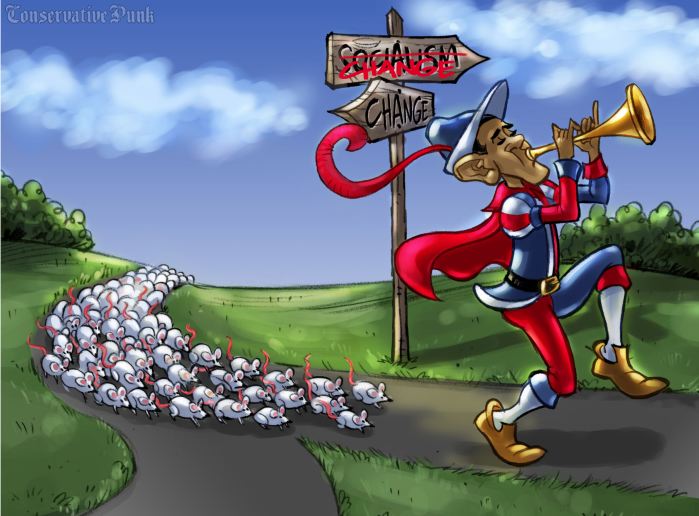
http://www.moonbattery.com/HUGH-OBAMA-FRIENDS.jpg
From The Corner:
Re: "Memory is a Motherf—ker"

Andy McCarthy

Byron is quite right about statutes of limitations — in most states, there is no SofL on murder. But for most federal crimes, the SofL is 5 years — we're long, long beyond it.

And, of course, what Ayers has is selective memory, not failed memory. When he was more haughty about his terrorist exploits, he wrote, for example: “Everything was absolutely ideal on the day I bombed the Pentagon. The sky was blue. The birds were singing. And the bastards were finally going to get what was coming to them.” If it was this easy to get witnesses to perceive, recall and relate, I might have stayed in the trial lawyer biz. Dohrn, too, had a keen sense of detail, gushing over the barbaric Manson Family murders: “Dig it! First they killed those pigs, then they ate dinner in the same room with them. They even shoved a fork into the victim’s stomach! Wild!”

But the larger point is this: We are too hung up on the word terrorist. Yes, Ayers was a terrorist, but he's not anymore in the sense that he hasn't bombed anything in a long time. He is, however, and he has always been, a radical leftist revolutionary. Don't take my word for it — he proudly says it himself, as I detailed in this post yesterday.

That was the ideology that drove him to bomb American targets, it is the ideology he has taken to America's classrooms (which are just a different front in the same war he has been raging against our society for 40 years), it is the ideology he has never hidden from anyone, and — here's the point — it is the ideology that drove his partnership with Barack Obama. That's the reason Obama is minimizing the relationship. Obama and Ayers worked well together — happily funding the same communists, socialists, America haters, Israel haters, etc. — because they were ideologically aligned. Obama is smoother and more marketable than Ayers, but ideologically they're coming from the same place: American society needs drastic change. And if you want to know the change Obama and Ayers have in mind, look at what they did at the Chicago Annenberg Challenge. Look at Obama's Chicago years, which explains why Ayers and Dohrn would host the launching of his political career from their living room. That's where Obama doesn't want to go — because if voters look there, he's toast.

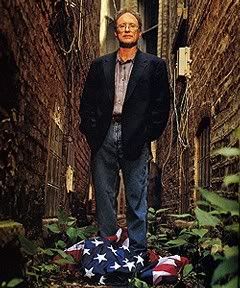
http://bitsblog.florack.us/wp-content/uploads/2008/02/ayers.jpg
From The Corner:
"Memory is a Motherf—ker"

Byron York

Barack Obama's statement that he "assumed [William Ayers] had been rehabilitated" raises an interesting issue. In some press coverage of this matter, "unrepentant" has virtually become Ayers' middle name. And while Ayers indeed appears unrepentant, it is important to note that he has never specified just what it is that he is unrepentant about. In other words, he's never owned up to any of the crimes he committed. It would be one thing for him to say, "I did this, and I'd do it again." But Ayers doesn't do that.

Ayers opens his memoir, Fugitive Days, with the statement, "Memory is a motherf—ker. I myself remember almost nothing." Well, there's a reason Ayers says he remembers almost nothing, and that is because he committed serious crimes and people quite likely died as a result of his actions. Andy could speak to this more authoritatively, but there are still statute of limitations issues involved. After escaping prosecution, Ayers famously said of himself, "Guilty as hell, free as a bird — it's a great country." But he's not going to press his luck. So he says he doesn't remember. His wife, Bernardine Dohrn, has memory problems, too.

If you haven't watched it, I would recommend you look at the Oscar-nominated 2004 documentary Weather Underground, available (cut into nine parts) on YouTube. In it, another of Ayers' fellow Weathermen, Brian Flanagan, says:

I'm not going to tell you, "Oh, I walked in here this day and put a bomb here, or I made this here, or I blew up this car, or I held up this bank." I mean, there were armed robberies, terrorism, all kinds of things that went down that were illegal. So I'll tell you that we did them, but I'm not going to tell you which ones I did or who did what, because you just can't do that…

To repent, you have to confess your wrongdoing. To be unrepentant, you have to acknowledge your actions and still maintain that you did the right thing. But to avoid prosecution, you have to duck the question altogether. That's what Ayers is doing. In a sense, he's still on the lam. Which might make Obama's situation even worse.

Thursday, October 09, 2008

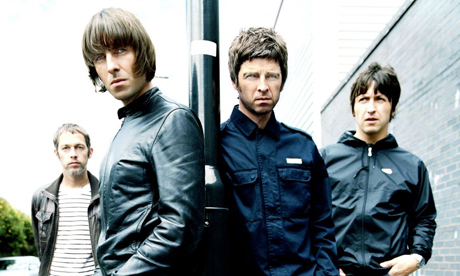
http://www.abbeyroad.co.uk/uploads/uploads/86185160.jpg
From The Courier-Mail: www.news.com.au:
Oasis' Dig Out Your Soul one of their best
Noel Mengel

October 09, 2008 12:00am

THUMP, take that! This is Oasis sounding as pumped and as hard as they've ever been. And that's balanced against one of their best slower songs, well, ever.
The youthful arrogance - and Liam G's sneer - seem to have been replaced by an exuberance. Maybe it's just being happy to discover that they are still bloody good.

The long-time Oasis fans have had their share of disappointments, but this isn't one of them. You keep waiting for Dig Out Your Soul to let up in intensity - and quality of songwriting - but that only comes right at the end. And, after a few days of listening, it seems they have made something the fans can happily play alongside Morning Glory.

Oasis records always have some good songs and on this one that's most of them, dropping off the pace with the final track.

Last-up effort Don't Believe the Truth was consistent too, but this one hangs together very well as an album, rather than something fans will download a few tracks from and forget the rest. It's as if they heard their mate Paul Weller's cracking 22 Dreams and went, "Right, we're not being shown up by him!"

Of course, Oasis always sound exactly like themselves, with lyrics that border on the banal ("Get off your high horse lady", etc) and all the bits of code that fellow Beatles freaks either enjoy or detest.

Let's mention a few: the sitar intro on Gem's To Be Where There's Life, the Give Peace a Chance beat to High Horse, the Tomorrow Never Knows beat to the lovely psychedelic throb of Falling Down, the Ringo fills - well, that is his son Zac Starkey on drums after all.

Actually, some of it's not even code. "It's all in my mind ... a magical mystery" leaves no doubt about who their favourite band is. But no one else was working over those ingredients to such powerful effect in '95, and in 2008 no one else is either.

Bag It Up mightn't have anything much to say but it acts like it does, from the George Harrison guitar bits to Liam's Lennon-ish rasp and the roaring guitar conclusion; The Turning has very '60s piano and organ parts - Traffic, perchance? - but builds to a hook that's just massive.

There's more searing rock on Waiting for the Rapture and Starkey pummels his kit into submission on the droning The Shock of the Lightning. Drum aficionados will find the Zac freakout at 3:21 is just about worth the price of admission alone.

The songwriting is shared around, one each to Gem Archer and Andy Bell, six to Noel Gallagher, and three to Liam including the ace I'm Outta Time. No sneer, but a great vocal performance. Not to mention the Day in the Life piano chord bit and the heartbreaking excerpt from a Lennon radio interview.

Of course, Oasis fans don't want to hear any of this positive talk; they don't want their expectations built up again only to be dashed. So, what can I say? It's rubbish, folks
http://farm4.static.flickr.com/3006/2366638601_815b52ed9e_o.jpg
From The Corner:
Barack Obama, Socialist (Cont'd)

Andy McCarthy

Oct. 9, 2008

I raised this topic in a post yesterday morning based on some information that he been unearthed on Larry Johnson's website. Now, John Hinderaker at Powerline points to this report from a site called "Politically Drunk on Power." The report provides what appears to be documentary evidence that Obama was a member of the Chicago New Party, a creation of the Democratic Socialists of America — and adds that there has been a determined effort to purge the paper-trail. Another report has since been added, here, which adds (a) another New Party document claiming Obama as a member, and (b) evidence that Obama appeared in 1996 at a Youth Democratic Socialists townhall meeting.

As John concludes: "it appears clear that as of 1996, the New Party and its parent organization the Democratic Socialists of America considered Barack Obama to be their guy — one of a handful of avowed socialists running for office at any level in the United States. It strikes me that Obama has some explaining to do."

Barack Obama, Socialist
Andy McCarthy

Oct. 8, 2008

Larry Johnson, formerly of the CIA, can be spectacularly wrong on occasion. He does, however, seem to have nailed down that Obama was an active member of the Democratic Socialists of America, the U.S. affiliate of the Socialist International. His post, with lots of corroborating links, is here.

UPDATE: A number of readers object to my use of the word "member" because the links "merely" show that Obama participated in meetings, sought the nomination, and used the nomination. I'm not striking it because I think it's an abundantly fair description. See, e.g., this (my italics):

The NP's [NP stands for the New Party, which was formed by the Democratic Socialists of America] political strategy is to support progressive candidates in elections only if they have a concrete chance to "win". This has resulted in a winning ratio of 77 of 110 elections. Candidates must be approved via a NP political committee. Once approved, candidates must sign a contract with the NP. The contract mandates that they must have a visible and active relationship with the NP. The political entourage included Alderman Michael Chandler, William Delgado, chief of staff for State Rep Miguel del Valle, and spokespersons for State Sen. Alice Palmer, Sonya Sanchez, chief of staff for State Sen. Jesse Garcia, who is running for State Rep in Garcia's District; and Barack Obama, chief of staff for State Sen. Alice Palmer. Obama is running for Palmer's vacant seat.

And this:

The NP's '96 Political Program has been enormously successful with 3 of 4 endorsed candidates winning electoral primaries. All four candidates attended the NP membership meeting on April 11th to express their gratitude. Danny Davis, winner in the 7th Congressional District, invited NPers to join his Campaign Steering Committee. Patricia Martin, who won the race for Judge in 7th Subcircuit Court, explained that due to the NP she was able to network and get experienced advice from progressives like Davis. Barack Obama, victor in the 13th State Senate District, encouraged NPers to join in his task forces on Voter Education and Voter Registration.

ME: This has been a pet peeve of mine since I used to prosecute organized crime cases and had to deal with murderers and drug dealers who would argue that they weren't really "members" of a mafia family just because the fellas hadn't held that ceremony with the pricked fingers and burning saint cards. Whether one is a "member" of some association is a function of our observation of his conduct; the niceties that the association in question imposes are relevant, but they're not dispositive. For all it appears, Obama may very well have been a card-carrying member, but his degree of participation makes that question academic.

Wednesday, October 08, 2008

http://politicalpartypoop.com/wp-content/uploads/2008/04/1ayers005.jpg
From Real Clear Politics:
The Obama-Ayers Connection
By Dick Morris

In the best tradition of Bill Clinton’s famous declaration that the answer to the question of whether or not he was having an affair with Monica depended on “what the definition of ‘is’ is,” Barack Obama was clearly splitting hairs and concealing the truth when he said that William Ayers was “just a guy who lives in my neighborhood.”

The records of the administration of the Chicago Annenberg Challenge (CAC), released last week by the University of Illinois, show that the Ayers-Obama connection was, in fact, an intimate collaboration and that it led to the only executive or administrative experience in Obama’s life.

After Walter Annenberg’s foundation offered several hundred million dollars to American public schools in the mid-’90s, William Ayers applied for $50 million for Chicago. The purpose of his application was to secure funds to “raise political consciousness” in Chicago’s public schools. After he won the grant, Ayers’s group chose Barack Obama to distribute the money. Between 1995 and 1999, Obama distributed the $50 million and raised another $60 million from other civic groups to augment it. In doing so, he was following Ayers’s admonition to grant the funds to “external” organizations, like American Community Organizations for Reform Now (ACORN) to pair with schools and conduct programs to radicalize the students and politicize them.

Reading, math and science achievement tests counted for little in the CAC grants, but the school’s success in preaching a radical political agenda determined how much money they got.

Barack Obama should have run screaming at the sight of William Ayers and his wife, Bernadette Dohrn. Ayers has admitted bombing the U.S. Capitol building and the Pentagon, and his wife was sent to prison for failing to cooperate in solving the robbery of a Brink’s armored car in which two police officers were killed. Far from remorse, Ayers told The New York Times in September 2001 that he “wished he could have done more.”

Ayers only avoided conviction when the evidence against him turned out to be contained in illegally obtained wiretaps by the FBI. He was, in fact, guilty as sin.

That Obama should ally himself with Ayers is almost beyond understanding. The former terrorist had not repented of his views and the education grants he got were expressly designed to further them.

So let’s sum up Obama’s Chicago connections. His chief financial supporter was Tony Rezko, now on his way to federal prison. His spiritual adviser and mentor was the Rev. Jeremiah Wright, of “God damn America” fame. And the guy who got him his only administrative job and put him in charge of doling out $50 million is William Ayers, a terrorist who was a domestic Osama bin Laden in his youth.

Even apart from the details of the Obama/Ayers connection, two key points emerge:

a) Obama lied and misled the American people in his description of his relationship with Ayers as casual and arm’s-length; and

b) Obama was consciously guided by Ayers’s radical philosophy, rooted in the teachings of leftist Saul Alinksy, in his distribution of CAC grant funds.

Since Obama is asking us to let him direct education spending by the federal government and wants us to trust his veracity, these are difficulties he will have to explain in order to get the votes to win.

Now that Obama is comfortably ahead in the polls, attention will understandably shift to him. We will want to know what kind of president he would make. The fact that, within the past 10 years, he participated in a radical program of political education conceptualized by an admitted radical terrorist offers no reassurance.

Why did Obama put up with Ayers? Because he got a big job and $50 million of patronage to distribute to his friends and supporters in Chicago. Why did he hang out with Jeremiah Wright? Because he was new in town, having grown up in Hawaii and Indonesia and having been educated at Columbia and Harvard, and needed all the local introductions he could get to jump-start his political career. Why was he so close to Rezko?

Because he funded Obama’s campaigns and helped him buy a house for $300,000 less than he otherwise would have had to pay.

Not a good recommendation for a president.

Tuesday, October 07, 2008

http://www.chicagomag.com/Chicago-Magazine/Radical-Stories/radical_stories_main.jpg
From The Corner:
Peace Lovers All

Jonah Goldberg

...I love that statement from the noble scholars in defense of Ayers. Indeed one of my favorite things about the Ayers controversy is that it "heightens the contradictions" of the America left, as the Marxists might say. If I may say so, I was one of the first columnists to write about Ayers (back in Feburary), and my chief interest in Ayers was what he represents:

What fascinates me is how light the baggage is when one travels from violent radicalism to liberalism. Chicago activist Sam Ackerman told Politico’s reporter that Ayers “is one of my heroes in life.” Cass Sunstein, a first-rank liberal intellectual, said, “I feel very uncomfortable with their past, but neither of them is thought of as horrible types now — so far as most of us know, they are legitimate members of the community.”

It seems to me the liberal left needs to decide, was Ayers a horrible figure to be ashamed of, or a hero? If you don't like this choice, why?

And since I'm quoting myself here's a page from my book on the Weather Underground passionate civil rights and anti-war movement:

Many of us forget that the Weather Underground bombing campaign was not a matter of a few isolated incidents. From September 1969 to May 1970, Rudd and his co-revolutionaries on the white radical left committed about 250 attacks, or almost one terrorist bombing a day (government estimates put that number up to 600 percent higher). During the summer of 1970, there were twenty bombings a week in California. The bombings were the backbeat to the symphony of violence, much of it rhetorical, that set the score for the New Left in the late 1960s and early 1970s. Rudd captured the tone perfectly: “It’s a wonderful feeling to hit a pig. It must be a really wonderful feeling to kill a pig or blow up a building.” “The real division is not between people who support bombings and people who don’t,” explained a secret member of a “bombing collective,” but “between people who will do them and people who are too hung up on their own privileges and security to take those risks.”

Bourgeois self-loathing lay at the very heart of the New Left’s hatred of liberalism, its love affair with violence, and its willingness to take a sledgehammer to Western civilization. “We’re against everything that’s ‘good and decent’ in honky America,” declared one rebel. “We will burn and loot and destroy. We are the incubation of your mother’s worst nightmare.” The Weathermen became the storm troopers of the New Left, horrifying even those who agreed with their cause. Convinced that all whites were born tainted with the original sin of “skin privilege,” the fighting brigade of the New Left internalized racialist thinking as hatred of their own whiteness. “All white babies are pigs,” declared one Weatherman. On one occasion the feminist poet Robin Morgan was breast-feeding her son at the offices of the radical journal Rat. A Weatherwoman saw this and told her, “You have no right to have that pig male baby.” “How can you say that?” Morgan asked. “What should I do?” “Put it in the garbage,” the Weatherwoman answered.

Bernadine Dohrn [Ayers' wife], an acid-loving University of Chicago law student turned revolutionary, reflected the widespread New Left fascination with the serial-killing hippie Übermensch Charles Manson. “Dig It! First they killed those pigs, then they ate dinner in the same room with them, they even shoved a fork into a victim’s stomach! Wild!” In appreciation, her Weather Underground cell made a three-fingered “fork” gesture its official salute.

Yep, nothing but a lot of singing "We Shall Overcome" and peaceful civil disobedience here!

http://i289.photobucket.com/albums/ll218/PatRacimora/Ayers-cartoon_edited-WEB.jpg
From National Review Online:
Why Won’t Obama Talk About Columbia?
The years he won’t discuss
may explain the Ayers tie he keeps lying about.
By Andrew C. McCarthy

Barack Obama does not want to talk about Columbia. Not even to his good friends at the New York Times, who’ve so reliably helped him bleach away his past — a past neck-deep in the hard Left radicalism he has gussied up but never abandoned.

Why? I suspect it is because Columbia would shred his thin post-partisan camouflage.

You might think the Times would be more curious. After all, the Democrats’ presidential nominee has already lied to the Gray Lady about the origins of his relationship with Weather Underground terrorists Bill Ayers and Bernadine Dohrn. Back in May, in a cheery profile of Obama’s early Chicago days, the Times claimed (emphasis is mine):

Mr. Obama also fit in at Hyde Park’s fringes, among university faculty members like Bill Ayers and Bernadine Dohrn, unrepentant members of the radical Weather Underground that bombed the United States Capitol and the Pentagon to protest the Vietnam War. Mr. Obama was introduced to the couple in 1995 at a meet-and-greet they held for him at their home, aides said.

Now look, anyone who gave five seconds of thought to that passage smelled a rat. Ayers and Dohrn are passionate radical activists who lived as fugitives for a decade. There’s no way they held a political coming-out party for someone who was unknown to them. Obviously, they already knew him well enough by then to feel very comfortable. They might have been sympathetic to a relative stranger, but sponsoring such a gathering in one’s living room is a strong endorsement.

And now, even the Times now knows it’s been had. In this past weekend’s transparent whitewashing of the Obama/Ayers tie, the paper claimed that the pair first met earlier in 1995, “at a lunchtime meeting about school reform in a Chicago skyscraper[.]” That storyline is preposterous too, but it is also a marked revision of the paper’s prior account (which, naturally, reporter Scott Shane fails to mention).

Why the change? The tacit concession was forced by Stanley Kurtz and Steve Diamond — whom the Times chooses not to acknowledge but who hover over Shane’s sunny narrative like a dark cloud.

Despite all manner of stonewalling by Obama, Ayers and their allies, these commentators have doggedly pursued information about the Chicago Annenberg Challenge. That’s the $150+ million “education reform” piggy bank substantially controlled in the nineties by Ayers and Obama, who doled out tens of millions of dollars to Leftist radicals — radicals who, like their patrons, understood that control over our institutions, and especially our schools, was a surer and less risky way to spread their revolution than blowing up buildings and mass-murdering American soldiers. As Diamond observes, in a 2006 speech in Venezuela, with Leftist strongman Hugo Chavez looking on, Ayers exhorted: “Teaching invites transformations, it urges revolutions small and large. La educacion es revolucion!”

Be clear on that much: Whether clothed as a terrorist or an academic, Ayers has made abundantly clear in his public statements, both before and after he established a working relationship and mutual admiration society with Obama, that he remains a revolutionary fueled by hatred of the United States. And while Obama now ludicrously pleads ignorance about Ayers’s terrorism — the terrorism that made the unabashed Ayers an icon of the Left — understand that this rabid anti-Americanism is the common denominator running through Obama’s orbit of influences.

Yes, Ayers is blunter than Obama. As he so delicately told the Times, America makes him “want to puke.” The smoother Obama is content to say our society needs fundamental “change.” But what they’re talking about is not materially different.

Such sentiments should make Obama unelectable. So, when it comes to his own radical moorings, Obama is engaged in classic liar behavior. He changes his story as the facts change — and the burden is always on you to dig up the facts, not on him to come clean. Yesterday, asked to comment on the Ayers relationship, David Axelrod, Obama’s top political adviser, hilariously chirped, “There’s no evidence that they’re close.” Translation: Get back to us when you can prove more damaging information — until then, we don’t need to further refine our perjury.

And then Axelrod gave us still more lies: “There’s no evidence that Obama in any way subscribed to any of Ayers’ views.”

Oh yeah? Well, Mr. Axelrod, how do you explain Obama’s breathless endorsement of Ayers’s 1997 Leftist polemic on the criminal-justice system, A Kind and Just Parent? As Stanley Kurtz has recounted, Ayers’s book is a radical indictment of American society: We, not the criminals, are responsible for the violent crime that plagues our cities; even the most vicious juvenile offenders should not be tried as adults; prisons should eventually be replaced by home detention; American justice is comparable to South Africa under Apartheid. Obama’s reaction? He described the book as “a searing and timely account” — a take even the Times concedes was a “rave review.”

Obama and Ayers shared all kinds of views. That is why they worked so well together at the Chicago Annenberg Challenge (CAC), funding the likes of Mike Klonsky, a fellow SDS and Maoist associate of Ayers who, as Steve Diamond relates, used to host a “social justice” blog on Obama’s campaign website. With Obama heading the board of directors that approved expenditures and Ayers, the mastermind running its operational arm, hundreds of thousands of CAC dollars poured into the “Small Schools Workshop” — a project begun by Ayers and run by Klonsky to spur the revolution from the ground up.

Precisely because they shared the same views, Obama and Ayers also worked comfortably together on the board of the Woods Fund. There, they doled out thousands of dollars to Jeremiah Wright’s Trinity Church to promote its Marxist “black liberation theology.” Moreover, they underwrote the Arab American Action Network (AAAN) founded by Rashid Khalidi, a top apologist for Yasser Arafat. As National Review’s David Pryce-Jones notes, Khalidi once directed WAFA, the terrorist PLO’s news agency. Then, like Ayers, he repackaged himself as an academic who rails at American policy. The AAAN, which supports driver’s licenses and public welfare benefits for illegal aliens, holds that the establishment of Israel was an illegitimate “catastrophe.”

Khalidi, who regards Israel as a “racist” “apartheid” state, supports Palestinian terror strikes against Israeli military targets. It’s little surprise that he should be such a favorite of Ayers, the terrorist for whom “racism” and “apartheid” trip off the tongue as easily as “pass the salt.”

And it’s no surprise that the like-minded Obama would be a fan. Khalidi, after all, has mastered the Arafat art of posing as a moderate before credulous Westerners while (as Martin Kramer documents) scalding America’s “Zionist lobby” when addressing Arabic audiences. The Obama who decries “bitter” Americans “cling[ing] to guns or religion” when he’s in San Francisco but morphs into a God-fearing Second Amendment enthusiast when he’s in Pennsylvania — like the Obama who pummels NAFTA before labor union supporters but has advisers quietly assure the Canadians not to worry about such campaign cant — surely appreciates the craft.

Obama and Ayers not only demonstrated their shared view of Khalidi by funding him. They also gave glowing testimonials at a farewell dinner when Khalidi left the University of Chicago for Columbia’s greener pastures. That would be the same Columbia from which Obama graduated in 1983.

Khalidi was leaving to become director of Columbia’s Middle East Institute, assuming a professorship endowed in honor of another Arafat devotee, the late Edward Said. A hero of the Left who consulted with terrorist leaders (including Hezbollah’s Sheikh Hassan Nasrallah) and was once photographed hurling rocks at Israelis from the Lebanese border, Said was exposed by researcher Justus Reid Weiner as a fraud who had created a fictional account of his childhood, the rock on which he built his Palestinian grievance mythology.

We know precious little about Obama’s Columbia years, but the Los Angeles Times has reported that he studied under Said. In and of itself, that is meaningless: Said was a hotshot prof and hundreds of students took his comparative-lit courses. But Obama plainly maintained some sort of tie with Said — a photo making the Internet rounds shows Obama conversing with the great man himself at a 1998 Arab American community dinner in Chicago, where the Obamas and Saids were seated together.

Said had a wide circle of radical acquaintances. That circle clearly included Bill Ayers and Bernadine Dohrn. When they came out of hiding in the early 1980s (while Obama was attending Columbia), Ayers took education courses at Bank Street College, adjacent to Columbia in Morningside Heights — before earning his doctorate at Columbia’s Teachers College in 1987.

Said was so enamored of Ayers that he commended the unrepentant terrorist’s 2001 memoir, Fugitive Days — the book in which the haughty Ayers brags about his Weatherman past — with this glowing dust-jacket blurb:

What makes Fugitive Days unique is its unsparing detail and its marvelous human coherence and integrity. Bill Ayers's America and his family background, his education, his political awakening, his anger and involvement, his anguished re-emergence from the shadows: all these are rendered in their truth without a trace of nostalgia or “second thinking.” For anyone who cares about the sorry mess we are in, this book is essential, indeed necessary, reading.

Sorry mess, indeed. For his part, Ayers is at least equally enthralled by Said, of whom, even in death, Ayers says “[t]here is no one better positioned … to offer advice on the conduct of intellectual life[,]” than the man who was “over the last thirty-five years, the most passionate, eloquent, and clear-eyed advocate for the rights of the Palestinian people.”

After they left Columbia, both Obama and Ayers went to Chicago: Obama to become a “community organizer” (the director of the Developing Communities Project, an offshoot of the Gamaliel Foundation dedicated to Saul Alinsky’s principles for radicalizing society); Ayers, two years later, to teach at the University of Illinois. Diamond details how they both became embroiled in a major education controversy that resulted in 1988 reform legislation.

Ayers’s father, Tom Ayers, a prominent Chicago businessman, was also deeply involved in the reform effort. Interestingly, in 1988, while Obama and Ayers toiled on the same education agenda, Bernadine Dohrn worked as an intern at the prestigious Chicago law firm of Sidley Austin — even though she could not be admitted to the bar due to her contempt conviction for refusing to cooperate in a terrorist investigation. How could that happen? It turns out that Sidley was the longtime outside counsel for Tom Ayers’s company, Commonwealth Edison. That is, Ayers’ father had pull at the firm and successfully pressed for the hiring of his daughter-in-law.

The next summer, though he had gone off to Harvard Law School (another impressive accomplishment he prefers not to discuss), Obama returned to the Windy City to work as an intern at Sidley. Dohrn was gone by then to teach at Northwestern. A coincidence? Maybe (Diamond doesn’t think so), but that’s an awful lot of coincidences — and a long trail of common people, places and experiences — for people who purportedly didn’t know each other yet managed to end up as partners in significant financial and political ventures.

In short, Bill Ayers and Barack Obama moved in the same circles, were driven by the same cause, and admired the same radicals all the way from Morningside Heights to Hyde Park. They ended up publicly admiring each other, promoting each other’s work, sitting on the same boards, and funding the same Leftist agitators.

You could conclude, as I do, that it all goes back to a formative time in his life that Obama refuses to discuss. Or you could buy the fairy tale that Bill Ayers first encountered an unknown, inexperienced, third-year associate from a small Chicago law-firm over coffee in 1995 and suddenly decided Barack Obama was the perfect fit to oversee the $150 million pot of gold Ayers hoped would underwrite his revolution.
The Bomber as School Reformer
The press—and debate moderators—
shouldn’t let Bill Ayers and Barack Obama off the hook.
By Sol Stern

6 October 2008

Back in the early eighties, in an interview with David Horowitz and Peter Collier, Bill Ayers remembered his reaction upon learning that he would not be prosecuted by the government for his bombing spree as a member of the Weather Underground. “Guilty as hell, free as a bird—America is a great country,” he exulted. Ayers is now a university professor, but he must have been exulting all over again after reading Saturday’s front-page story in the New York Times.

The article explored the putative relationship between Ayers and Barack Obama during the time they worked together on the Chicago Annenberg Challenge, a five-year philanthropic venture that, starting in 1995, distributed over $160 million in school-improvement grants to the Windy City’s public schools. Ayers wrote the grant proposal that secured seed money for the schools and ran the implementation arm of the project; Obama became chairman of the board that distributed the grants. Not only did the Times exonerate the Democratic presidential candidate of having anything like a “close” relationship with Ayers—their paths merely “crossed” while working on the Challenge, the paper said—but it also bestowed the honorific of “school reformer” on the ex-bomber. “Mr. Ayers has been a professor of education at the University of Illinois at Chicago, the author or editor of 15 books, and an advocate of school reform,” the article maintained. On Meet the Press Sunday morning, Tom Brokaw—who will be moderating tomorrow’s debate between the presidential candidates—picked up this now conventional wisdom and described Ayers as “a school reformer.”

Calling Bill Ayers a school reformer is a bit like calling Joseph Stalin an agricultural reformer. (If you find the metaphor strained, consider that Walter Duranty, the infamous New York Times reporter covering the Soviet Union in the 1930s, did, in fact, depict Stalin as a great land reformer who created happy, productive collective farms.) For instance, at a November 2006 education forum in Caracas, Venezuela, with President Hugo Chávez at his side, Ayers proclaimed his support for “the profound educational reforms under way here in Venezuela under the leadership of President Chávez. We share the belief that education is the motor-force of revolution. . . . I look forward to seeing how you continue to overcome the failings of capitalist education as you seek to create something truly new and deeply humane.” Ayers concluded his speech by declaring that “Venezuela is poised to offer the world a new model of education—a humanizing and revolutionary model whose twin missions are enlightenment and liberation,” and then, as in days of old, raised his fist and chanted: “Viva Presidente Chávez! Viva la Revolucion Bolivariana! Hasta la Victoria Siempre!”

As I have shown in previous articles in City Journal, Ayers’s school reform agenda focuses almost exclusively on the idea of teaching for “social justice” in the classroom. This has nothing to do with the social-justice ideals of the Sermon on the Mount or Martin Luther King’s “I Have a Dream” speech. Rather, Ayers and his education school comrades are explicit about the need to indoctrinate public school children with the belief that America is a racist, militarist country and that the capitalist system is inherently unfair and oppressive. As a leader of this growing “reform” movement, Ayers was recently elected vice president for curriculum of the American Education Research Association, the nation’s largest organization of ed school professors and researchers.

Despite the Times story, American voters still don’t have an accurate picture of the relationship between Obama and Ayers during their work on the Annenberg Challenge. The paper’s account quoted several people who worked on the project as saying that they didn’t think Ayers had any role in selecting Obama for his position as chairman. But we haven’t heard a word about the subject from the two principals. For the first time in his life, Ayers seems to be observing Democratic Party discipline and won’t be talking until after November 4. Meanwhile, in one of the Democratic primary debates, Obama said that Ayers was just “a guy I know in the neighborhood”—which certainly qualifies as one of the biggest fibs told by any of the candidates so far.

Is it too much to hope that one of the moderators of the two remaining debates will press Obama for a fuller accounting of his work with Bill Ayers on the Chicago Annenberg Challenge, and also ask Obama what he thinks of Ayers’s views on school reform? If the mainstream media deem it important that voters know which newspapers one of the vice presidential candidates reads, they certainly ought to be demanding more information from a presidential candidate about whom he collaborated with in distributing $160 million to the public schools. How about it, Tom Brokaw?

Sol Stern is a contributing editor of City Journal and the author of Breaking Free: Public School Lessons and the Imperative of School Choice.

Monday, October 06, 2008

http://ri-ra.org/obamunista.jpg
From The Corner:
Notes on the Obama / Ayers Romance

The Obama Fan-Dance Must End

[Mark R. Levin]

As someone who has written critically of John McCain on a host of issues, including the Keating Five, none of it compares to the life that Barack Obama has led and his belief system. Obama is not merely associated with domestic terrorists, Palestinian radicals, Marxists, and black liberation ideologues — he was their favorite candidate. They groomed him. They befriended him. He befriended them. He socialized with them. In other words, these people saw Obama as representing their views and aspirations and he saw them the same way. I am not among those who raise Obama's associations but add "of course, it doesn't mean Obama shares their views." Oh really? These miscreants include Obama's former pastor, political mentors and allies, and friends. Obama attempts to downplay and distance himself from his own circle of allies now that he is running for president. But he is one of them. Obama is getting a pass that no other candidate in my memory has ever received.

If John McCain had belonged to a church for 20 years and that church advocated white supremacy and the pastor of the church spewed racist propaganda wrapped in Biblical verses — much of which was caught on video-tape — what would we say? If McCain's good friends included people involved in blowing up abortion clinics instead of the Capitol Building, the Pentagon, and police stations, what would we say? If McCain was socially close to a professor with ties to neo-Nazi groups in Berlin, as opposed to a professor who had ties to the PLO, what would we say? If McCain spent his formative years schooled in fascism as opposed to Marxism, what would we say?

Every time Obama's life experiences and character are raised, the response is a diversionary tactic. Today, we're supposed to be impressed with the moral equivalency argument (Ayers = Keating Five), or Obama's associations and friendships aren't what they appear to be, or Obama really isn't like all those people he drew around him, or those raising these issues are guilty of McCarthyism. There are 30 days left in this election. It's high time the Obama fan-dance ended.

The Ayers Question
[Yuval Levin]

Very soon after she was picked to be McCain’s running mate, Sarah Palin was attacked by Obama campaign spokesmen and a Democratic member of Congress for once being seen wearing a Pat Buchanan button. She had an answer and the campaign offered it. Yet now we are asked to believe that it’s somehow inappropriate to inquire why Barack Obama’s political career began in the home of an admitted and unrepentant domestic terrorist of the radical left? “Who is Barack Obama?” is not an irrelevant question given the job Obama is seeking, and it’s a question he has sought mightily to avoid answering. The veil of secrecy he has thrown over his past (journalists have been denied access to his state legislative office records, documents about state earmarks he distributed in Illinois, a list of his legal clients, his state bar application, billing records related to Tony Rezko, medical records, academic records — all of which are the sort of documents candidates routinely make public) forces the question all the more.

The Obama campaign’s response to the question appears to be to raise John McCain’s connection to the Keating Five scandal. It is by no means out of bounds to raise the issue. McCain received campaign funds from Keating, his wife’s company had been involved in investment ventures with him, and he once met with federal regulators about Keating’s bank — though the Senate Ethics Committee found that unlike three other senators involved in the scandal, “Senator McCain’s actions were not improper.” The committee said only that he had exercised bad judgment by being involved with Keating at all and not seeing what others were doing. In fact, Bob Bennett, who was the Democratic lawyer selected by the committee to investigate the Keating Five, says in his book that he recommended that McCain’s name be dropped from the investigation because there was no evidence against him but, for political reasons (the other Senators were all Democrats), McCain’s name was left on the list.

McCain’s response to that scandal should certainly be compared with Obama’s Ayers explanations. McCain has spoken and written about every detail of the Keating mess, has expressed open contrition for allowing himself to be drawn into it even tangentially, and devoted years of his career to combating corruption as a result. He even badly overreacted and pushed for vastly excessive regulation of campaign financing. He has said (in a book in which he details his and others’ actions in the matter) that merely the appearance of impropriety involved makes his involvement with Keating “the worst mistake of my life.”

Had Obama done and said something similar regarding the sort of radicalism Ayers represents, he would now have an answer to offer. Instead, he has worked with Ayers, supported his causes, and denied any significance to the links between them. That, too, makes this a legitimate question about a man who would be president.

Obama Doesn't Pass the Mainstream Smell Test

[Peter Kirsanow]

As Mark Levin notes below, Obama presents himself as mainstream. I suspect that almost every Cornerite could make each of the following statements:
  • My career was not launched with the assistance of an unrepentant terrorist.
  • My pastor has never said "God damn America."
  • I don't think our troops are "just air-raiding villages and killing civilians."
  • My spouse doesn't think America is a "downright mean country."
  • I've never sat on a board with an unrepentant terrorist.
  • I've never directed millions of dollars to radical organizations.
  • I've never opposed requiring medical care for babies who are born alive.
  • I bought my home without assistance from a convicted felon.
  • I've never taken my kids to a church whose pastor thinks AIDS was created by the government.
If Obama's mainstream, most Americans are extremists.

Crime passionel

[Mark Steyn]

From the statement of educators in support of Bill Ayers:

All citizens, but particularly teachers and scholars, are called upon to challenge orthodoxy, dogma, and mindless complacency, to be skeptical of authoritative claims, to interrogate and trouble the given and the taken-for-granted. Without critical dialogue and dissent we would likely be burning witches and enslaving our fellow human beings to this day...

The current characterizations of Professor Ayers—-“unrepentant terrorist,” “lunatic leftist”—-are unrecognizable to those who know or work with him. It’s true that Professor Ayers participated passionately in the civil rights and antiwar movements of the 1960s, as did hundreds of thousands of Americans.

Really? Hundreds of thousands of Americans plotted to kill soldiers and their dates by blowing them up at a dance? No wonder Barack's ahead in the polls.

The point is not that President-designate Obama is a "close friend" of the unrepentant Ayers, or that he was only eight when his patron was building bombs to kill the women of New Jersey. As Joe Biden would no doubt point out on his entertaining "This Day In History" segment, McCain was only six when Czogolsz killed President McKinley. But I doubt he'd let the guy host a fundraiser for him.

But, in the world in which Obama moves, it would seem absurd and provincial to object to partying with an "unrepentant terrorist". The Senator advanced and prospered in a milieu in which men like Ayers are not just accepted but admired for their "passionate participation", and function as power-brokers and path-smoothers. This is a great country, and most of us (as Peter Kirsanow notes below) make it without having to kiss up to America-haters like Ayers and Wright. But not Obama.

Who is this man on course to be 44th president? Apparently, it's not just impolite but racist to ask. As notorious white supremacist Thomas Sowell puts it:

But the country does not deserve to be put in the hands of a glib and cocky know-it-all, who has accomplished absolutely nothing beyond the advancement of his own career with rhetoric, and who has for years allied himself with a succession of people who have openly expressed their hatred of America.

Can the industrial-strength Doris Day fuzzy filter the media are filming him through be penetrated? Time is running out, McCain seems disinclined to do it, and (as Rich says) his lack of an economic message will make the point moot.

Sunday, October 05, 2008

http://myplay.com/files/imagecache/photo_345_square/files/artist_images/oasis.jpg
From The Guardian:
Why the music world needs Oasis
By Alan McGee

Turning 48 yesterday, I realised the only Creation band that I still get excited about is Oasis. And who wouldn't? The band contains two world-class songwriters, and two great ones, and their new release Dig Out Your Soul is truly tremendous. It's as if they have re-imagined their discography and made their true follow-up to What's the Story Morning Glory, completing the elusive and perfect rock'n'roll trilogy that began with Definitely Maybe.

The music world needs Oasis at this moment, a band with more personality and more amusing quips than any British band for at least 10 years. Throughout their history Oasis have captured the pop zeitgeist (and my personal zeitgeist) as a band that combine the best elements of the Beatles and Sex Pistols to emerge as this generation's Rolling Stones.

"Better than Morning Glory", has become many a critic's meme when reviewing post-Morning Glory Oasis albums, thrown into reviews in a random fashion as a desperate bid to return the band to the halcyon days of old. You know what? Dig Out Your Soul is the best Oasis album since What's the Story Morning Glory. Easy.

The signs were good when I met up with the Gallagher brothers last year in Los Angeles. We discussed music and, curiously, Noel told me how much he liked Glasvegas. I was surprised that he had heard of them at that point. The evening fell into typical Oasis debauchery: hanging out with Brody Dalle and Biffy Clyro and ending up in a dub club in east LA with Oasis participating in a stage invasion. The surreal nature of being Noel Gallagher must be bizarre. Noel, at his best, writes songs about pure escapism, northern ambition and transcending class culture, all in rock'n'roll Technicolor. The question is: "What do you do when you've achieved all your dreams?" You return to your youth and get back to who you were.

Dig Out Your Soul works because Noel has returned to the original inspiration of his youth for his songwriting. Definitely Maybe was about their dreams of rock'n'roll stardom, Morning Glory was about achieving the dream, Be Here Now was the coked-up aftermath, now Dig Out Your Soul is a glance to a psychedelic yesterday, again. For me, the past four post-Morning Glory albums never captured the magic of the first two. Songs from the past five albums had moments of pop reverberations and incredible songwriting, but were never complete statements. With Dig Out Your Soul, the notorious Oasis brothers have found their mojo. It's back, without a doubt.

Musically, it's a return to the grander ambitions and excess of before, with Noel stating: "But I kind of like fancy! I'd like to make an absolutely fucking colossal album. You know? Like literally two orchestras, stuff like that." Dig Out Your Soul is Oasis at their most baroque and Noel's pure pop ambition sits easily with his experimental side. The album oozes with confidence, and great songs.

Maybe it is their the lucky seventh album? The Beatles and the Stones released Revolver and Beggar's Banquet respectively, both were album number seven, and Dig Out Your Soul is on a par of with both in terms of classic songwriting. Or maybe it was his musical peer Paul Weller who inspired Noel to turn his back on Britpop and take a more eclectic direction after Weller's own opus of 22 Dreams? Noel Gallagher has said that Shock of the Lightning was the only song that had "Oasis single status" as the rest is far removed from the sound of Oasis.

I love the decision not to make the album freely available to download, as the Charlatans and Radiohead have. Noel's decision to release the sheet music and lyrics is very Noel; not encouraging free music, but encouraging kids to pick up guitars, learn songs and YouTube them. Or forming a personal army of New York City buskers to perform Dig Out Your Soul - and why not?

These songs are fantastic. From the opening Bag It Up, with the "freaks coming out through the floor", capturing the sound of drug psychosis; the Buffalo Springfield raga glam-stomp of Get Off Your High Horse Lady; the street-fighting vibe of Waiting for the Rapture, the Left Bank psychedelic baroqueness of To Be Where There's Life; the Dear Prudence lift on The Turning - Dig Out Your Soul is the sound of one of Britain's greatest bands at play.

Liam's soulful vocals are utter gems, no longer the one-take hooligan of before, he plays it like a psychedelic Elvis, underpinning the tracks with a commanding presence. Noel's vocal turn on Falling Down is one of the best tracks he has ever sang on. It is subtle, haunting, and full of pure Noel Gallagher magic.

I understand that openly admitting to liking Oasis is inviting confrontation, but you know what? Being an Oasis fan is never having to say I'm sorry. And I'm not. Leave saying sorry to the Coldplay imitators as their era of bedwetter music is over. It's only Glasvegas and Oasis for competition in this country. If you are in a band and are not artistically competing with the creative rock'n'roll genius of Oasis or Glasvegas, it's time to just stop and get off the treadmill. This is how rock'n'roll should be done in the United Kingdom today.

Oasis

From Times Online:
The verdict on Oasis's new album
Dig Out Your Soul

As Oasis unveil their seventh studio album on MySpace,
The Times' chief rock critic Pete Paphides goes through Dig Out Your Soul,
track-by-track, and comes to the conclusion that this could be their best album
since the siblings’ Britpop glory days

A sensational opening volley of new Noel Gallagher songs establishes a standard it can’t quite sustain. But for the main part, Oasis’s first album in over three years comes close.

BAG IT UP

Four-to-the-floor opening shot features a multi-tracked Liam Gallagher declaring, “I’m gonna take a walk with the monkey man.” Monster chorus can’t even be derailed by the questionable claim, “I’ve got my heebeegeebees in a little bag.” Should distinguish itself as an instant live favourite when the UK tour begins on Tuesday.

THE TURNING

One of Oasis’s most atmospheric recordings. Moody electric piano gives way to affirmative come-ons on a series of increasingly rock-tastic choruses. Cheeky Dear Prudence-style coda heralds the beginning of a series of Beatles borrowings, thankfully more artfully deployed than on previous occasions.

WAITING FOR THE RAPTURE

Intro reminiscent of The Doors Five To One gives way to a Noel third-person account of being ensnared by a predatory woman. Dave Sardy’s production cleverly allows the needle to stay firmly in the red – although any sonic bombast is once again trumped by an excellent chorus.

THE SHOCK OF THE LIGHTNING

The first single from the album. Pacey, energized delivery from Liam, coupled with a performance that recalls 1995’s Morning Glory. As a result, probably the song most likely to find favour with fans of “vintage” Oasis.

I’M OUTTA TIME

Liam’s first and best contribution to the album. Featuring a sample of John Lennon’s final interview at the end, the song itself is a tender love song which deploys several key Lennonisms in its instrumentation. Hard to equate such open-hearted sensitivity with the man who, in a recent interview, declared, “SpongeBob SquarePants is a mental, full-of-beans sponge. He’s mad for it.”

(GET OFF YOUR) HIGH HORSE LADY

Instantly memorable, thanks to Liam’s stoned vocoder delivery and the hypnotic boom-thump of its rhythm. Having spent so much of their time talking up the Sixties, this may be the first Oasis song that could pass muster on a compilation of treasured obscurities from the end of that decade.

FALLING DOWN

Noel sings this one. Deploys an identical rhythm to the one invented by Ringo Starr on Rain – but there are mitigating factors at play. First of all, it’s being played by Ringo’s son Zak Starkey; more importantly, it sits at the centre of another Oasis song that corresponds to little else in their canon – a rain-lashed, nocturnal hymn to uncertainty that makes good use of the vulnerability that seems ingrained in the guitarist’s vocal style.

TO BE WHERE THERE’S LIFE

Written by Gem Archer. Charges along on a bassline that should Paul McCartney hear it, may push Paul McCartney’s eyebrows up into the realms of physical implausibility. Modestly diverting piece of raga-rock, but by no means one of the better songs on the album.

AIN’T GOT NOTHING

A combustible Who-style studio freakout. Probably fun to play; should be exciting live – but once removed from the circumstances in which it was created, it slightly palls.

THE NATURE OF REALITY

Andy Bell’s sole writing contribution to the album – apparently prompted by the demise of his marriage. The final part in a relative slough of three songs. “The nature of reality is only in your mind,” sings Liam, with a peculiar lack of conviction.

SOLDIER ON

Reflective paean to perseverance oscillates soberly between a single titular mantra and bursts of keening melodica from Noel, until both dissipate, as if to leave room for closing credits. Again, further evidence of Oasis’s new-found ability to create sympathetic settings for the their older more thoughtful selves. As such, a fitting conclusion.

http://www.telegraph.co.uk/arts/graphics/2008/10/01/bmoasis101.jpg
From The TimesUK:
Oasis: Dig Out Your Soul
Pete Paphides

(4 of 5 Stars)

There’s something oddly reassuring about Liam Gallagher’s inability to be anything other than his unswerving absolute self. Asked recently if Oasis had considered putting out their new album as a free download, the monobrowed singer revealed his neophobia in a way that only he could. Eccentrically. “Look, I’m trying salmon, that’s as far as my interest in new things goes,” he declaimed impatiently.

Two days ago, then, when all of the new album appeared (albeit in a non-downloadable form) on their MySpace page, you suspect that Liam may not have even been aware of the fact – less still his brother. Noel’s mistrust of progress has pretty much informed Oasis’s lack of it over the last decade.

While their two most notable rock contemporaries, Thom Yorke and Damon Albarn, have shed skin after skin to keep themselves artistically relevant, Oasis have merely turned up the volume, lowered their heads and peddled workmanlike Brit rock. As Noel Gallagher has confessed, he may never write another Live Forever or Wonderwall. But when your band is a Grateful Dead for the new Labour years then your fanbase will continue to be here now for you, through good times and bad.

Which is something of a mixed blessing. On the cement-footed Don’t Believe the Truth in 2005, Noel Gallagher sounded like a man who could use a little pressure to raise his game. But Dig Out Your Soul suggests that Oasis may be dipping their toes into experimental waters, and enjoying the sensation.

What the online move this week illustrates is that someone somewhere believes that Oasis have produced some music to rival those high-water marks. They’re not wrong. Noel Gallagher is no longer possessive about appearing in the credits of every Oasis song. Liam turns in an unprecedented three contributions, while the bassist Andy Bell and guitarist Gem Archer chip in with one apiece. And somewhere amid the relative seclusion of his rural retreat, Noel’s writing appears to have acquired a renewed sense of urgency.

There’s very little on Dig Out Your Soul that’s as adventurous even as trying salmon for the first time. That said, there are moments where you feel like flinging your arms around the Gallaghers for the modest innovations: the hypnotically sluggish rhythm that pushes along Liam’s stoned vocoder vocal on Get Off Your High Horse Lady; the demonic swamp rock of Waiting for the Rapture, executed with febrile intensity.

It’s an album that maintains an irresistible atmospheric pull for sustained periods – and that’s an advance on anything the band have offered this decade. Certainly, they’ve written nothing that sounds quite like The Turning, a moody five-minute beauty that moves from a tentative electric piano and climaxes with a nocturnal FM rock climax.

At this stage, an Oasis album that totally divests itself of all Beatles influences is asking a bit much. Gem Archer’s sole compositional contribution, To Be Where There’s Life, charges along on a bassline, played by Bell, that may push Paul McCartney’s eyebrows up into the realms of physical implausibility. Falling Down deploys an identical rhythm to the one invented by Ringo Starr on Rain, but it’s being played by Ringo’s son Zak Starkey. More importantly, it sits at the centre of another Oasis song that corresponds to little else in their canon – a rain-lashed, nocturnal hymn to uncertainty and vulnerability.

Of course, vulnerability isn’t something on which the older Gallagher has a monopoly. But the brothers’ ways of showing it couldn’t have been more different. On the rare occasions that Noel has sung Wonderwall it has sounded like a 2am cry for help. The reason Oasis became a social phenomenon, though, was because Liam could sing the same lyrics and sound like a man who could punch a hole through a door to prove how f***king sensitive he is.

But Wonderwall was a long time ago. And if Liam was the same person that he was in 1995, he surely couldn’t have sustained a quiet family life with Nicole Appleton over the years. It’s a view lent some weight by I’m Outta Time. Like every song that Liam will ever write, the John Lennon influence is unavoidable. But, over the course of his most tender vocal to date, he sounds oddly, movingly enraptured. Another first.

Relaxed as Noel is, three Liam classics on one album might have been a bit much to stomach. So it may be no accident that the other two Liam songs aren’t quite up to the same standard. Of Ain’t Got Nothin’ and Soldier On, one was a discarded song unearthed only at the last minute. But which one? Surely the former, a Who-style sonic dust-up of minimal melodic traction?

Actually, it’s the far superior Soldier On. Here, Liam’s reflective paean to perseverance oscillates soberly between a single titular mantra and bursts of keening melodica from Noel, until both dissipate, as if to leave room for closing credits. Could you really have been listening to the best Oasis album since Definitely Maybe? Maybe not definitely. But definitely more than maybe.

(Big Brother, TMS £13.99, call 0845 6026328)
Oasis posing for Dig Out Your Soul
From SundayHerald.com:
Bigger brothers
Noel and Liam Gallagher are back
with a surprisingly powerful new album
By Paul Dalgarno

SO IS this the start of a much bigger, baggier Oasis? After just a few listens to their new album Dig Out Your Soul, it sounds remarkably like it - and that comes as a genuine surprise. Noel Gallagher describes track two, The Turning, as The Stone Roses meets The Stooges (which is pretty accurate), and the ambitious, non-Oasis-sounding Falling Down as "the kind of song I've wanted to write for years". His intention for album seven (that's right, you may have missed a few) was to "write music that had a groove". Reviews to date have been gushing, fuelling the resurgence of interest in the band that began with 2005's Don't Believe The Truth. But clearly, if things are going right these days, they must have gone wrong somewhere in the past - or for the entire decade between 1995 and 2005, to be precise.

The band's new-found conviction on the single Lyla in 2005 was like waking up from an Oasis dream in which nothing of consequence had really happened for years. Liam getting his teeth knocked out in a Munich bar brawl in 2002? Ach, who cared? By the late 1990s the band was becoming too much like someone on cocaine at a party; someone who had been on cocaine, and at the party, for too long. Time was when the brothers Gallagher were everywhere: Liam and Patsy's arm-tattooing years, Meg Mathews and Noel's divorce, the spats and cancelled tour dates - all gone now.

Cynics will tell you that Noel's mojo was sucked, via the nervous system, into Tony Blair's egotron during their infamous Downing Street handshake in 1997 and that, after this, his songs were never the same. Whatever the reason, things changed. Definitely Maybe (1994) was the fasting-selling UK debut ever at the time of its release, shifting more than 7.5 million copies worldwide. Its follow-up (What's The Story) Morning Glory? sold more than 18m copies and remains the third highest-selling album in UK chart history, behind Queen's Greatest Hits and The Beatles' Sgt. Pepper's Lonely Hearts Club Band.

But by the time of Be Here Now (1997), the wheels were badly rusted. The album shifted 420,000 units on its first day and was hastily described as a classic, but, more tellingly, none of its tracks was included in the band's 2006 Sony swansong compilation Stop The Clocks. In 2007, Q magazine described the third album as "the moment when Oasis, their judgment clouded by drugs and blanket adulation, ran aground on their own sky-high self-belief". Its bloated sound was down, according to studio producer Owen Morris at the time, to "massive amounts of drugs. Bad vibes. Shit recordings".

Oasis had become the last slice of cake at a party, with other people's fingermarks clearly visible in the marzipan. Standing On The Shoulder Of Giants (2000) and Heathen Chemistry (2002) were both chart-toppers, but will be remembered as the revolving-door albums: founding members Paul McGuigan and Paul "Bonehead" Arthurs left the band during sessions for the first, and had been replaced, not entirely comfortably, by the second. Oasis had lost their swagger - and if there's one band that can't lose it's swagger, it's Oasis.

Liam's angry stance on stage - his hands behind his back as if they've been tied for an execution - was even wearing thin, and that was a real shame. The look (most recently employed to good effect by drug lord Stringer Bell in the hit HBO crime series The Wire) has always communicated the band's central thesis: you could lunge towards me, grab me by the knees and headbutt me clean in the maracas, but you won't. And that's partially because, even at their worst, Oasis have never been terrible - they just needed to grow up. In the century past they were embraced by, and embraced, rock elder statesman Paul Weller, but their own transition to an older and wiser version of themselves has been plagued by inconsistency.

The first sign that they were over the worst was Don't Believe The Truth (2005). Peter de Havilland, producer and ideas man for the record, has described it as a "make or break album", adding: "In the industry, a whispering campaign was in full swing. Oasis had lost their edge and the future of the band was on a knife edge."

The album sold 6m copies and triggered a worldwide tour to 1.7m people in 26 countries. Dig Out Your Soul, they hope, will do the same. Noel describes it as "the album we've been leading up to since Gem Archer and Andy Bell joined the band in 1999". Clearly, it has taken some time to incorporate those members - and still the personnel keeps changing.

Drummers have been a peculiar Achilles heel for the Gallaghers. Founding member Tony McCarroll was booted out before the release of What's The Story; his replacement Alan White served for nearly a decade until an argument with Liam forced him out in 2004. Much of the bombast with guitars - on the first album especially, but not exclusively - was, one imagines, a means of over-compensating for the (sometimes shockingly) poor drums.

That problem seemed to have been solved in 2005 with Zak Starkey, son of Ringo, who replaced White on Don't Believe The Truth. But Starkey quit following the recording sessions for Dig Out Your Soul, and has now been replaced by Chris Sharrock, formerly of The La's, World Party and, for the past 12 years, Robbie Williams's backing band.

It's a shame Starkey had to go: his drums are the standout instrument on the new album. And, of course, there was his father, Ringo. The Gallaghers have always worn their Beatles obsession on their sleeves. Books could be written on how little they resemble their idols musically, but there are several similarities: not least their chart success with two different lead vocalists, and not least those Beatles melodies and chord progressions, lifted so blatantly you assume it's being done on purpose, without any deliberate malice. Also mirroring The Beatles, there has been an increasing democratisation of the band's songwriting duties. Originally, it was agreed that Noel would write the songs and lead the band, no questions asked, but that rule has been slipping for a while. The lighter workload bodes well for Noel on the new album: there are still superfluous lyrics about "merry-go-rounds" and "revolutions in yer 'ed", but fewer than there have been for a good while.

Opening track Bag It Up sets out Noel's stall: psychedelic harmonies, thumping drums, Liam bellowing that "the freaks are rising up through the floor". (Get Off Your) High Horse Lady is bluesy enough to blow the stitching from the Confederate flag; Waiting For The Rapture lifts The Doors' Five To One guitar riff and runs with it. Guitarist Gem Archer wheels George Harrison's sitar out of retirement for To Be Where There's Life - a slice of Madchester meets the Middle East with a baggy-assed bass line that would have Bez from the Happy Mondays popping moves until kingdom come. Bass player Andy Bell, on The Nature Of Reality, has Liam singing about "pure subjective fantasy", and then there are the songs written by Liam himself.

There are three on this album, which indicates a growing belief by Noel in his abilities. Little James, from Standing On The Shoulder Of Giants, was the first time Liam had written a song for an Oasis album, and, as Noel told Q recently: "Little James isn't the greatest song in the world. In fact it's one of the ****ing shittest." Liam's first track on Dig Out Your Soul, I'm Outta Time, is also the best. By far. A piano-driven ballad (not three words you would necessarily associate with Oasis) it offers surely one of the best vocal performances of Liam's career (undercut with a sample from a John Lennon radio interview recorded two days before his death in 1980). Liam also wrote the album closer, the drearyish Soldier On - a melancholy sentiment if ever there was one.

For some time Liam has played home bird to Noel's night owl, expressing in recent interviews his love for SpongeBob SquarePants and The Weakest Link. He runs 10 miles every morning from his house on Hampstead Heath and enjoys spending time with his two boys: Lennon, who lives with his ex, Patsy Kensit, and Gene, who lives with Liam and his second wife, Nicole Appleton of All Saints. The partying is not what it once was.

Noel, by comparison, is a party animal, turning up everywhere from nightclubs to BBC Radio 5 Live, on which he regularly airs his opinions. But for Noel too, the stimulus has changed. He gave up cocaine in June 1998, he told Q recently, after watching a World Cup match and feeling unwell. "I've been ****ed on drugs before," he told the magazine. "I've been slapped awake by Bobby Gillespie in my house ... This was something completely different."

Gem Archer describes both Gallaghers as "beyond positive people", which has never got in the way of their famous feuds. Lately, they have said they never talk to each other outside the band, which doesn't seem outwith the realms of possibility. In 1996 Liam heckled Noel during an MTV Unplugged Oasis set, having backed out of his singing duties shortly before the performance; in 2000, there was the tour-threatening punch-up between the two in Barcelona, supposedly over one of Liam's stray comments regarding the legitimacy of Noel's daughter Anais.

The spikes are still out, but these days the brothers are less willing to go in for the kill. Following their recent media battle with Jay-Z - who headlined, controversially, this year's Glastonbury Festival - Noel admitted openly that both parties profited through publicity from the supposed spat. It seems a lifetime since his infamous comment (later retracted) at the height of the band's Britpop rivalry with Blur, that he hoped Damon Albarn and Alex James of Blur would "catch Aids and die". The message has been softened by Liam, if only slightly, for contemporaries such as Coldplay and Radiohead. "I don't hate them," he told The Times recently. "I don't wish they had accidents."

The band's place in British music history was cemented with an Outstanding Contribution To Music award at the Brits last year. Definitely Maybe and What's The Story were subsequently voted the number one and two best British albums of all time by a HMV and Q magazine poll in February, and Noel was dubbed by NME recently as "the wisest man in rock". Both brothers, whether it's Liam in The Times recently on "chav" culture ("they look like dicks but fair play to them") or Noel in the NME on knife crime ("If you're not in the kitchen chopping a tomato, you're f***ing going to jail."), have found a certain stride. And in the midst of all this, the new album.

The Gallaghers have discovered the balance between burying the hatchet and staying angry: you find the groove, and build from there. You maybe thought it would never happen again for Oasis: an album to bring back the doubters and, hopefully, start a few more fights.

http://assets.nydailynews.com/img/2008/10/04/amd_palin-wink.jpg
From National Review Online:
With a Wink and a Smile
A citizen-politician runs for veep.

By Mark Steyn

Back in February, several political lifetimes ago, I was on the radio with Laura Ingraham and she played Stevie Wonder’s campaign song for Barack Obama, whose lyric, in its entirety, runs:

Ba-rack O-ba-ma
Ba-a-rack O-ba-a-ma
Ba-ra-ack Obama-a...

(Repeat until coronation.)

And Laura and I had a good laugh about it, until it occurred to me that, in politics as in pop, the tune is more important than the words. A guy can run for president with all the right lyrics — on the war, the economy, the social issues — but what matters is whether people respond to the underlying music: not what he’s saying, but how he’s saying it. At the time, I was reflecting on Mitt Romney: The song looked great on paper, but when he stuck it on the stand and started to warble it never quite soared.

That’s where Sarah Palin scored in the vice-presidential showdown. A lot of the grandees in the post-debate analysis reviewed the lyrics and missed the music. Whereas, I would wager, a big chunk of uncommitted voters out in TV land listened to Governor Palin, and liked the tune they were hearing. If you’re one of those coastal feminists who despise Alaska’s sweetheart as a chillbilly breeder whose knowledge of foreign policy is as full of holes as the last moose to make the mistake of strolling past her deck, Thursday night’s folksy performance isn’t going to change your view. But, if your contempt for her wasn’t already chiseled in granite, she came over as genuine, confident …and different. Change you can believe in, to coin a phrase.

I was a bit alarmed at first. I hadn’t seen her for awhile, not since the halfwits at the McCain campaign walled her up in the witness protection program and permitted visitations only by selected poobahs of the Metamucil networks. When she walked out on stage, her famous reach-for-the-skies up-do seemed a bit subdued and earthbound, like a low-budget remake of the famous scene in There’s Something About Mary. Then she started speaking. The lyrics were workmanlike, but the music was effective. I have a couple of favorite snapshots from the evening. One was when Governor Sarah Palin said that John McCain hadn’t required her to check her principles at the door, and she still believed in drilling in ANWR and she was hoping to bring him round on that. And then she grinned and gave a mischievous wink into the camera, and to the nation.

“Don’t sell the American people short,” said Obama honcho David Axelrod. “They need more than a wink and a smile.” Okay, so how about this? Joe Biden mocked the McCain campaign’s energy policy as “Drill, drill, drill”, and the governor came back to correct the line: “It’s not ‘Drill, drill, drill’,” she grinned. “It’s ‘Drill, baby, drill!’”

To be sure, if you listened to the lyrics — the policy, the facts, the platform — they weren’t always what you wanted to hear. Governor Palin’s riff on education quickly descended into a rote call for more spending, even though America already spends more per pupil than any advanced nation other than Switzerland and has less to show for it. And more than once you pined for a more devastating putdown: The Obama “plan” to “end” the war was, more precisely, a plan to lose the war, and in a healthy political culture would disqualify him from serious contention. If I’d been in charge of “coaching” Governor Palin, I’d take her out back, and set up the various Obama policy platforms as cardboard elk, lurking in the protective undergrowth of the mainstream media but still eminently hittable to a crack shot.

By contrast, Senator Biden was glib and fluent and in command of the facts — if by “in command of the facts” you mean “talks complete blithering balderdash and hogwash.” He flatly declared that Obama never said he would meet Ahmadinejad without preconditions. But, on Debate Night, the official Obama website was still boasting that he would meet Ahmadinejad “without preconditions”. He said America spends more in a month in Iraq than it’s spent in seven years in Afghanistan. Er, America has spent over $700 billion in Afghanistan since 2001. It’s spending about $10 billion a month in Iraq. But no matter. To demonstrate his command of the “facts”, Senator Biden sportingly offered up his own instant replays:

“My friend John McCain voted 422 times against tax cuts for the middle classes. Let me repeat that so the American people are clear on this. My friend John McCain voted 673 times against tax cuts for the middle classes.”

The problem was that it all sounded drearily senatorial. Mention any global crisis — civil war in Bosnia, genocide in Darfur, Russian aggression in Georgia, the lack of five-star restaurants in Wales — and Biden has been there, usually within the last two weeks, and always at public expense. What the American taxpayer gets for the Emir of Delaware’s frequent-flyer miles is harder to discern. Biden was doing his best to turn in a decent karaoke version of Lloyd Bentsen, but, unfortunately, Governor Palin declined to play Dan Quayle. That left Joe sounding like an ancient pol being generically vice-presidential. Sarah, at her best, sounded like the citizen-politician this country’s Founders intended. She hasn’t voted 397 times against this or that in the U.S. Senate, because she’s been running a state, and a town, and a commercial fishing operation. She’s a doer, not a talker, which is why so many of my fellow professional talkers disdain her.

When Regular Joe Six-Pack Bluecollar Biden tried to match her on the Main Street cred, it rang slightly wacky. “Look,” he said, “All you have to do is go down Union Street with me in Wilmington or go to Katie’s Restaurant or walk into Home Depot with me, where I spend a lot of time.” Why? Is he moonlighting as a checkout clerk on the evening shift? Or is he stalking that nice lady in Lighting Fixtures? As for Katie’s Restaurant, ah, I’m sure it was grand but apparently it closed in 1990. In the Diner of the Mind, the refills are endless and Senator Joe is sitting shootin’ the breeze over a cuppa joe with a couple other regular joes on adjoining stools while Betty-Jo, the sassy waitress who’s tough as nails but with a heart of gold, says Ol’ Joe, the short-order cook who’s doing his Sloppy Joes just the way the Senator likes ‘em, really appreciates the way that, despite 78 years in Washington, Joe Biden is still just the same regular Joe Six-Pack he was when he and Norman Rockwell first came in for a sarsaparilla all those years ago. But, alas, while he was jetting off for one-to-one talks with the Deputy Tourism Minister of Waziristan, the old neighborhood changed.

In a conventional presidential environment, Bidenesque fake authenticity would be enough. Up against Sarah Palin’s authentic authenticity, I’m not so sure. All I know is that the McCain campaign should have her out on the road and doing every interview she can over this final month. Oh, and send her snowmobiling hubby to Maine, which splits its electoral college votes. He’ll put their Second Congressional District back in the red camp, and the way things are looking that could be the 270th vote that saves McCain’s bacon.