Friday, September 19, 2008

Jason and the Scorchers receive a lifetime achievement award for performance at the Americana Music Association's Honors and  Awards show at the Ryman Auditorium on Thursday in Nashville. Band members  Jason Ringenberg on vocals, lead guitarist Warner Hodges and drummer Perry Baggs rocked the crowd.
From The Tennessean:
Americana awards celebrate genre-blurring music
Artists from country to gospel,
folk to pop are essence of AMAs

By PETER COOPER

There were rock stars up on the Ryman stage Thursday night at the Americana Music Association's Honors and Awards show.

And there was a folk music queen, and a gospel-singing soul shouter and some of contemporary music's most acclaimed performers.

And these folks — Robert Plant, Joan Baez, John Hiatt, Nanci Griffith, Levon Helm, Jason and the Scorchers, Jim Lauderdale, Buddy Miller, Steve Earle and so many others — were bound by the amorphous "Americana" designation, by a love of American roots music and by the shared feeling that genre divisions are among the sillier of musical (or anti-musical) notions.

So the Scorchers played throttling, drawling rock 'n' roll and lead singer Jason Ringenberg praised "The founding fathers of Americana, Jerry Lee Lewis and The Ramones."

And The SteelDrivers played bluegrass. Mike Farris sang the washed-in-the-blood "Mary Don't You Weep." Joan Baez, who stole hearts and changed minds as a protest movement folkie in the 1960s, delivered "Day After Tomorrow" and spoke of the musicianship of the late Jerry Reed.

Baez, whose time around Bob Dylan, Richie Havens, Pete Seeger and so many others taught her much about stout musical communities, looked at the talent milling about backstage and said quietly: "This is pretty astounding."

There were also awards, and the much-lauded duo of Plant and Alison Krauss was a double-winner, taking home prizes for album of the year (Raising Sand) and duo/group of the year.

Helm, who spent years as a driving force in The Band, won artist of the year on the strength of his Dirt Farmer album.

Miller, who has been out touring with Plant and Krauss, triumphed as top instrumentalist. Farris, surely among Nashville's most impressive and energized vocalists, was named the new/emerging artist of the year.

Farris' award for his gospel-drenched music provided an interesting juxtaposition, given that the song of the year prize was awarded to Hayes Carll and Brian Keane for their less-than-reverent "She Left Me For Jesus."

Those were the yearly prizes, but many of the night's emotional moments centered on the lifetime achievement awards.

The Scorchers won the night's first such trophy, for live performance, as presenter Anthony DeCurtis of Rolling Stone said the band represents "The best of what American music can be" and predicted the Scorchers would "burn this (expletive) place down."

The band's original members — Ringenberg, Warner Hodges, Perry Baggs and Jeff Johnson — did not set fire to the hallowed Ryman, but they did provide ample evidence as to just why they deserved such a designation.

"This was always a community, but it has coalesced," Ringenberg said backstage, as friends including Earle, Hiatt and Todd Snider greeted him.

New at getting awards

Hiatt won a lifetime achievement award for songwriting. His colorful trophy included the names of some of the songs on which he's built a legacy: "Thing Called Love," "Drive South" and "Tennessee Plates" among them.

"This 'getting awards' deal is kind of a new thing for me," he said. "Joe Ely presented the award to me, and he's a songwriting hero of mine."

Former Bob Dylan band member Larry Campbell, who often performs now with Helm, received a lifetime achievement award for his instrumental work.

Tony Brown was there to present a trailblazer award to Nanci Griffith, who had no idea she was getting an award.

Griffith knew she was presenting an achievement award for production/engineering to Brown, who had no clue he was getting an award. The surprise lasted right up until they were onstage.

"She changed my life," Brown said. "She was the beginning of a whole tribe of country artists that were different."

Later, Griffith told Brown, "I thought you were talking about Patty Loveless."

Griffith told the Ryman crowd, "This was a big surprise that made me cry," and she asked, "Am I still supposed to give Tony an award?"

Assured that she was still giving the award — that the whole night wasn't one big ruse — Griffith spoke eloquently of Brown's work in bringing right field artists into the country mainstream in the 1980s and beyond.

Another surprise came later, when Plant came onstage not to sing with Krauss (they had been up together to collect awards earlier) but to sing with Miller, a Nashville singer, songwriter, guitarist, producer and engineer.

The Led Zeppelin leader and the scruffy Music City troubadour mixed together like peas in some big, weird and fine pod.

"It's been such an experience working with this guy," Plant said. "He's spectacular."

It was another memory made on what has become an annual showcase of great American music. And if calling a British rock star "Americana" struck anyone funny, it didn't strike anyone as anything less than righteous when the music was being made.
http://i196.photobucket.com/albums/aa181/Okieboy_1/europeIslamProtest.jpg
From TownHall.com:
We Are Losing Europe to Islam

Diana West

Thursday, September 18, 2008

With Wall Street convulsing, and the White House race intensifying, the question "Who lost Europe" is on no one's lips, let alone minds. Indeed, the question begs another: "Is Europe lost?"

The answer to the second question is, "No, not yet." And losing Europe, I would add, is by no means inevitable. But that doesn't mean the continent isn't currently hell-bent to accommodate the dictates of Islamic law, bit by increasingly larger bit. Such a course of accommodation, barring reversal, will only hasten Bernard Lewis' famous prediction that Europe will be Islamic by century's end.

And what do I mean by "accommodation"? Well, to take one tiny example, one snowflake in a blizzard of such examples, there are schools in Belgium that not only serve halal food to Muslim and non-Muslim alike (old news), but, according to a recent French magazine report, no longer teach authors deemed offensive to Muslims, including Voltaire and Diderot; the same is increasingly true of Darwin. (Don't even ask about the Holocaust.)

For a more substantial, indeed, keystone example of accommodation, we can look to England, where, it pains me to write, Sharia courts are now officially part of the British legal system. According to press reports this week, the British government has quietly, cravenly elevated five Sharia courts to the level of tribunal hearings, thus making their rulings legally binding.

It may be difficult to quantify the impact of a Voltaire vacuum on the continent, but we can instantly see the inequities of British Sharia (I can't believe I'm writing that phrase). Among the first official verdicts were those upholding the Islamic belief in male supremacy. These included an inheritance decision in which male heirs received twice as much as female; and several cases of domestic violence in which husbands were acquitted and wives' charges were dropped.

In a decidedly minuscule minority, I say we ignore the spread of Islamic law across Europe, from the schoolroom to the courtroom, at our peril, particularly given that in so doing, we also ignore the vital political parties that have arisen in reaction to this threat to Western civilization. Why at our peril? Because the same type of liberty-shrinking, Sharia-driven accommodation is happening here.

Of the parties dedicated to resisting Islamization that I examined in Europe last summer, the most promising range from the sizeable Vlaams Belang in Belgium to the tiny Sweden Democrats, and include the Lega Nord in Italy, the Party for Freedom of Geert Wilders in Holland, the Danish People's Party, the Swiss People's Party and the Austrian Freedom Party. Such parties are unknown here, or ignored. Worse, they are shunned. Why? I believe it's because their respective political opponents -- the leftist media and governing establishments that are increasingly dependent on Islamic support, by the way -- have successfully slandered these parties as "extremists," "racists," "fascists" and "Nazis."

Is advocating freedom of speech "extreme" or "fascist"? Is opposing Islam's law, which knows no race, "racist"? Is supporting Israel (which these parties do far more than other European parties) "Nazi"? The outrageously empty epithets of the Islamo-socialist left seem calculated to stop thought cold and trigger a massive rejection reflex. In this way, resistance becomes anathema, and Islamic law, unchecked, spreads across Europe.

Does that sound "Islamophobic"? You bet. How can anyone who values freedom of conscience, equality before the law and other such Western jewels not have a healthy fear of Islamic law, which values none of these things? Incredibly, this is an emotion that is supposed to be suppressed -- and, in Europe, on pain of prosecution. Indeed, because Filip Dewinter admitted to such "Islamophobia" in an interview, his party, the Vlaams Belang, has been taken to court in Belgium on charges of racism, and, if convicted, will be effectively shut down through defunding by the government.

That hasn't stopped Dewinter, who, in accepting an award at a memorial event dedicated to Oriana Fallaci in Florence, last week, said: "Islamophobia is not merely a phenomenon of unparalleled fear, but it is the duty of every one who wants to safeguard Europe's future. Europe means Rome, Greece, Enlightenment and Judeo-Christian roots. Europe is a continent of castles and cathedrals, not of mosques and minarets."

Of course, even as Dewinter admits to fearing the Islamization of Europe, he and his colleagues act with exceptional political -- and physical -- bravery in rallying voters against it. This coming weekend, he joins several other politicians on the Sharia-fighting right in Europe -- among them two other men I interviewed, Mario Borghezio of Lega Nord, which is part of Italy's ruling coalition, and Heinz-Christian Strache of Austria's Freedom Party, which is expected to become part of Austria's ruling coalition after elections this month -- in Cologne, Germany. In that ancient cathedral city, where the city council recently approved the construction of a long-controversial mega-mosque, these men will address a rally against European Islamization. (Contrary to initial reports, Jean-Marie Le Pen will not be at the demonstration.) The Sharia-fighters expect 1,500 demonstrators. Police expect 40,000 counter-demonstrators.

These are frightening odds -- a metaphor, perhaps, for Europe's chances of staving off Islamic law. Who lost Europe? If it does happen, we certainly won't be able to say we weren't warned.

Thursday, September 18, 2008

http://www.washblade.com/2007/11-2/news/national/frank%20and%20pelosi.jpg
Congress Tries To Fix What It Broke
By INVESTOR'S BUSINESS DAILY

Posted Wednesday, September 17, 2008 4:20 PM PT

Regulation: As the financial crisis spreads, denials on Capitol Hill grow more shrill. Blame an aloof President Bush, greedy Wall Street, risky capitalism — anybody but those in Congress who wrote the banking rules.

Such denials won't hold against the angry facts banging on their doors. The only question is whether the guilty party can keep up the barricade until Election Day.

A visibly annoyed House Speaker Nancy Pelosi rejected suggestions that Democrats share blame for the meltdown. "No," she snapped at reporters who dared ask.

Stick to our narrative, she scolded: The bursting of the housing bubble was another story of market failure and deregulation.

"The American people are not protected from the risk-taking and the greed of these financial institutions," she said, while calling for investigations of the industry.

Only, the risk-taking was her idea — and the idea of all the other Democrats, along with a handful of Republicans, who over the past 30 years have demonized lenders as racist and passed regulation after regulation pressuring them to make more loans to unqualified borrowers in the name of diversity.

They were the ones who screamed — "REDLINING!" — and sent banks scurrying for cover in low-income neighborhoods, where they have been forced to lower long-held industry standards for judging creditworthiness to make the subprime loans.

If they don't comply, they are threatened with stiff penalties under the Community Reinvestment Act, or CRA, a law that forces banks to make home loans to people with poor credit risks.

No fewer than four federal banking regulatory agencies are responsible for enforcing the law. They subject lenders to racial litmus tests and issue regular report cards, the industry's dreaded "CRA rating."

The more branches that lenders put in poor neighborhoods, and the more loans they make there, the better their rating. Those lenders with low ratings can not only be fined, but also blocked from mergers and other business transactions needed to expand.

The regulation grew to monstrous proportions during the Clinton administration, obsessed as it was with multiculturalism. Amendments to the CRA in the mid-1990s dramatically raised the amount of home loans to otherwise unqualified low-income borrowers.

The revisions also allowed for the first time the securitization of CRA-regulated loans containing subprime mortgages. The changes came as radical "housing rights" groups led by ACORN lobbied for such loans. ACORN at the time was represented by a young public-interest lawyer in Chicago by the name of Barack Obama.

HUD, in turn, pressured Fannie Mae and Freddie Mac to purchase more subprime mortgages, and Fannie and Freddie, in turn, donated to the campaigns of leading Democrats like Barney Frank and Pelosi who throttled investigations into fraud at the agencies.

Soon, investment banks such as Bear Stearns were aggressively hawking the securities as "guaranteed." Wall Street's pitch was that MBSs were as safe as Treasuries, but with a higher yield.

But they weren't safe. Everyone in the subprime business — from brokers to lenders to banks to investment houses — absolved themselves of responsibility for ensuring the high-risk loans were good.

The mortgage lenders didn't care, because they were going to sell the loans to other banks. The banks didn't care, because they were going to repackage the loans as MBSs. The investors and traders didn't care, because the MBSs were backed by Fannie and Freddie and their implicit government guarantees.

In other words, nobody up and down the line — from the branch office on main street to the high-rise on Wall Street — analyzed the risk of such ill-advised loans. But why should they? Everybody was just doing what the regulators in Washington wanted them to do.

So everybody won until everybody lost, including the minorities the government originally mandated the banks to serve.

The original culprits in all this were the social engineers who compelled banks to make the bad loans. The private sector has no business conducting social experiments on behalf of government. Its business is making profit. Period. So it did what it naturally does and turned the subprime social mandate into a lucrative industry.

Of course, it was a Ponzi scheme, because they weren't allowed to play by their rules. The government changed the rules for risk.

In order to put low-income minorities into home loans, they were ordered to suspend lending standards that had served the banking industry well for centuries. No one wants to talk about it, so they just scapegoat Wall Street. Even John McCain has joined the Democrat chorus on this.

The FBI is now investigating 24 large mortgage lenders for alleged abuses. But who will investigate the pols and the lobbyists and the community agitators who made the bad decisions that ultimately forced businesses to make their bad decisions?
http://images.chron.com/blogs/newswatchenergy/archives/Newsmaker_Palin_AKCM502_.JPG
From The Wall Street Journal:
Will McCain Waste Palin?
By Daniel Henninger

The media is turning the news into a presidential video game. "Hurricane Ike" or "Wall Street Meltdown" appears onscreen, and the media boots up Barack Obama and John McCain to see how well they talk the problem. Mostly they are speaking gobbledygook about things they barely understand. Whatever a credit default swap is, I'm against it. The public is left to wonder if they are voting for a commentator in chief or commander in chief.

The credit-market turmoil is serious, but no campaign has the information Treasury or the Fed are using to work the problem.

Rather than be dragged into the path of the financial storm, the McCain campaign especially needs to refocus on its postconvention momentum. It needs to worry about wasting the political capital Gov. Sarah Palin deposited in the Bank of McCain three weeks ago.

Once Mr. McCain picked Mrs. Palin as his running mate, he demoted "experience" and elevated a government "reform" message. It was the right thing to do. Presidential voters are ambivalent about Beltway-marinated senators like Mr. McCain and Joe Biden. John McCain's edge is his famous reputation as a reform maverick. So far, though, he is not casting his reform message in large enough terms.

Washington is arguably at its lowest ebb in the public mind since before World War II. Join that fact to Sarah Palin's personally gutsy and professionally strong reform credentials, and Mr. McCain has the chance to offer voters a reform presidency in historic terms.

Yes, the Obama campaign is trying to hang the Bush presidency around his neck. Mr. McCain knows -- and should give -- the answer to that: Voter disgust with Washington goes far beyond George W. Bush.

In the 2006 off-year election, voters threw out the Republican bums and turned over control of Congress to the Democrats. In an odd thank-you, the Democratic Congress earned the lowest approval ratings ever recorded in opinion polls.

This decline is not part of the normal ebb and flow of politics. The fall, the malfeasance, is deeper. It's bipartisan. It's endemic. The most acute comment on what Washington has become -- and what the American public knows it has become -- was a federal judge's Sept. 4 sentencing statement for convicted Beltway favor-meister Jack Abramoff.

Standing before federal Judge Ellen Huvelle, Abramoff said, "So much that happens in Washington stretches the envelope, skirts the spirit of the law and lives in loopholes." Agreed, said Judge Huvelle, who hammered Abramoff with an additional 48-month sentence, more than prosecutors had asked. She said simply: "The true victims are members of the public who lost their trust in government."

Forget the Tina Fey SNL mockery and all the marginalia being written about Sarah Palin now. She did four real things in Alaska that make her fit for anyone interested in a reform presidency.

She took on: her party's state chairman, her party's state attorney general, GOP Gov. Frank Murkowski's tainted gas pipeline project, and then she supported a GOP candidate who ran against Alaska's "untouchable" GOP congressional earmarker, Don Young.

One way or another, each episode involved severing the sleazy ties that bind public officials to grasping commercial interests, something even the Democratic left purports to favor.

It isn't just Washington and Juneau. You could open the nozzle on the same reform fire hose to wash the public-private slime out of the capital hallways of New York, New Jersey, California, Illinois and onward.

You say Sarah Palin doesn't have enough "experience" to run Washington? Washington is barely fit to be run.

The problem isn't standard political corruption. The problem is that the $2.8 trillion federal budget is a vast ocean of Beltway pilot fish feeding off scraps from the whale -- lawyers, lobbyists, ex-Members of Congress. No one runs the Sea of Washington. It's too big, too deep.

Barack Obama wants to dig a deeper hole. John McCain should ask the American people if they want this to go on, because it's nonsense to vote for government to do "more" and then whine when it doesn't work or degrades into sweetheart-deal hell.

Unfocused "reform" rhetoric from Mr. McCain isn't enough. The public has been there, heard that. Sen. McCain should talk about what he knows -- fat Fannie and Freddie, farm-bill bloat, the ethanol subsidy fiasco, the federal procurement mess. Show people Gov. Palin's 18 single-spaced pages of 2007 vetoes. Then identify Congress's bipartisan supporters of the Legislative Line-Item Veto Act and ask the voters' support. Appear with GOP congressman from Sarah's new generation who want to help -- Eric Cantor of Virginia, Paul Ryan of Wisconsin, Kevin McCarthy of California. There are others.

Promise to spend the first two years on this historic political reform effort, and if a Democratic Congress laughs, promise to barnstorm in 2010 for a Congress willing to act, from any party.

One hears talk of John McCain's temper. My guess is voters want someone to lose it with Washington, big time. Oh, and he should ask what's the difference between a reformist pit bull and a six-term senator. It isn't lipstick.

Daniel Henninger is deputy editor of The Wall Street Journal's editorial page.
http://images.teamsugar.com/files/upl1/10/104169/16_2008/palin.jpg
McCain's Closing Argument
By George Will

Man is in love and loves what vanishes.
What more is there to say?
-- William Butler Yeats

WASHINGTON -- Conservatives, who reputedly have lumps of coal where their hearts should be, have fallen in love. So have many people who are not doctrinal conservatives. The world is a sweeter place because Sarah Palin has increased the quantity of love, but this is not a reliable foundation for John McCain's campaign.

The tech bubble was followed by the housing bubble, which has been topped by the Palin bubble. Bubbles will always be with us, because irrational exuberance always will be. Its symptom is the assumption that old limits have yielded to undreamt-of possibilities: The Dow will always rise, as will housing prices, and rapture about a running mate can be decisive in a presidential election.

Palin is as bracing as an Arctic breeze and delightfully elicits the condescension of liberals whose enthusiasm for everyday middle-class Americans cannot survive an encounter with one. But the country's romance with her will, as romances do, cool somewhat, and even before November some new fad might distract a nation that loves "American Idol" for the metronomic regularity with which it discovers genius in persons hitherto unsuspected of it.

McCain should, therefore, enunciate a closing argument for his candidacy that goes to fundamentals of governance, concerning which the vice presidency is usually peripheral. His argument should assert the virtues of something that voters, judging by their behavior over time, prefer -- divided government.

The incumbent Republican president's job approval is in the low 30s but is about 10 points higher than that of the Democratic-controlled Congress. The 22nd Amendment will banish the president in January, but Congress will then be even more Democratic than it is now. Does the country really want there to be no check on it? Consider two things that will quickly become law unless McCain is there to veto them or unless -- this is a thin reed on which to depend -- Senate Minority Leader Mitch McConnell has 40 reliable senators to filibuster them to deserved deaths.

The exquisitely misnamed Employee Free Choice Act would strip from workers their right to secret ballots in unionization elections. Instead, unions could use the "card check" system: Once a majority of a company's employees -- each person confronted one-on-one by a union organizer in an inherently coercive setting -- sign cards expressing consent, the union would be certified as the bargaining agent for all workers. Proving that the law's purpose is less to improve workers' conditions than to capture dues-payers for the unions, the law will forbid employers from discouraging unionization by giving "unilateral" -- not negotiated -- improvements in compensation and working conditions.

Unless McCain is president, the government will reinstate the equally misnamed "fairness doctrine." Until Ronald Reagan eliminated it in 1987, that regulation discouraged freewheeling political programming by the threat of litigation over inherently vague standards of "fairness" in presenting "balanced" political views. In 1980 there were fewer than 100 radio talk shows nationwide. Today there are more than 1,400 stations entirely devoted to talk formats. Liberals, not satisfied with their domination of academia, Hollywood and most of the mainstream media, want to kill talk radio, where liberals have been unable to dent conservatives' dominance.

Today, as usual, but perhaps even more so, Americans are in the iron grip of cognitive dissonance. It is a genteel mental disorder afflicting those people -- essentially everybody -- who have contradictory convictions and yearnings. Consider health care. Americans want 2008 medicine at 1958 prices, and universal coverage with undiminished choice -- without mandatory purchases or government interference with choices, including doctor-patient relationships. As usual, neither party completely pleases a majority of voters. That is why 19 of the 31 elections since World War II produced or preserved divided government -- the presidency and at least one chamber of Congress controlled by different parties.

Divided government compels compromises that curb each party's excesses, especially both parties' proclivities for excessive spending when unconstrained by an institution controlled by the other party. William Niskanen, chairman of the libertarian Cato Institute, notes that in the last 50 years, "government spending has increased an average of only 1.73 percent annually during periods of divided government. This number more than triples, to 5.26 percent, for periods of unified government."

By picking Palin, McCain got the country's attention. That is a perishable thing and before it dissipates, he should show the country his veto pen.


From The New York Times: An excellent, spot-on review...
A Vision of Old Boston in All Its Angry Power

By JANET MASLIN

THE GIVEN DAY
By Dennis Lehane
704 pages. William Morrow. $27.95.

In “The Given Day” Dennis Lehane uses “fierce-terrible” as a two-fisted Irish modifier, an archaic way of signifying tremendous angry power. He not only links the term to comically quaint Irish brogues but also demonstrates, through the gut-wrenching force of this stunning historical novel, exactly what it means.

No more thinking of Mr. Lehane as an author of detective novels that make good movies (“Gone, Baby, Gone”) and tell devastatingly bleak Boston stories (“Mystic River”). He has written a majestic, fiery epic that moves him far beyond the confines of the crime genre.

Shades of Doctorow and Dreiser surround Mr. Lehane’s choice of 1919 as the time for this expansive story. It is not simply the relatively unexplored eventfulness of that year that makes “The Given Day” so far reaching; it’s the relentless fierce-terrible nature of the turmoil on parade.

In 1919, as Mr. Lehane illustrates with such sweep and agility, World War I was ending, sending home soldiers who would reshape the labor market; the Spanish Influenza plague still raged; Bolsheviks and anarchists were branded the terrorists of their time; the Volstead Act was about to inaugurate Prohibition, creating whole new dimensions of caste and crime; and baseball players talking to game-fixers were laying the groundwork for the Black Sox scandal at the World Series. As for Boston, it was beset by an apocalyptic, groundbreaking police strike. Not content with that broad swath of material, and looking back to the East St. Louis Riot of 1917, Mr. Lehane also makes racial tensions a major part of his book’s enthralling drama.

Babe Ruth, who turns up throughout “The Given Day,” is Mr. Lehane’s unlikely fulcrum. The book begins in September 1918 with Ruth on a train, en route from Chicago to Boston in the midst of the World Series. The train breaks down in Ohio, leaving the white ballplayers with time to kill. Babe happens onto a group of black players and decides to engage them in some harmless, sporting fun.

The segregated black and white teams get along fine — until the blacks start winning. One particularly gifted black player, Luther Laurence, who will become one of this novel’s central characters, is good enough to get Babe’s goat. When Luther walks away from an easy catch and throws the game to avoid an ugly showdown, he creates the highly charged atmosphere in which “The Given Day” will unfold. In this one episode Mr. Lehane signals the questions of fairness, conscience, fame, power and tactical maneuvering that shape his panoramic story.

The book moves to Boston to meet the Coughlins, the lace-curtain Irish family of a proud police captain. The Coughlins would be straight out of central casting if Mr. Lehane, cementing his reputation as the bard of Irish Boston, did not draw them with such insight and intimate familiarity. The patriarch, Thomas Coughlin, casts a long shadow over all three of his sons, particularly Danny, the headstrong eldest. Danny has followed his father onto the police force but will develop an idea of lawfulness very different from his old man’s.

Early in the novel Danny is caught in the terrorist bombing of a station house. He finds out what it’s like to look up from the basement and see the sky. Deeply swayed by this experience, he is talked into spying on dissidents suspected of spreading radical ideas among Boston’s immigrants. And he is promised a promotion if he penetrates their ranks. “You don’t cotton to radicals, do you, Mr. Coughlin?” asks the vaguely menacing Justice Department lawyer John Hoover, who is soon to be known as J. Edgar Hoover and is one of the book’s occasional celebrity walk-ons. Though a drunken “Gene” O’Neill calls Babe Ruth “the Emperor Jones” here and gets slugged by Ruth for his trouble, most of the cameos do nothing to overshadow the book’s main action.

“The Given Day”— with a title that uses “given” to signify both specificity and gift — moves relatively mildly at first. It tethers Luther to a marriage in Tulsa, only to rupture that bond and send him fleeing to the supposed safety of Boston; it puts Luther in the Coughlins’ employ and creates an affectionate link between him and Nora, the former waif who winds up bewitching two Coughlin sons. It even introduces Luther to the burgeoning N.A.A.C.P., as the book’s characters create new families to replace their given ones. During all of this relative calm it’s almost possible to forget what Mr. Lehane can ignite when tempers mount, storms gather, and unimaginably savage violence ruptures any veneer of civilized society. Not for nothing are bomb-throwing anarchists at the heart of this rich, intricate story.

Once the cauldron boils over, “The Given Day” becomes a wrenchingly suspenseful book. It triggers grim certainty that Mr. Lehane’s tenderly drawn players will not survive the events that envelop them. Luther is goaded viciously by the bullying, rogue Lieutenant Eddie McKenna of the police, one of Mr. Lehane’s most ferocious creations and a terrifying villain in this story. The political landscape, in what becomes a deeply felt novel of political cowardice and corruption, is also filled with visions of indelible evil.

“The Given Day” creates a particularly chilling portrait of Boston’s police commissioner, Edwin Upton Curtis, as a dangerous has-been with no regard for the safety, dignity or vulnerability of his cops. When the strike erupts, turning Boston into “an uncaged zoo,” Mr. Lehane renders it with staggering fury.

The searing precision with which the book describes this devastation is one of its great strengths. (“Blackened storefronts. Overturned carts and overturned cars, all burnt. Two halves of one skirt in the gutter, wet and covered in soot.”) But that quiet horror, reminiscent as it is of the best of “Mystic River,” is by no means this book’s sole source of strength. “The Given Day” is a huge, impassioned, intensively researched book that brings history alive by grounding the present in the lessons of the past. When Mr. Lehane writes of “a man who wore his power like a white suit on a coal black night,” he could be writing about a distant time — or writing about his own.

Wednesday, September 17, 2008

http://www.morethings.com/fan/saturday_night_live/jon_lovitz/jon_lovitz-devil-snl-04.jpg
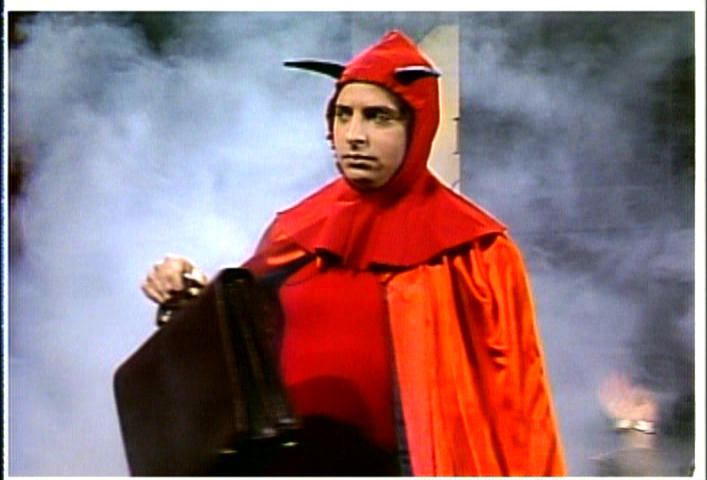
Obama: Lucifer Is My Homeboy
Ann Coulter

Wednesday, September 17, 2008

It's another election season, so that means it's time for Democrats to start uttering wild malapropisms about the Bible to pretend they believe in God!

In 2000, we had Al Gore inverting a Christian parable into something nearly satanic. Defending his nutty ideas about the Earth during one of the debates, Gore said: "In my faith tradition, it's written in the book of Matthew, where your heart is, there is your treasure also." And that, he said, is why we should treasure the environment.

First of all, people who say "faith tradition" instead of "religion" are always phony-baloney, "Christmas and Easter"-type believers.

Second, Jesus was making almost the exact opposite point, saying: "Do not store up for yourselves treasures on Earth," where there are moths, rust and thieves, but in heaven, because, Jesus said, "where your treasure is, there your heart will be also."

I guess that's the kind of mix-up that can happen when your theological adviser is Naomi Wolf.

Then in 2004, Democratic presidential candidate and future Trivial Pursuit answer Howard Dean told an interviewer that his favorite part of the New Testament was the Book of Job. The reporter should have asked him if that was his favorite book in all three testaments.

And now in 2008, we have Democrats attacking Sarah Palin for being a Christian, while comparing Obama to Jesus Christ. (And not in the sarcastic way the rest of us do.)

Liberals have indignantly claimed that Palin thinks the founding fathers wrote the Pledge of Allegiance, which is Olbmermannic in the sense that (a) if it were true, it's trivial, and (b) it's not true.

Their claim is based on a questionnaire Palin filled out when she was running for governor of Alaska in 2006, which asked the candidates if they were "offended by the phrase 'under God' in the Pledge of Allegiance." Palin answered: "Not on your life. If it was good enough for the founding fathers, it's good enough for me, and I'll fight in defense of our Pledge of Allegiance."

As anyone can see, Palin was not suggesting that the founding fathers "wrote" the Pledge of Allegiance: She said the founding fathers believed this was a country "under God." Which, um, it is.

For the benefit of MSNBC viewers who aren't watching it as a joke, the whole point of the Declaration of Independence was to lay out the founders' breathtaking new argument that rights came not from the king, but from God or, as the Declaration said, "Nature's God," the "Creator."

That summer, in 1776, Gen. George Washington -- a charter member of the founding fathers -- rallied his troops, saying: "The time is now near at hand which must probably determine whether Americans are to be freemen or slaves. ... The fate of unborn millions will now depend, under God, on the courage and conduct of the army."

So Washington not only used the phrase "under God," but gave us one of the earliest known references to the rights of the "unborn." That's right! George Washington was a "pro-life extremist," just like Sarah Palin.

There is no disputing that a nation "under God" was "good enough" for the founding fathers, exactly as Palin said.

Meanwhile, on the House floor last week, Democratic Rep. Steve Cohen of Tennessee compared Palin to Pontius Pilate -- and Obama to Jesus. Cohen said: "Barack Obama was a community organizer like Jesus, who our minister prayed about. Pontius Pilate was a governor." Yes, who can forget the Biblical account of how Jesus got the homeless Samaritan to register as a Democrat in exchange for a carton of smokes!

Rep. Cohen would be well-advised to stay away from New Testament references.

As anyone familiar with the New Testament can confirm for him, there are no parables about Jesus passing out cigarettes for votes, lobbying the Romans for less restrictive workfare rules or filing for grants under the Community Redevelopment Act. No time for soul-saving now! First, we lobby Fannie Mae to ease off those lending standards and demand a windfall profits tax on the money-changers in the temple.

David Freddoso's magnificent new book, The Case Against Barack Obama describes the forefather to "community organizers" like Barack Obama and Hillary Clinton -- the famed Saul Alinsky.

Alinsky is sort of the George Washington of "community organizers." If there were an America-hater's Mount Rushmore, Saul Alinsky would be on it. He tried to hire Hillary to work for him right out of Wellesley. A generation later, those who had trained with Alinsky did hire Obama as a community organizer.

In Freddoso's book , he quotes from the dedication in the first edition of Alinsky's seminal book, "Rules for Radicals," where Alinsky wrote:

"Lest we forget at least an over-the-shoulder acknowledgment to the very first radical: From all our legends, mythology and history (and who is to know where mythology leaves off and history begins -- or which is which), the first radical known to man who rebelled against the establishment and did it so effectively that he at least won his own kingdom -- Lucifer."

I suppose it could have been worse. He could have dedicated his book to George Soros.

Even liberals eventually figured out that they shouldn't be praising Satan in public, so the Lucifer-as-inspiration paragraph was cut from later editions of Alinsky's book. (But on the bright side, MSNBC adopted as its motto: "Who is to know where mythology leaves off and history begins -- or which is which.")

That's exactly what happens to most Democratic ideas -- as soon as they are said out loud, normal people react with revulsion, so Democrats learn to pretend they never said them: I was NOT comparing Palin to a pig! I did not play the race card! I did not say I would meet with Ahmadinejad without preconditions!

Sarah Palin might be just the lucky break the Democrats need. As a staunch pro-lifer, Palin could give Democrats an excuse to steer away from topics they know nothing about, like the Bible , and onto a subject they know chapter and verse, like abortion.
http://newyorkpanorama.com/blog/wp-content/uploads/2008/03/2008-03-Wall-Street-frontal-flat-700.jpg
From Bloomberg.com:
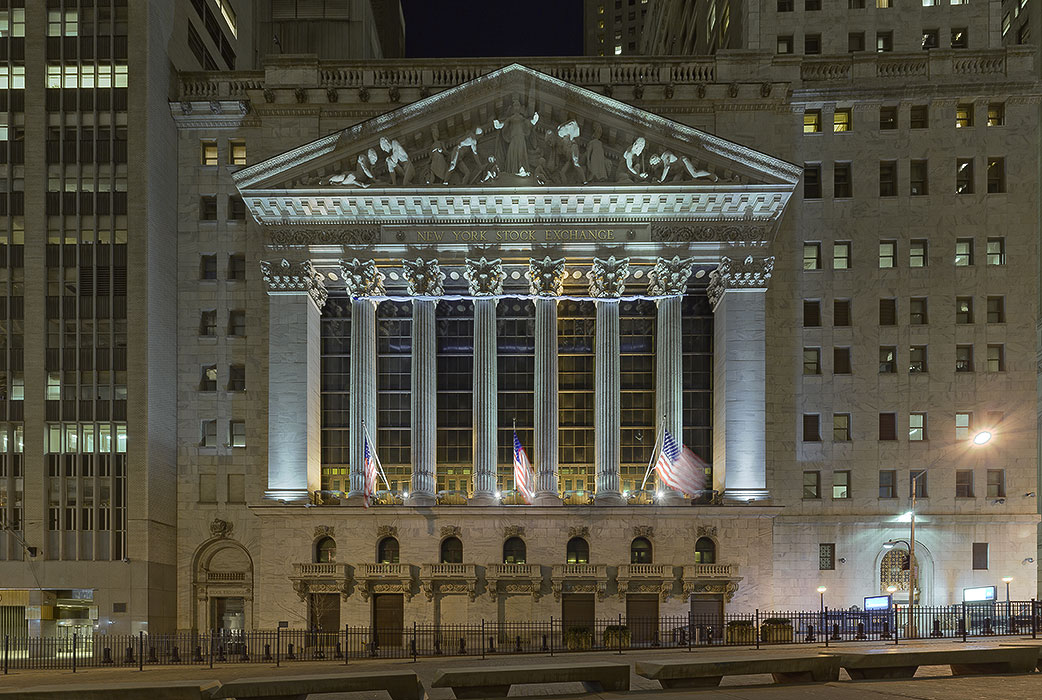
First Men, Then New Rules Can Rescue Wall Street

Commentary by Amity Shlaes

Sept. 16 (Bloomberg) -- Paulson. Merrill Lynch. Lehman. Bernanke. Names are what investors start talking about at moments like this. Names, the faith is, will rescue Wall Street and by extension the U.S. economy. When a market crash is big enough, people are too panicked to think about the technicalities of reform. They think about the names they are losing and the names who, they hope, will save the day.

Names certainly have their uses in tense moments like this one. But only rules can bring the markets back in the longer run.

Consider the analogy most mentioned as markets take in Treasury Secretary Henry Paulson's decision to cut off Lehman Brothers Holdings Inc.: the Panic of 1907. Then a name, J.P. Morgan, pulled fellow bankers and the Treasury together, putting forward a plan to supply cash so banks wouldn't fail.

The Lehman of the day was Knickerbocker Trust. The Dow Jones Industrial Average lost about half its value, and Knickerbocker Trust faded. But the Wall Streeters succeeded. Men, it was said, had saved the Street.

But what made World War I and the 1920s more manageable was the existence of new institutions, not men. The Federal Reserve Act became law in 1913. The Fed's initial structure was imperfect, a fact that would become more than apparent in the early 1930s. But the Fed did help stabilize the economy in the critical intervening decade and a half since 1913.

Then new names could rise to take the place of the old in the U.S. economy. Among the most important of these was Henry Ford.

Heroic Roles

Today, too, men have played heroic roles. Paulson will go down in history as the Treasury secretary who could say ``no.''

But maybe it was too many heroes on the stage that got us to this point. Former Federal Reserve Chairman Alan Greenspan assumed the rank of deity in the last decade of his tenure. In hindsight, his task would have been simpler and more transparent had he not been required to advance the Fed's two conflicting mandates: keeping employment high and inflation low.

Another set of big names, Moody's Investors Service and Standard & Poor's, were at the heart of the buddy-buddy system that led to problematic credit ratings.

And while Paulson stood firm with Lehman, he has courted conflict by formatting Treasury's takeover of Fannie Mae and Freddie Mac as a conservatorship, a legal structure to keep the businesses open.

Three Rules

Conservatorship, as Peter Wallison of the American Enterprise Institute has pointed out, suggests a postponement of the reckoning of Fannie's and Freddie's value. Had Paulson insisted on a receivership instead, the shock of Fannie's and Freddie's takeover by the government might have been greater at first. As markets have since shown, even conservatorship didn't provide stability.

At least three rules-based reforms cry out for implementation:

First, no more bailouts. Otherwise, it is already clear, the auto companies will be next. The airlines are also in line.

Heck, you can even give this reform a name: The Lehman Rule -- and then hope that the Treasury abides by it. One reason the Dow drooped during Paulson's press briefing yesterday was that he seemed to be indicating he might break the rule soon.

Second, clean up the rating system so that numbers speak something closer to the truth.

Death of Banker

Third, make the U.S. more competitive by lowering corporate taxes and other levies so foreign firms will want to fill our new vacuum. The worst thing about John McCain's new ``crisis'' advertisement is that it suggests a strong man -- and not a strong country -- is the answer. Here President George W. Bush's response, that he had faith in our economy, was more useful.

Back in the 1990s, when life had a much different texture, the financial historian Ron Chernow published a book called ``The Death of the Banker.'' His thesis was that market securitization had replaced the need for the individual relationship with one's trusted adviser at the desk.

There will be some now who call for the return of the banker. Sure, we need heroes at this hour. But it's probably best to keep that old fellow in the morgue. Better rules will lay the quickest path to recovery, and keep markets alive.

(Amity Shlaes, a senior fellow in economic history at the Council on Foreign Relations, is a Bloomberg News columnist. The opinions expressed are her own.)

http://www.abc.net.au/reslib/200710/r195372_742203.jpg
From Real Clear Politics:
Wall Street's Unraveling

By Robert Samuelson

WASHINGTON -- Wall Street as we know it is kaput. It is not just that Merrill Lynch agreed to be purchased by Bank of America or that the legendary investment bank Lehman Brothers filed for bankruptcy or that the insurance giant AIG is floundering. It is not even that these events followed the failure of the investment bank Bear Stearns or the government's takeover of Fannie Mae and Freddie Mac, the largest mortgage lenders. What's really happened is that Wall Street's business model has collapsed.

Greed and fear, which routinely govern financial markets, have seeded this global crisis. Just when it will end isn't clear. What is clear is that its origins lie in the ways that Wall Street -- the giant investment houses, brokerage firms, hedge funds and "private equity" firms -- has changed since 1980. Its present business model has three basic components.

First, financial firms have moved beyond their traditional roles as advisers and intermediaries. Once, major investment banks such as Goldman Sachs and Lehman worked mainly for their clients. They traded stocks and bonds for major institutional investors (insurance companies, pension funds, mutual funds). They raised capital for companies by underwriting -- selling -- new stocks and bonds for the firms. They provided advice to corporate clients on mergers, acquisitions and spinoffs. All these services earned fees.

Now, most financial firms also invest for themselves. They use partners' or shareholders' money to place bets on stocks, bonds and other securities -- so-called "principal transactions." Merrill and other retail brokers, which once served individual clients, have ventured into investment banking. So have some commercial banks that were barred from doing so until the repeal in 1999 of the Glass-Steagall Act of 1933.

Second, Wall Street's compensation is heavily skewed toward annual bonuses, reflecting the profits traders and managers earned in the year. Despite lavish base salaries, bonuses dominate. Managing directors with 15 years' experience can receive bonuses five to 10 times their base salaries of $200,000 to $300,000.

Finally, investment banks rely heavily on borrowed money, called "leverage" in financial lingo. Lehman was typical. In late 2007, it held almost $700 billion in stocks, bonds and other securities. Meanwhile, its shareholders' investment (equity) was about $23 billion. All the rest was supported by borrowings. The "leverage ratio" was 30 to 1.

Leverage can create huge windfalls. Suppose you buy a stock for $100. It goes to $110. You made 10 percent, a decent return. Now suppose you borrowed $90 of the $100. If the price rises to $101, you've made 10 percent on your $10 investment. (Technically, the price has to exceed $101 slightly to cover interest payments.) If it goes to $110, you've doubled your money. Wow.

Once assembled, these components created a manic machine for gambling. Traders and money managers had huge incentives to do whatever would increase short-term profits. Dubious mortgages were packaged into bonds, sold and traded. Investment houses had huge incentives to increase leverage. While the boom continued, government remained aloof. Congress resisted tougher regulation for Fannie and Freddie and permitted them to run leverage ratios that, by plausible calculations, exceeded 60 to 1.

It wasn't that Wall Street's leaders deceived customers or lenders into taking risks that were known to be hazardous. Instead, they concluded that risks were low or nonexistent. They fooled themselves, because the short-term rewards blinded them to the long-term dangers. Inevitably, these surfaced. Mortgages went bad. The powerful logic of high leverage went into reverse. Losses eroded firms' tiny capital bases, raising doubts about their survival. This year, Lehman lost nearly $8 billion in "principal transactions." Otherwise, it was profitable.

How Wall Street restructures itself is as yet unclear. Companies need more capital. Merrill went to Bank of America because commercial banks have lower leverage (about 10 to 1). It seems likely that many thinly capitalized hedge funds will be forced to reduce leverage. Ditto for "private equity" firms. In time, all this may prove beneficial. Financial firms may take fewer stupid and wasteful risks -- at least for a while. Talented and ambitious people may move from finance, where they were attracted by exorbitant pay, into more productive industries.

But the immediate effect may be to damage the rest of the economy. People have already lost their jobs. States and localities, particularly New York City and New Jersey, that depend on Wall Street's profits and payrolls will face further spending cuts. Banks and investment banks may tighten lending standards again and impede any economic recovery. The stock market's swoon may deepen consumers' pessimism, fear and reluctance to spend. There may be more failures of financial firms. It's hard to know, because financial crises resemble wars in one crucial respect: They result from miscalculation.

Tuesday, September 16, 2008


http://www.thepeoplesvoice.org/cgi-bin/blogs/media/democracy_55.JPG
The Neocons' Palin Project
by Patrick J. Buchanan

Posted 09/16/2008 ET

Will the neocons who tutored George W. Bush in the ideology he pursued to the ruin of his presidency do the same for Sarah Palin?

Should they succeed, they will destroy her. Yet, they are moving even now to capture this princess of the right and hope of the party.

In St. Paul, Palin was told to cancel a meeting with Phyllis Schlafly and pro-life conservatives. McCain's operatives said Palin had to rest for her Wednesday convention speech.

Yet, on Tuesday, Palin was behind closed doors with Joe Lieberman and officials of the Israeli lobby AIPAC. There, according to The Washington Post, Palin took and passed her oral exams.

"Palin assured the group of her strong support for Israel, of her desire to see the United States move its embassy from Tel Aviv to Jerusalem and of her opposition to Iran's aspirations to become a nuclear power, according to sources familiar with the meeting."

AIPAC's mission, like that of Likud, is to goad America into launching air and missile strikes on any and all Iranian nuclear facilities.

AIPAC went away happy. Purred spokesman Josh Block, "We were pleased that Gov. Palin expressed her deep personal commitment to the safety and well-being of Israel."

Heading home to Alaska to prepare for her interview with Charlie Gibson, Palin was escorted by Randy Scheunemann, McCain's foreign policy guru and, until March, a hired agent of the Tbilisi regime.

Scheunemann's lobbying assignment: Bring Georgia into NATO, so U.S. troops, like 19-year-old Track Palin, will be required to fight Russia to defend a Saakashvili regime that has paid Randy and his partner $730,000.

Reportedly, a phone conversation was held between Saakashvili and Palin, in which Palin committed herself to the territorial integrity of Georgia, though South Ossetia and Abkhazia have declared independence and been recognized by Moscow, which now has troops in both.

Also on Palin's plane was Steve Biegun, formerly of Bush's National Security Council, and Scheunemann's choice to tutor her. Of Biegun, Steven Clemens of the New American Foundation says, "He will turn her into an advocate of Cheneyism and Cheney's view of national security issues."

During her interview with Gibson, Palin often took a neocon line. Three times she said that, should Israel decide to attack Iran, the United States should not "second guess" Israel's decision or interfere.

This contradicts U.S. policy. Adm. Michael Mullen, chairman of the joint chiefs, has warned Israel not to attack Iran, as the United States does not want a "third front." And the Pentagon is withholding crucial weapons the Israelis want and need to carry out any such attack.

Palin also volunteered that the Russian invasion was "unprovoked," though Georgia attacked South Ossetia first. She followed up by saying that Georgia and Ukraine should be brought into NATO.

Would that mean America would have to go to war with Russia on behalf of Georgia in any new conflict, asked Gibson.

"Perhaps so," said Palin.

Scheunemann should get a fat severance check from Saakashvili for that one.

One ex-White House aide at American Enterprise Institute, asked by Tim Shipman of the Daily Telegraph if AEI sees Palin as a "project," replied: "Your word, not mine. ... But I wouldn't disagree with the sentiment. ... She's bright, and she's a blank page. She's going places, and it's worth going there with her."

In fairness to Palin, on issues like NATO membership for Ukraine and Georgia, her answers reflect the views of the man who chose her. She has no option at present but to follow the line laid down by Scheunemann.

But make no mistake. Sarah Palin is no neocon. She did not come by her beliefs by studying Leo Strauss. She is a traditionalist whose values are those of family, faith, community and country, not some utopian ideology.

Wasilla, Alaska, is not a natural habitat of neoconservatives.

And her unrehearsed answers to Gibson's questions reveal her natural conservatism. Asked if she agrees with the Bush Doctrine, Palin asked for clarification. "In what respect, Charlie?"

Gibson: "Do we have the right of an anticipatory self-defense?"

Yes, said Palin, "if there is legitimate and enough intelligence that tells us that a strike is imminent against (the) American people, we have every right to defend our country. In fact, the president has the obligation, the duty to defend."

Exactly. The intelligence must be legit and the threat "imminent."

Interviewed by Alaska Business Monthly in March 2007 on the surge, Palin said, "I heard on the news about the new deployments, and while I support our president, I want to know that we have an exit plan in place."

That is not the language of empire or "benevolent global hegemony."

Palin may disappoint many conservatives in the next seven weeks by having to parrot the McCain-neocon line on NATO expansion, NAFTA and a "path to citizenship" for illegal aliens. But the battle for Sarah's soul is not over.

For, again, the lady is no neocon. Nor is the husband Todd, First Dude of Alaska and former member of the "Alaska First" Independence Party.

http://mypetjawa.mu.nu/archives/LogObama4.jpg
Community Organizer In Chief
By INVESTOR'S BUSINESS DAILY

Posted Tuesday, September 16, 2008 4:20 PM PT

Election '08: Barack Obama claims he worked for a "small group of churches" as a community organizer. In fact, he was hired by a radical Alinskyite group, and Saul Alinsky's own son has outed him

Buried last month in the Boston Globe's letters to the editor was a three-paragraph letter congratulating Obama for putting on a great show at the Democratic National Convention.

That open-stadium rally in Denver, with it's packed crowd and perfectly timed chanting of key phrases, "had all the elements of the perfectly organized event, Saul Alinsky-style," opined the letter-writer. The reference was to the hard-boiled Chicago socialist and father of radical community organizing.

"Barack Obama's training in Chicago by the great community organizers is showing its effectiveness," the author continued. "When executed meticulously and thoughtfully, it is a powerful strategy for initiating change and making it really happen. Obama learned his lesson well.

"I am proud to see that my father's model for organizing is being applied successfully beyond local community organizing to affect the Democratic campaign in 2008," the author said. "It is a fine tribute to Saul Alinsky as we approach his 100th birthday."

The person who signed the letter, Lee David Alinsky, a longtime public TV producer in the Boston area, is indeed the son of the late radical. Alinsky no doubt felt compelled to make the tribute on behalf of Obama because Obama refuses to even acknowledge his Alinsky training in public.

He is quick to say that the community organizing he did in Chicago was "the best education I ever had, better than anything I got at Harvard Law School." But he never tells us who educated him, not even in the two memoirs he's written. He also fails to disclose who hired him. Obama claimed in the recent national service forum at Columbia University that he worked for "churches" while organizing on the South Side of Chicago.

Talk about putting lipstick on a pig. Obama in fact worked for a subsidiary of the radical Gamaliel Foundation, a Chicago-based Alinsky group, and he was paid by the radical Woods Fund, which supports Gamaliel. Gamaliel's Web site and history page make plain that it evolved from the Alinsky school of organizing. Its training methods acknowledge an "agitational" style of organizing.

Obama also fails to disclose that he himself became a trainer of community organizers for the radical Gamaliel network. He also won't disclose that he contributed to a Chicago forum called "After Alinsky," where he argued for a "systematic approach" to community organizing and more "power" to bring about social change.

Serving on Gamaliel's board of directors is John McKnight, who wrote a letter of recommendation for Obama to Harvard. McKnight is a noted "student of Alinsky" and former ACLU director who now teaches at Northwestern University.

McKnight also sits on the board of the National People's Action, or NPA, a particularly thuggish group of Alinskyite agitators who sing the following ditty when picketing the homes of business and government leaders: "Who's on your hit list, NPA? Who's on your hit list of today? Take no prisoner, take no names. Kick 'em in the ass when they play their games."

Some community organizers are well-meaning and harmless. But not the ones Obama threw in with. They intimidate and agitate for more government home loans, more government job programs, a ban on police profiling, more benefits for illegal aliens, felon voting rights, minimum wage hikes, "environmental justice" and so on.

What they do is not harmless. What they demand is not noble. But Obama wants to give them more money and power, and organize them on a "large scale." He can run from his radical organizing record, but he can't hide.

Monday, September 15, 2008

http://hogwartsprofessor.com/wp-content/uploads/777/2007/09/witchdoctor1.jpg
From Deadspin.com: Oh, the valuable lessons of diversity....
A Red Card Seems Somehow Inadequate


In America we have a gentlemen's agreement that magic will not be used to gain an advantage in pro sporting events (although Belichick may be cheating). But not so in the Democratic Republic of Congo, where they're casting spells all over the place to try and win soccer games. And suddenly Terrell Owens' end zone antics seem so quaint and harmless.

Eleven people were killed in a stadium riot when a soccer player tried to use witchcraft to win a local match.

Nyuki club was losing to local rivals Socozaki on Sunday when Nyuki's goalkeeper advanced up the pitch and tried to use "fetishist" spells to turn the tide of the match, Okapi said, without giving more details. When a police commander tried to break up an ensuing brawl between rival players, members of the crowd pelted him with rocks, the radio added. Police fired teargas in response, causing a stampede to the exits in which 11 people were killed and several injured, Okapi said.

This type of thing happens often in African soccer, apparently.

Two years ago in the Nations Cup quarterfinal in Lagos, Senegal, having taken an early lead, looked to be holding on when, 15 minutes from time, a former official of the Nigerian FA raced on to the pitch and seized a 'charm' that had been lying in the back of the Senegal net. Senegal protested, but to no avail, and Nigeria went on to score twice and win. The official was subsequently banned, but his action was seen as hugely significant in Nigeria's progress. This time around, Senegalese journalists insist they saw a marabout smearing goalkeeper Tony Sylva's post with an ointment ahead of the Lions' 1-0 victory over Zambia in the group stages. Sylva went 448 minutes without conceding a goal.

Before you judge, I'm sure that our practice of summoning Al Davis from the dead every Sunday seems strange and horrible to them.

From Gateway Pundit:
At 9-11 Anniversary Tribute...
Muslim Cleric Promises Next Massive Attack
Will Be in Great Britain


Saturday, September 13, 2008

A group of radical Muslims held a 9-11 Anniversary "tribute" in London this week.
They promised that the next massive attack would be in Great Britain.
The "tribute" was covered by the local media.

Radical Islamist Omar Bakri Mohammed, who rejoiced over the assassination of Benazir Bhutto, promised this week that the next 9-11 will be in Great Britain.

The Daily Mail and ROP reported:

Muslim hate fanatics plan to take over Britain by having more babies and forcing a population explosion, it has been revealed.

The swollen Muslim population would be enough to conquer Britain from inside, they claim.

Fanatics told a meeting of young Muslims on the anniversary of the 9/11 atrocity, that it would then be easy to impose Sharia law on the population, the Sun newspaper reported.

Speaking at a meeting in London, Anjem Choudary, right-hand man of exiled preacher Omar Bakri Mohammed, said: "It may be by pure conversion that Britain will become an Islamic state. We may never need to conquer it from the outside."

He added: "We do not integrate into Christianity. We will ensure that one day you will integrate into the Sharia Islamic law."

His comments were made as voice of hate Bakri warned that the next 9/11 would take place in the UK.

Speaking via video link the exiled cleric said Osama bin Laden had taught the Americans a ‘lesson’ seven years ago, but the ‘crusaders’ had not learned.

He said the next ‘9/11 will take place in Britain, the next 7/7 [London bombings] could take place locally’.

Sunday, September 14, 2008


http://i166.photobucket.com/albums/u115/flacfinder/JasonRingenburg.jpg
From The Tennessean:
Nashville's greatest rock band,
Scorchers get their due

By PETER COOPER

September 14, 2008

Jimmy Guterman writes books and articles about rock 'n' roll. He's often called on for expert opinions. On just such a recent occasion, he pondered the inanity of the inquiry at hand.

"Are Jason and the Scorchers the greatest rock band ever to come out of Nashville?" he asked, repeating the question in the same childlike voice he might use to repeat nonsense queries such as "What color is the Jolly Green Giant?" Guterman chuckled, paused and replied, "Oh, of course."

Up to now, the prize for being Nashville's greatest rock band was a gift set that included day jobs and dissolution, quiet pride and considerable heartache and breathless reviews that cannot be redeemed for fame or fortune. Musicians know, and hard-core music fans know, and much of the record-buying nation yawns in collective disinterest.

But on Thursday night at the Ryman Auditorium, the Americana Music Association will bestow a lifetime achievement award on these Scorchers, and the band's most celebrated lineup — singer-songwriter Jason Ringenberg, guitarist Warner Hodges, drummer Perry Baggs and bass man Jeff Johnson — will gather onstage for the first time in 11 years.

Music historian and Rolling Stone contributing editor Anthony DeCurtis will speak of the band as an electrifying, innovative force that fused punk rock energy and country roots in a manner never before attempted. Ringenberg will bounce around like, as Guterman once wrote, "Ed Norton on methamphetamines." Hodges will twirl around and unleash twang and distortion from his guitar. Johnson will stand solid and play simple and true. Baggs will fight past the diabetes that sends him to dialysis three days a week. Two songs, that's all they'll play.

"It could very well be the last thing we ever do together," said Baggs, whose day gig involves typing in nightclub listings at The Tennessean. Scorchers fans crowded the Exit/In in 2007 for a concert that raised money to defray Baggs' medical costs.

"It's great to get an award, but this goes further," he continued. "After last year's benefit show, for me, I cried on the way home. And I'm sure I'll cry about this, because I love these guys and I'm going to miss them. If I don't have kidneys, I can't tour. Once, I tried to walk away from this and say it doesn't matter, but it matters every day. We're going to play two songs at the Ryman, and I don't care if they take me away in an ambulance."
http://i210.photobucket.com/albums/bb36/TnSouthernBelle/Warneroffriserjune22007.jpg

'It was an explosion'

"I looked at the band in 1992 as a complete failure," Ringenberg said. "At that time, people were saying, 'You guys had a big push, and it didn't happen.' They weren't saying, 'You guys revolutionized and changed music,' which is what some people say now."

Ringenberg was landscaping — mowing yards — in and around 1992. He'd take a job, and sometimes the property owner would recognize him. There would be the "You're Jason Ringenberg? You're mowing my yard?" moment, followed by a mumbled apology and an offer of, perhaps, a drink of water. In the early 1990s, that was the legacy of Jason and the Scorchers: a swing and a miss.

Ringenberg came to Nashville on July 4, 1981, driving south from Illinois with the notion of starting a band that would rev up some standard country songs into something more rock than hillbilly. Hodges and Johnson had already experimented with just such an idea, with Hodges' country-loving father telling him that if he got serious about that, then he'd really have something. Ringenberg was hanging out at the Springwater dive barwhen he met ambitious Vanderbilt student Jack Emerson and told Emerson of an idea to start a supercharged country band with a rock edge.

"Jack said, 'I'll help you do that, and I don't know how to play bass, but I'll play bass,' " Ringenberg remembered. Emerson managed to get Ringenberg gigs playing in front of buzzed-about alternative band REM and the legendary rocker Carl Perkins. Though the initial band didn't click, Ringenberg was a dynamo onstage, dancing as if he was somehow being pleasurably electrocuted. He had a 200-foot microphone cable, so "onstage" was often offstage, and he'd climb towers or venture into the audience while singing.

Johnson said Ringenberg's intensity was no less in evidence when he was singing in private settings.

"When I first met Jason, I could tell there was a magic there," Johnson said. "Jack Emerson brought him by, and I can remember the first time we jammed. He had a white shirt and a bolo tie. And he was electric, singing and just bouncing off the walls."

Johnson called his longtime friend Hodges and told him to go out and hear the thin, wild vocalist.

"Jeff told me, 'Dude, you've got to see this guy,' " Hodges said. "I did, and Jeff was right. Jeff always knew everything before the rest of us did."

In Hodges' childhood home, his music-making parents played traditional country in the living room, while the son often retreated to the bedroom to listen to AC/DC records. Bass player Johnson was into punk rock. They spoke with Ringenberg and decided to get together and play, and they quickly drove away the fellow who was playing drums. Hodges said he knew a guy who might be able to drum, and so they auditioned 20-year-old Baggs, who showed up at Ringenberg's West Nashville home with a sad little drum kit and two sticks.

"The four of us got together, and started with Carl Perkins' 'Gone, Gone, Gone' and it was an explosion of conflicting chemical components," Ringenberg said. "Right from the first verse, it was there."

Baggs quickly broke a drumstick, and he finished the audition with a tree branch he found in Ringenberg's yard. Weeks later, they recorded a four-song record called Reckless Country Soul, and then they played a New Year's Eve show in Murfreesboro at a club called K.O. Jams. The music was raw and furious, as "Jason and the Nashville Scorchers" whipped Hank Williams' "I'm So Lonesome I Could Cry" until it bled. Patrons began hurling chairs and tables into walls, and the dance floor was littered with wood chunks. People threw beer mugs through windows. Rock 'n' roll, hoochie coo.

As 1982 began, the Scorchers sped as Nashville slumbered. Staid pop-country ruled Music Row, and the rock scene was less than notable. Promising talents went unfulfilled, and a few should-be stars (Dave Olney and Tim Krekel among them) failed to gain public mandate. The Scorchers, though, filled rooms and fueled talk, while Emerson greased the business wheels.

"I saw them first in 1982 in Atlanta," said DeCurtis, who was then a freelance writer. "Rock in the early '80s was very British-oriented, and REM and the Scorchers led this American counter-revolution. There was a neo-traditional aspect to the Scorchers, going back to the country sources that are the American grain. Putting that forward in the context of punk rock and upheaval and rebellion gave it a depth. And then seeing them live, there was a feeling that the whole stage was going to levitate."

In 1983, the six-song Fervor came out on Praxis Records, an indie label begun by Jack Emerson and Andy McLenon. Then there was a genuine major-label bidding war, and a contract with EMI, and the reissue of Fervor with the addition of new track "Absolutely Sweet Marie." The video for that song, a hyper-drive cover of Bob Dylan's original, aired repeatedly on MTV and featured plenty of Nashville scenery. Thousands of viewers saw Music City in a new light.

"Punk had turned into new wave, which had turned into synth pop," Guterman said. "Country was going through a time when Reba McEntire was considered a singer with edge. The Scorchers were a great punk band and a great rock band and a great country band, often in the same song. They invented what we're now calling 'Americana.' "

A hit, except on radio

The band's masterwork, Lost & Found, was released in 1985, to magnificent reviews. In The New York Times, the Scorchers were "one of the great rock bands of the 1980s," while the Los Angeles Times' Steve Hockman wrote, "The Nashville-based quartet doesn't just blend elements of rock 'n' roll and country, it rams them together with as much force as can be mustered." Ringenberg and Baggs also received notice for their songwriting, as the Scorchers' originals were as sharp as the cover songs they chose.

Trouble was, the band was connecting everywhere but at rock radio.

"It seemed like the crowds loved us, and the record company loved us and radio treated us like we had the flu," Baggs said. "You put a band like the Scorchers on the radio, and you're taking a chance. And they don't like to take chances."

The Scorchers and EMI expected 1986's Still Standing to be the commercial breakthrough. And … it wasn't. Miles and disagreements and rock 'n' roll habits had torn and frayed the Scorchers, and the burgeoning "hair metal" rock scene meant that the commercial marketplace was less friendly to roots-oriented music.

"A lot of stupid things were going on in the band, which were our fault," Hodges said. "And the harder we tried to be commercial, the less like ourselves we got."

EMI dropped the Scorchers, and Johnson exited. The group took on bass player Ken Fox and second guitarist Andy York and made Thunder and Fire for A&M Records, and then toured relentlessly. While the Scorchers opened a string of dates for Bob Dylan, Baggs was losing weight and energy. He wound up in a hospital, and discovered that he had diabetes. Wounded, reeling and exhausted, the band then found it had been dropped by A&M.

"Warner called me at my little farm in Kingston Springs and said, 'I can't do this anymore,' " Ringenberg said. "And the band broke up, for real. I didn't have any belief in going on. Everything was wrong."

Wanting to move toward country music, Ringenberg made a commercially forgettable solo album for Capitol Nashville. He lost the Capitol deal and got divorced, all in the same week. And he went to work, mowing yards.

In 1992, Guterman put together a Scorchers compilation for EMI called Are You Ready For The Country, collecting previously recorded tracks from a now-disbanded group and thereby bringing Fervor and Lost & Found into the compact disc era. Johnson, who had been out of touch with his former bandmates, purchased a copy of the disc, liked it and began calling Ringenberg and Hodges about getting back together. He'd tell Ringenberg that Hodges wanted to do it, which wasn't true. And he'd tell Hodges that Ringenberg wanted to do it, which wasn't true. Until, finally, it became true.

The original Scorchers regrouped, and in 1995, Mammoth Records put out A Blazing Grace. Clear Impetuous Morning came the following year, and finally there was a live album called Midnight Roads & Stages Seen, recorded at Exit/In. By Midnight Roads, Johnson was gone again, replaced by Kenny Ames. In the new century there have been sporadic, often brilliant live shows, including last year's "Perry Fest." The Scorchers may well make another album, though no one dreams anymore of a radio takeover.

Why this band matters

What, then, is the big deal about a band that never had a gold record or a Top 20 hit?

Thursday's career achievement award isn't about sales figures, it's about energy, inspiration and influence. The Scorchers' American collision of punk, rock and country battered some doors, and if the band emerged with broken collarbones from all that banging, groups such as the Georgia Satellites, the Black Crowes, Wilco and Son Volt were free to walk right through. The band opened minds and ears in Nashville as well, as evidenced by a display at the Country Music Hall of Fame and Museum, where Ringenberg's red shirt, the one he wore for the Fervor cover shoot, hangs behind glass.

"Rock 'n' roll ain't nothing but blues and country, but when we started, if you came at it from a country perspective, they looked at you like you were from Mars," Hodges said. "Maybe we changed that."

"They delivered on the promise of what country-rock started out to be in the late 1960s," DeCurtis said. "They modernized it, and they're more important for what has come after. The quality of the work is impeccable, and the impulse has been a lasting one: that desire to take a vital element of the country tradition and connect it with rock. That still gets people excited."
HIGH PRAISE

Jason and the Scorchers in the 1980s press:

“Wildly exciting. This is rock ’n’ roll, the real stuff.”
The New York Times

“Their roots are country, their raw sound is rock ’n’ roll and their songs seem like a natural synthesis of the best of both.” — Chicago Sun-Times

“Better to forget about labels and simply call (Lost & Found) a great record.
Musician magazine

“A fabulous band.”
London Times

“Jason Ringenberg with his nasal whine remains a Dixie-fried Joey Ramone, and the band’s guitars bash and twang like a demolition derby on tracks.”
Entertainment Weekly

“A Scorchers show is not easy to describe. But it is certainly — on the right night — the nearest you’ll find today to that unspeakable rock ’n’ roll borderline where chaos is transformed magically into art, and art splinters into chaos. In other words, the edge.”
Record magazine

“The band bashes on: Hodges raising great balls of hellfire on the guitar, bassist Jeff Johnson pumping eighth notes till you can feel the calluses, and drummer Perry Baggs banging away with muscular, unrestrained zeal.” — Rolling Stone

http://nicedeb.files.wordpress.com/2008/02/palin-in-the-car.jpg
From The Weekly Standard:
The Bonfire of the Hypocrisies

The nomination that launched a thousand attacks.
by Tod Lindberg

09/22/2008, Volume 014, Issue 02

Historians looking back on these tumultuous times will no doubt argue over the precise date on which the Age of Palin began. Her speech at the Republican National Convention on September 3 certainly catapulted her to national renown. But there is a good case to be made for her introductory appearance in Dayton, Ohio, five days before.

It's all there: You have the same poise and panache Palin exhibited at the convention. You have the self-assurance of a champion high-school athlete who went on to bigger and better things (unlike in the gloomy Democratic, Bruce Springsteen version of life, in which it's all downhill after your Glory Days). There's the ability to deliver a barb with a smile. And above all, that day inaugurated arguably the most incoherent and blubbering partisan response to a candidate in the history of American politics--against which the charms of the candidate stood out even more clearly.

Let's get this straight: Your party has just nominated for president a fellow who has been elected exactly once to the United States Senate, in an uncompetitive race, following a garden-variety stint in a state legislature. And your response to the GOP nominee's choice for vice president--someone who has been elected once as governor following a stint as a small town mayor--is to decry the lack of experience? Nobody ever said Barack Obama was unqualified for the No. 2 spot on the ticket.

Had Hillary Clinton won the nomination and selected Obama as her running mate--which, being a savvy politician, she would certainly have done, in order to fire up his 18 million primary supporters--Obama would have been perfectly positioned. Either he would be preparing himself as vice president for his run for the Oval Office eight years hence. Or he would be experienced and tested in a national campaign that he would never be held responsible for losing, with a fundraising base beyond the imagination of Croesus. Instead, it's McCain-Palin with the wind at their backs, and Palin who is being prepared as the outstanding future prospect for her party.

Now, you might think it hypocritical to criticize the inexperience of a vice presidential nominee who has similar experience to your presidential nominee, but that's just a failure of the imagination. Indeed, hypocrisy was the strange charge Democrats decided to make against McCain and Palin: Having run against Obama all summer for his lack of experience and accomplishment, how dare John McCain pick as his running mate someone with (ahem) experience comparable to that of the Democratic candidate for president McCain had been criticizing?

Well, maybe because it is not a sign of the strength of a candidate at the top of a ticket to need the experience of Joe Biden (or Dick Cheney) in order to allay concerns that he's not quite up to some aspects of the job. And, contrariwise, it is a sign of strength at the top when the nominee can look to the future and make a priority of party-building. Does anybody think that if Obama loses, he will have left his party in a stronger position by advancing the prospects of Joe Biden? Fortunately for Democrats, at least they've got Hillary in the wings.

But these weren't the only hypocrisies in the air. Remember reading the discussions of Vice President Al Gore's parenting skills in all the papers the day after his teenage son got busted for dope at high school? No? That would be because Gore called around to all the papers (including the Washington Times, where I was editorial page editor at the time) and asked us not to publish it, kids being kids and being owed some privacy. The newspapers didn't. That was then: Given a preposterous Internet rumor that Sarah Palin was never pregnant with her four-month-old baby but faked it to cover up for her daughter, Bristol was fair game. This was a judgment shared among Democrats and, coincidentally, the media (the same ones who were also all over the John Edwards love-child story, remember?).

And so Democrats started pointing at the stunning "hypocrisy" of McCain putting Palin on the ticket in spite of her pregnant daughter. Shouldn't all the GOP talk about family values and abstinence education have disqualified Palin? Because, after all, Bristol is getting married and keeping the baby, and if that isn't a sure disqualification for someone's mother for the vice presidency, what is?

Plus, Sarah Palin, we've been informed endlessly, is a hypocrite with a capital H. In all the obvious ways, such as being opposed to women's rights while still having a career. Democrats have been at the forefront of cheering women on to break supposed glass ceilings, but only the right kind of women, which you can be pretty sure a Republican woman isn't.

Then there's all the pro-life business: It just took one columnist in Salon to expose the hypocrisy there: Palin had her baby tested for Down syndrome, and then--had the baby! If she were really pro-life, there wouldn't have been any reason to have the test. As Rahul K. Parikh, M.D., explained:

We could ask, given that Palin had no doubts about seeing her pregnancy through, why she bothered to take a genetic test. Why not, as you might expect a woman in her position and with her outspoken beliefs to do, decline any testing or counseling? Of course, it seems very reasonable to want to know about the health of your baby and to have time to prepare (emotionally and otherwise) for a baby that may have a genetic disorder. But that doesn't negate the fact that by having a blood test, Palin was given a choice about what to do. .  .  . Her supporters say that Trig signals that she practices what she preaches. Her decision to make her own choice but not grant it to others is a sign of her hypocrisy.

So let's see if the pro-lifers can get this straight for a change: If you are going to have the baby anyway, you are not entitled to information about its health (even though the desire for such information is "very reasonable"), because some people who are not pro-life use such information as a basis for deciding whether to terminate their pregnancies. Got it?

But the most stunning hypocrisy of all, from the point of view of most Democrats and, coincidentally, the media again, was that McCain had promised a vice presidential nominee qualified for the job and then undertook such a haphazard, last-minute, incompetent vetting process that he found out all the things that Democrats and the media are so exercised about. And he went ahead with Sarah Palin anyway!

And just look at the bitter fruit McCain has reaped for all his "hypocrisies": Palin has helped propel him ahead of Obama in national polls for the first time. Fifty-two percent of respondents in a Pew survey think she is ready to be president now. If people could vote only for vice president, they favor her over Biden 53-44 in a CNN poll. And the unknown governor of two weeks before is now the most popular Republican politician in the country.

Tod Lindberg, a WEEKLY STANDARD contributing editor and Hoover Institution fellow, is editor of Policy Review.