Saturday, July 14, 2007

http://medias.ados.fr/articles/jpg/gone_baby_gone_set.jpg
From The Boston Herald:
Lehane: ’Gone’ great, baby, great
By Gayle Fee and Laura Raposa


Tuesday, July 10, 2007 - Updated: 06:45 AM EST

Boston writer Dennis Lehane is giving big ups to Ben Affleck’s big-screen adaptation of his 1998 kidnap thriller “Gone, Baby, Gone,” saying the Cambridge homey has made a flick that “reeks of Boston.”

“I saw the movie and it’s terrific,” said Lehane who got a sneak peek at the made-in-Boston drama in New York City a few weeks back. “I wasn’t gonna say anything if I didn’t like it but it’s really terrific.”

Lehane said Affleck, who directed the movie and adapted the screenplay, was “over the moon” when he gave him his film review.

“The plan was, if I hated it, I’d vanish,” he said. “I actually set up my schedule to go into a black hole in September and October. But I gotta tell you, I’m very, very happy.”

Lehane’s 2001 novel noir “Mystic River” was adapted for the big screen by Clint Eastwood, but Dennis said he can’t really compare Affleck’s “Gone” to the Academy Award-winning “River.”

“At the end of the day, I was too close to ‘Mystic River,’ ” he said. “I felt like I had just finished writing it and I was watching them shoot it.”

But with “10 years of distance” from penning “Gone, Baby, Gone,” Dennis said he can objectively judge the flick.

“I’m serious, both Afflecks are going to surprise a lot of people,” he said.
Ben cast his bro, Casey, in the role of Boston private detective Patrick Kenzie. Michelle Monaghan of “Mission Impossible III” fame, plays his partner and sometime-galpal Angie Gennaro. The pair, who are recurring characters in Lehane’s early novels, investigate the disappearance of a 4-year-old Dorchester girl. The flick is due in theaters in October.

“I am not kidding you when I tell you that this is the most Boston movie ever made,” said Lehane. “It reeks of Boston in a way that only someone from here could do it. And the accents are sweet.”

All of which must have made Lehane nostalgic for Patrick and Angie, the detective duo who haven’t been heard from since his 1999 mystery “Prayers For Rain.” Lehane said he may finally be ready to revive the characters.

“I’m thinking about it,” he said.

Back in 2005, Lehane told the Track he put the pair on hiatus because “they stopped talking to me.”

“I can’t explain it any other way,” the local man of mystery said at the time. “But if they ever knock on my door again, I’ll welcome them with open arms. After all, they bought my house.”

At the mo, Dennis is in the throes of rewriting a massive work of fiction based on the 1918-1919 Boston police strike.

“It’s my great white whale,” he said.

But when he finally finishes it, he will either write a sequel - or take a break from the cops and return to Patrick and Angie.

“I think it’s time,” he said.

Friday, July 13, 2007

The image “http://eatourbrains.com/EoB/wp-content/uploads/2006/11/george-w-bush.jpg” cannot be displayed, because it contains errors.
From Opinion Journal:
American Grit

By PEGGY NOONAN

We can't fire the president right now, so we're waiting it out.

Friday, July 13, 2007 12:01 a.m.

It's been a slow week in a hot era. I found myself Thursday watching President Bush's news conference and thinking about what it is about him, real or perceived, that makes people who used to smile at the mention of his name now grit their teeth. I mean what it is apart from the huge and obvious issues on which they might disagree with him.

I'm not referring to what used to be called Bush Derangement Syndrome. That phrase suggested that to passionately dislike the president was to be somewhat unhinged. No one thinks that anymore. I received an email before the news conference from as rock-ribbed a Republican as you can find, a Georgia woman (middle-aged, entrepreneurial) who'd previously supported him. She said she'd had it. "I don't believe a word that comes out of his mouth." I was startled by her vehemence only because she is, as I said, rock-ribbed. Her email reminded me of another, one a friend received some months ago: "I took the W off my car today," it said on the subject line. It sounded like a country western song, like a great lament.

As I watched the news conference, it occurred to me that one of the things that might leave people feeling somewhat disoriented is the president's seemingly effortless high spirits. He's in a good mood. There was the usual teasing, the partly aggressive, partly joshing humor, the certitude. He doesn't seem to be suffering, which is jarring. Presidents in great enterprises that are going badly suffer: Lincoln, LBJ with his head in his hands. Why doesn't Mr. Bush? Every major domestic initiative of his second term has been ill thought through and ended in failure. His Iraq leadership has failed. His standing is lower than any previous president's since polling began. He's in a good mood. Discuss.

Is it defiance? Denial? Is it that he's right and you're wrong, which is your problem? Is he faking a certain steely good cheer to show his foes from Washington to Baghdad that the American president is neither beaten nor bowed? Fair enough: Presidents can't sit around and moan. But it doesn't look like an act. People would feel better to know his lack of success sometimes gets to him. It gets to them.

His stock answer is that of course he feels the sadness of the families who've lost someone in Iraq. And of course he must. Beyond that his good humor seems to me disorienting, and strange.

In arguing for the right path as he sees it, the president more and more claims for himself virtues that the other side, by inference, lacks. He is "idealistic"; those who oppose him are, apparently, lacking in ideals. He makes his decisions "based on principle," unlike his critics, who are ever watchful of the polls. He is steadfast, brave, he believes "freedom isn't just for Americans" but has "universal . . . applications," unlike those selfish, isolationist types who oppose him.

This is ungracious as a rhetorical approach, but not unprecedented. There's something in the White House water system. Presidents all wind up being gallant in their own eyes. Thursday I was reminded of President Nixon, who often noted he was resisting those who were always advising him to "take the easy way." Bill Safire used to joke that when he was a Nixon speechwriter, part of his job was to walk by the Oval Office and yell in, "Mr. President, take the easy way!"

I suspect people pick up with Mr. Bush the sense that part of his drama, part of the story of his presidency, is that he gets to be the romantic about history, and the American people get to be the realists. Of the two, the latter is not the more enjoyable role.

Americans have always been somewhat romantic about the meaning of our country, and the beacon it can be for the world, and what the Founders did. But they like the president to be the cool-eyed realist, the tough customer who understands harsh realities.

With Mr. Bush it is the people who are forced to be cool-eyed and realistic. He's the one who goes off on the toots. This is extremely irritating, and also unnatural. Actually it's weird.

Americans hire presidents and fire them. They're not as sweet about it as they used to be. This is not because they have grown cynical, but because they are disappointed, by both teams and both sides. Some part of them thinks no matter who is president he will not protect them from forces at work in the world. Some part of them fears that when history looks back on this moment, on the past few presidents and the next few, it will say: Those men were not big enough for the era.

But this is a democracy. You vote, you do the best you can with the choices presented, and you show the appropriate opposition to the guy who seems most likely to bring trouble. (I think that is one reason for the polarity and division of politics now. No one knows in his gut that the guy he supports will do any good. But at least you can oppose with enthusiasm and passion the guy you feel in your gut will cause more trouble than is needed! This is what happens when the pickings are slim: The greatest passion gets funneled into opposition.)

We hire them and fire them. President Bush was hired to know more than the people, to be told all the deep inside intelligence, all the facts Americans are not told, and do the right and smart thing in response.

That's the deal. It's the real "grand bargain." If you are a midlevel Verizon executive who lives in New Jersey, this is what you do: You hire a president and tell him to take care of everything you can't take care of--the security of the nation, its well-being, its long-term interests. And you in turn do your part. You meet your part of the bargain. You work, pay your taxes, which are your financial contribution to making it all work, you become involved in local things--the boy's ball team, the library, the homeless shelter. You handle what you can handle within your ken, and give the big things to the president.

And if he can't do it, or if he can't do it as well as you pay the mortgage and help the kid next door, you get mad. And you fire him.

Americans can't fire the president right now, so they're waiting it out. They can tell a pollster how they feel, and they do, and they can tell friends, and they do that too. They also watch the news conference, and grit their teeth a bit.

Monday, July 09, 2007

Aaron Houston for The New York Times
From left, Ian Kennedy, Alan Horne and Jeffrey Marquez are a combined 23-8 for Trenton.
Kennedy also went 6-1 for Class A Tampa.

From The New York Times:
Yankees Pin Their Hopes on Pitching and Patience

By TYLER KEPNER

TRENTON, July 3 — Tony Franklin has wandered the minor leagues for 38 years, watching teammates advance to the majors and teaching prospects to do the same. He is a wise 57 years old, and these days, he carries himself with a carefree air not often seen in a manager.

Franklin knows how good he has it as the manager of the Trenton Thunder, the Yankees’ Class AA affiliate in the Eastern League. He has seen enough pitchers to understand what a precious thing he has now.

“Every manager should have the opportunity to have a pitching staff like this at least one time in their career,” Franklin said Tuesday at Waterfront Park. “It’s pretty special to know you’ve got a great opportunity to win each and every night.”

Franklin spoke after a shutout victory against the Harrisburg Senators. Joba Chamberlain had worked six innings and struck out 12, two short of the Thunder record. [Brett Smith would toss a rain-shortened no-hitter the next night, and the team now has a nine-game winning streak.]

The staff’s earned run average, 2.57, is the lowest of any full-season minor league team. No wonder the Thunder is already selling playoff tickets.

“You compare what our staff’s bringing to the table to what a lot of other teams are, and it’s no contest,” said the Trenton right-hander Alan Horne, who is 9-3. “A lot of teams are scratching to get two or three quality starters, and we have six.”

Chamberlain, Horne, Smith, Ian Kennedy, Jeff Marquez and Jason Jones lead a Trenton staff that is the nexus of the Yankees’ recent emphasis on developing pitching. In a dreary season for the major league team, the Trenton pitchers have been the organization’s highlight.

Every team knows the importance of pitching. But under General Manager Brian Cashman, the Yankees’ strategy of taking risks on amateur pitchers and exceeding industry standards for bonuses seems to be working. It suggests that the Yankees may not be down for long, and other teams have noticed.

“He recognized a few years ago the need to fortify his system and has taken advantage of every opportunity possible to infuse talent into it,” Cleveland Indians General Manager Mark Shapiro said.

“The system is now one of the stronger ones in the minor leagues, and at some point, as those players become major-league-ready, the Yankees will have the most deadly combination of depth of young talent combined with elite payroll resources at the major league level.”

When Cashman assumed greater authority over baseball operations in 2005, he wanted clearly defined roles for others in the department. With Damon Oppenheimer running the draft and Mark Newman overseeing the farm system, the Yankees have steadily raised their profile in the minors.

In 2004, Baseball America ranked the Yankees 27th in minor league talent. Before this season, they ranked seventh. While the system is thin in position players, Cashman is closely guarding his pitching depth as the trading deadline nears.

“Everybody wants to win every day, and it’s tough to be patient and hold on to some of these guys,” said Newman, a senior vice president in his 19th season with the Yankees. “But this is as much pitching talent as we’ve had since I’ve been here, and in the long term, we know how quickly pitching can change the nature of the landscape.”

The Yankees used their first pick in 2006 on Kennedy, from the University of Southern California, and their second on Chamberlain, from the University of Nebraska. Both right-handers started this season with Class A Tampa and earned a quick promotion.

“I like Kennedy a lot,” said the former Yankee Tim Raines, now a coach for Harrisburg. “He reminds me a lot of Mark Prior. Maybe he doesn’t throw as hard or have the stuff yet, but I think he’s got a chance.”

Prior led the Cubs within five outs of the World Series in 2003, when he was 18-6. The Yankees had drafted him five years earlier, but by the time they relented and offered him a $1.5 million bonus, Prior had decided to go to Vanderbilt, where he was a freshman all-American before transferring to U.S.C.

The case was a lesson for the Yankees: when a pitcher is worth it, show him the money, even if it angers the commissioner’s office. The Yankees are not popular with Bud Selig for “going over slot” — paying more than the standard bonus for a player’s draft position — but they do not seem to care.

The Yankees chose pitchers with 14 of their first 18 picks in 2006. They paid Kennedy $2.25 million, Chamberlain $1.1 million and the high school right-hander Dellin Betances, an eighth-round draft choice from Grand Street Campus in Brooklyn, $1 million.

Like Prior, Betances had a scholarship to Vanderbilt. But his exorbitant bonus, considering where he was drafted, persuaded him to turn it down. He has 22 strikeouts in 18 innings for Class A Staten Island. Of Betances’ potential, Newman said, “He may have as much, or more, than any of them.”

Kennedy, 22, is 11-2 with a 1.71 E.R.A. at two levels, showing impeccable command and holding opponents to a .176 average. He is confident and inquisitive, setting goals each week to improve in a specific area.

“I always ask Scott Aldred, our pitching coach, ‘What’s the difference, what’s the big jump?’ ” Kennedy said. “And he said, ‘If you just basically execute your pitches, they’ll get themselves out, no matter what level they’re at.’ ”

Kennedy has action photos of other Thunder pitchers displayed at his locker in Trenton. The starters try to outdo one another while offering advice.

“Like tonight,” Kennedy said, before last Tuesday’s game, “I’ll just tell Joba to go after them and don’t be afraid to throw his 95, 98 right by them.”

Chamberlain did that, with 5 of his 92 pitches clocked at 98 miles an hour. But Kennedy said he was more impressed by the way Chamberlain pitched, using his breaking ball and changeup to overwhelm the Harrisburg hitters.

“This is only four years into pitching, so I’m learning,” said Chamberlain, a converted infielder and catcher. “It’s great to watch the guys before me.”

Chamberlain, 21, is 7-1 with a 2.26 E.R.A. at two levels, with 99 strikeouts in 67 2/3 innings. He pitched in the Futures Game in San Francisco on Sunday; Phil Hughes pitched in the game last season, when he was with Trenton.

Chamberlain’s father, Harlan, was born on the Winnebago Indian Reservation in Nebraska, and before every game, Chamberlain warms up to the Tim McGraw song “Indian Outlaw.” Harlan Chamberlain was afflicted with polio as a child, and Joba called him his inspiration.

“He worked his tail off for me, and that’s what I’m doing here, so he can relax and enjoy the rest of his time with us,” Chamberlain said.

In that way, Chamberlain is like his idol, Roger Clemens, who revered his late mother, Bess, whom he credited with instilling his work ethic. Chamberlain and Clemens share an agent, and Chamberlain has visited Clemens’s home in Houston. He said he absorbed all he could when Clemens pitched for Tampa in May.

“One thing he said to me was, ‘I try to beat guys physically and mentally before I even throw a pitch,’ ” Chamberlain said. “As you think about that, his name beats people. As I become older and learn how to pitch more, I’m trying to carry that along.”

Chamberlain’s stock fell in the draft because he had battled triceps tendinitis. Horne, a first-round pick out of high school, tumbled to the 11th round in 2005 after having reconstructive elbow surgery two years earlier. He received $400,000, well above the slotted value for such a low draft choice.

The Yankees are generally undeterred by elbow issues — this year’s top draft choice, the right-hander Andrew Brackman, may need elbow surgery — and when other teams pass on high-potential pitchers for medical reasons, the Yankees often gamble on them. They have the money to do so and often are drafting low.

“Where we pick,” Newman said, “there’s usually an issue somewhere.”

There is so much attrition with pitchers that it usually takes a few top prospects just to find one with long-term success. Marquez, a sinker specialist who is 9-5, said it would be “awesome” if the Trenton staff could graduate to New York together, but he acknowledges that is unrealistic.

“Will it happen? Probably not,” he said. “You never know.”

Now is the time to dream, before trades or injuries or the competition catch up. The pitching staff at Trenton could be like a snapshot in a high school yearbook, together for a moment, then scattered forever.

But the future, whatever it is, looks awfully good now. Soon these pitchers will leave Tony Franklin, and he will be proud to let them go.

“People will pay good money to see these guys at the major league level,” Franklin said. “I get to watch it for nothing, and I’m very happy about that.”
http://thumbnail.image.rakuten.co.jp/@0_mall/book/cabinet/jan_9780140/9780140441741.jpg
From The Corner at NRO:
Thyestean feast?

by Victor Davis Hanson

Greek mythology often encapsulated an entire culture's worst fears and depravities-and over centuries of story-telling became ever more complex and layered and bizarre.

But what is strange about reading Michael Yon's graphic descriptions from Iraq is that al Qaeda (or its kindred) seems almost in a single generation to be outdoing a millennium of savagery present in Greek history and myth. You have to go to Thucydides's Mycalessus to find a parallel of wiping out even the animals of a small village.

On Friday, Yon reported that al Qaeda served up a son for dinner to his own family— a barbarism reminiscent of Atreus (hence the "curse" on the House of Atreus) cooking (sans feet and hands) and then serving his twin brother's sons to their unsuspecting father Thyestes. So Yon reports a revolting modern-day Thysestean feast:

The official reported that on a couple of occasions in Baqubah, al Qaeda invited to lunch families they wanted to convert to their way of thinking. In each instance, the family had a boy, he said, who was about 11-years-old. As LT David Wallach interpreted the man's words, I saw Wallach go blank and silent. He stopped interpreting for a moment. I asked Wallach, "What did he say?" Wallach said that at these luncheons, the families were sat down to eat. And then their boy was brought in with his mouth stuffed. The boy had been baked. Al Qaeda served the boy to his family.

What is striking about all this savagery—whether with the filmed beheadings of Westerners in Iraq to the recent flaming Johnny Storm human torch at Glasgow, screaming epithets as he sought to engulf bystanders and ignite his canisters — is the absolute silence of the West, either distracted by Paris and i-Phones or suffering from Bush Derangement Syndrome and obsessed with Guantanamo.

It is hard to recall an enemy so savage and yet one so largely ignored by rich affluent and distracted elites as the radical jihadists, as we have to evoke everything from mythology to comic books to find analogies to their extra-human viciousness.

For a self-congratulatory culture issuing moral lectures on everything from global warming to the dangers of smoking, the silence of the West toward the primordial horror from Gaza to Anbar is, well, horrific in its own way as well...

Sunday, July 08, 2007

http://reactor-core.org/pics/islcen-mohammed.jpg
From The New York Post:

ISLAM'S PROBLEM
By IRSHAD MANJI


July 8, 2007
-- LAST week, two very different Brits had their say about the latest terrorist plots in their country. Prime Minister Gordon Brown told the nation that "we have got to separate those great moderate members of our community from a few extremists who wish to practice violence and inflict maximum loss of life in the interests of a perversion of their religion." By contrast, a former jihadist from Manchester wrote that the "real engine of our violence" is "Islamic theology."

Months ago, this young man informed me that as a militant he raised most of his war chest not from obscenely rich Saudis, but from middle-class Muslim dentists living in the United Kingdom. There's sobering lesson here for the new prime minister.

So far, those arrested in connection to the car bombs are, by and large, medical professionals. The seeming paradox of the privileged seeking to avenge grievance has many champions of compassion scratching their heads. Aren't Muslim martyrs supposed to be poor, disenfranchised, and resentful about both?

WE should have been stripped of that breezy simplification by now. The 9/11 hijackers came from means. Mohamed Atta, their ringleader, earned an engineering degree. He then moved to the West, pursuing his post-graduate studies in Germany. No servile goat-herder, that one.

In 2003, I interviewed Mohammad Al Hindi, the political leader of Islamic Jihad in Gaza. A physician himself, Dr. Al Hindi explained the difference between suicide and martyrdom. "Suicide is done out of despair," the good doctor diagnosed. "But most of our martyrs today were very successful in their earthly lives."

In short, it's not what the material world fails to deliver that drives suicide bombers. It's something else. And, time and again, the very people committing these acts have articulated what that something else is: their religion.

CONSIDER Mohammad Sidique Khan, the teaching assistant who master minded the July 7, 2005 transit bombings in London.

In a taped testimony, Khan railed against British foreign policy. But before bringing up Western imperialism, he emphasized that "Islam is our religion" and "the Prophet is our role model." Khan gave priority to God, not to Iraq.

Now take Mohammed Bouyeri, the Dutch-born Moroccan Muslim who murdered Amsterdam film director Theo van Gogh. Bouyeri pumped several bullets into van Gogh's body. Knowing that multiple shots would finish off his victim, why didn't Bouyeri stop there? Why did he pull out a blade to decapitate van Gogh?

Again, we must confront religious symbolism. The blade is an implement associated with 7th-century tribal conflict. Wielding it as a sword becomes a tribute to the founding moment of Islam. Even the note stabbed into van Gogh's corpse, although written in Dutch, had the unmistakable rhythms of Arabic poetry.

Let's credit Bouyeri with honesty: At his trial he proudly acknowledged acting from "religious conviction."

DESPITE integrating Muslims far more adroitly than most of Europe, North America isn't immune. Last year in Toronto, police nabbed 17 young Muslim men allegedly plotting to blow up Canada's parliament buildings and behead the prime minister. They called their campaign "Operation Badr," a reference to the Battle of Badr, the first decisive military triumph achieved by the Prophet Mohammed. Clearly, the Toronto 17 drew inspiration from religious history.

For people with big hearts and good will, this has to be uncomfortable to hear. But they can take solace that the law-and-order types have a hard time with it, too. After rounding up the Toronto suspects, police held a press conference and didn't once mention Islam or Muslims. At their second press conference, police boasted about avoiding those words.

If the guardians of public safety intended their silence to be a form of sensitivity, they instead accomplished a form of artistry, airbrushing the role that religion plays in the violence carried out under its banner.

THEY'RE in fine company: Moderate Muslims do the same.

While the vast majority of Muslims aren't extremists, a more important distinction must start being made - the distinction between moderate Muslims and reform-minded ones. Moderate Muslims denounce violence in the name of Islam - but deny that Islam has anything to do with it.

By their denial, moderates abandon the ground of theological interpretation to those with malignant intentions - effectively telling would-be terrorists that they can get away with abuses of power because mainstream Muslims won't challenge the fanatics with bold, competing interpretations.

To do so would be admit that religion is a factor. Moderate Muslims can't go there.

Reform-minded Muslims say it's time to admit that Islam's scripture and history are being exploited. They argue for re-interpretation precisely to put the would-be terrorists on notice that their monopoly is over. Re-interpreting doesn't mean re-writing. It means re-thinking words and practices that already exist - removing them from a seventh-century tribal time warp and introducing them to a twenty first-century pluralistic context.

Un-Islamic? God no. The Koran contains three times as many verses calling on Muslims to think, analyze, and reflect than passages that dictate what's absolutely right or wrong. In that sense, reform-minded Muslims are as authentic as moderates, and quite possibly more constructive.

Irshad Manji is a senior fellow with the European Foundation for Democracy, the creator of the PBS documentary "Faith Without Fear" and author of "The Trouble with Islam Today: A Muslim's Call for Reform in Her Faith." From TNR.com, the Web site of The New Republic.

07.07.02.Metastasis-X.gif

British bomb plot and Michael Moore-style health care

The legacy of Britain's socialized medical system is a growing reliance on foreign doctors, like seven of the eight suspects arrested in the failed London car bombing and Glasgow airport attack.

By MARK STEYN

There are many things wrong with U.S. health care, as there inevitably are with any health care system. The question is whether America wants to go down the British-Canadian-Cuban route, to name three government medical systems that Michael Moore admires in his new film "Sicko." Cuba, of course, is a totalitarian state, and even Hollywood celebrities, though they like to visit, wouldn't want to live there. (Incidentally, the best health treatment available on Cuba is at Gitmo.) The United Kingdom, by contrast, is a free society, but last week's incendiary Jeep Cherokee at Glasgow Airport has shone a rare light on the curious character of its government health system.

Of the eight persons arrested as of Friday in the terrorist plot, seven are doctors with the National Health Service (the eighth is the wife of one, and a lab technician at the same hospital). The bombs failed to go off because a medical syringe malfunctioned. I don't mean it malfunctioned as a syringe (even in the crumbling NHS, the syringes usually work) but as a triggering mechanism, to which it had been adapted, though evidently not too efficiently.

Does government health care inevitably lead to homicidal doctors who can't wait to leap into a flaming SUV and drive it through the check-in counter? No. But government health care does lead to a dependence on medical staff imported from other countries.

Some 40 percent of Britain's practicing doctors were trained overseas – and that percentage will increase, as older native doctors retire, and younger immigrant doctors take their place. According to the BBC, "Over two-thirds of doctors registering to practice in the UK in 2003 were from overseas – the vast majority from non-European countries." Five of the eight arrested are Arab Muslims, the other three Indian Muslims. Bilal Abdulla, the Wahhabi driver of the incendiary Jeep and a doctor at the Royal Alexandra Hospital near Glasgow, is one of over 2,000 Iraqi doctors working in Britain.

Many of these imported medical staff have never practiced in their own countries. As soon as they complete their training, they move to a Western world hungry for doctors to prop up their understaffed health systems: Dr. Abdulla got his medical qualification in Baghdad in 2004 and was practicing in Britain by 2006. His co-plotter, Mohammed Asha, a neurosurgeon, graduated in Jordan in 2004 and came to England the same year.

When the president talks about needing immigrants to do "the jobs Americans won't do," most of us assume he means seasonal fruit pickers and the maid who turns down your hotel bed and leaves the little chocolate on it. But in the United Kingdom the jobs Britons won't do has somehow come to encompass the medical profession.

Aneurin Bevan, the socialist who created the National Health Service after World War II, was once asked to explain how he'd talked the country's doctors into agreeing to become state employees: "I stuffed their mouths with gold," he crowed. Sixty years later, no amount of gold can persuade Britons to spend their working lives in the country's dirty, decrepit hospitals (they spend enough of their nonworking lives there, waiting to be seen, waiting for beds, waiting for operations). According to a report in the British Medical Journal, white males comprise 43.5 percent of the population but now account for less than a quarter of students at UK medical schools. In other words, being a doctor is no longer an attractive middle-class career proposition. That's quite a monument to six decades of Michael Moore-style socialist health care.

So today the NHS is hungry for medical personnel from almost anywhere on the planet, so hungry that the government set up special fast-track immigration programs: Mohammed Asha, Mohammed Haneef and their comrades didn't even require a work permit to come and practice as doctors in state hospitals. You don't have to be the smartest jihadist in the cave to see that as an opportunity, any more than it required no great expertise for the 9/11 killers to figure that the quickest place to get the picture IDs with which they boarded the planes was through Virginia's "undocumented worker" network. Everyone else from the Venezuelan peasantry to the Russia mafia knows the vulnerabilities of Western immigration systems, so why not the jihadists?

Maybe their mistake was trying to blow up the airport instead of wreaking subtler havoc on the infidels. Did you see this week's scare-of-the-week from the Chinese health system? "About 420 bottles of fake blood protein, albumin, were found at hospitals in Hubei province but none had been used to treat patients, said Liu Jinai, an official with the inspection division of the provincial food and drug administration."

Well, this being China, where public lies about public health are routine, we just have to take Liu Jinai's word that "none had been used to treat patients." But imagine what Doctor Jihad could get up to if he stopped trying to use the syringe as a detonator and just resumed using it as a syringe?

But beyond that the Glasgow Jeep story symbolizes a more basic reality. The NHS is the biggest employer in Europe, and it's utterly dependent on imported staff such as Dr. Asha and Dr. Abdulla. In the West, we look on mass immigration as a testament to our generosity, to our multicultural bona fides. But it's not: A dependence on mass immigration is always a structural weakness and should be understood as such. In the socialized health systems of the Continent, aging, shrinking populations of native Europeans will spend their final years being cared for by young Muslim doctors and nurses. Indeed, in the NHS, geriatric medicine is a field overwhelmingly dependent on immigrant staff.

And what of the other end of the medical business? Take Japan, a country with the same collapsed birth rates as Europe but with virtually no immigration. In my book, I note an interesting trend in Japanese health care: The shortage of newborn children has led to a shortage of obstetricians. For in a country with deathbed demographics, why would any talented ambitious med-school student want to go into a field in such precipitous decline? In Japan, birthing is a dying business.

Back at the Royal Alexandra Hospital, three doctors were under arrest, and the bomb squad performed a controlled explosion on a vehicle in the parking lot. Pulled from the flaming Cherokee, Dr. Kafeel Ahmed is now being treated for 90 percent burns in his own hospital by the very colleagues he sought to kill. But at one level he and Dr. Asha and Dr. Abdulla don't need to blow up anything at all. The fact that the National Health Service – the "envy of the world" in every British politician's absurdly parochial cliché – has to hire Wahhabist doctors with no background checks tells you everything about where the country's heading.

©MARK STEYN
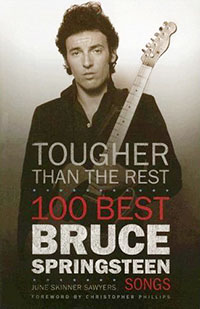
The image “http://www.backstreets.com/Merchant2/graphics/bktougher.jpg” cannot be displayed, because it contains errors.

Tougher Than The Rest
After making all the requisite comments about the Sawyers book (nobody will have the same list, it's tough to get down to just 100 songs, etc.), I was surprised by how easy it was to work chronologically and come up with a Springsteen top 100. Of course, Bruce has helped things out by not writing much of note since The Rising (something one hopes the upcoming band release will show he has remedied).

Using strictly subjective criteria, and working from a list of releases in order of appearance (and not referencing the Sawyers list), I didn't have to leave out a single song I felt strongly about. (Detroit Medley, Jersey Girl, and Raise Your Hand were omitted because they were not Springsteen original compositions. Trapped was included because the Jimmy Cliff version was so radically altered.)

The 100 Best Bruce Springsteen Songs
(Chronological in order of official release date
on a Springsteen only album or compilation.)

http://badlands.com.sapo.pt/pics/disco/greetings_xl.jpg
http://static.rateyourmusic.com/album_images/3585.jpg
  • SPIRIT IN THE NIGHT
  • IT'S HARD TO BE A SAINT IN THE CITY
The image “http://images-eu.amazon.com/images/P/B00008Z5G7.02.LZZZZZZZ.jpg” cannot be displayed, because it contains errors.
The image “http://static.rateyourmusic.com/album_images/5686.jpg” cannot be displayed, because it contains errors.
  • THE E STREET SHUFFLE
  • 4TH OF JULY, ASBURY PARK (SANDY)
  • KITTY'S BACK
  • INCIDENT ON 57TH STREET
  • ROSALITA (COME OUT TONIGHT)
http://www.audiocy.com/applications/CatalogManager/images/Springsteen_Bornto_web1.jpg
  • THUNDER ROAD
  • TENTH AVENUE FREEZE-OUT
  • BACKSTREETS
  • BORN TO RUN
  • SHE'S THE ONE
  • MEETING ACROSS THE RIVER
  • JUNGLELAND
The image “http://images-eu.amazon.com/images/P/B00008Z5G8.02.LZZZZZZZ.jpg” cannot be displayed, because it contains errors.
  • BADLANDS
  • ADAM RAISED A CAIN
  • SOMETHING IN THE NIGHT
  • CANDY'S ROOM
  • RACING IN THE STREET
  • BADLANDS
  • THE PROMISED LAND
  • PROVE IT ALL NIGHT
  • DARKNESS ON THE EDGE OF TOWN
The image “http://www.vinylzart.com/images/AlbumCovers-BruceSpringsteen-TheRiver(1980).jpg” cannot be displayed, because it contains errors.
  • THE TIES THAT BIND
  • SHERRY DARLING
  • JACKSON CAGE
  • INDEPENDENCE DAY
  • HUNGRY HEART
  • OUT IN THE STREET
  • THE RIVER
  • POINT BLANK
  • CADILLAC RANCH
  • FADE AWAY
  • STOLEN CAR
  • RAMROD
  • THE PRICE YOU PAY
http://cocosuodo.magicrpm.com/images/mn/1146643885.jpg
  • ATLANTIC CITY
  • JOHNNY 99
  • STATE TROOPER
  • OPEN ALL NIGHT
http://vinylzart.com/images/AlbumCovers-BruceSpringsteen-BornintheU.S.A.(1984).jpg
  • BORN IN THE USA
  • COVER ME
  • DOWNBOUND TRAIN
  • NO SURRENDER
  • BOBBY JEAN
  • I'M GOIN' DOWN
  • DANCING IN THE DARK
http://www.hebig.org/blogs/archives/main/bosslive.gif
  • FIRE
  • BECAUSE THE NIGHT
The image “http://static.rateyourmusic.com/album_images/s3828.jpg” cannot be displayed, because it contains errors.
  • TOUGHER THAN THE REST
  • ALL THAT HEAVEN WILL ALLOW
  • WALK LIKE A MAN
  • TUNNEL OF LOVE
  • BRILLIANT DISGUISE
  • ONE STEP UP
The image “http://www.kkbox.com.tw/funky/album/57509.jpg” cannot be displayed, because it contains errors.
  • HUMAN TOUCH
  • ROLL OF THE DICE
  • I WISH I WERE BLIND
http://images.barnesandnoble.com/images/11150000/11156483.jpg
  • BETTER DAYS
  • LUCKY TOWN
  • IF I SHOULD FALL BEHIND
  • LIVING PROOF
  • SOULS OF THE DEPARTED
  • MY BEAUTIFUL REWARD
The image “http://images.barnesandnoble.com/images/11400000/11403221.jpg” cannot be displayed, because it contains errors.
  • STREETS OF PHILADELPHIA
  • SECRET GARDEN
  • MURDER INCORPORATED
The image “http://s.yottamusic.com/i/aa8c.ese0/375x375” cannot be displayed, because it contains errors.
  • THE GHOST OF TOM JOAD
  • HIGHWAY 29
  • YOUNGSTOWN
  • DRY LIGHTNING
  • ACROSS THE BORDER
http://www.rockguiden.se/Bilder/brucebox.jpg
  • ZERO AND BLIND TERRY
  • LINDA LET ME BE THE ONE
  • THUNDERCRACK
  • RENDEZVOUS
  • HEARTS OF STONE
  • LOOSE ENDS
  • TAKE 'EM AS THEY COME
  • SHUT OUT THE LIGHT
  • MY LOVE WILL NOT LET YOU DOWN
  • STAND ON IT
  • PINK CADILLAC
  • JANEY DON'T YOU LOSE HEART
  • SAD EYES
  • BACK IN YOUR ARMS
The image “http://s.yottamusic.com/i/aa8a.3nzA/375x375” cannot be displayed, because it contains errors.
  • THE FEVER
  • THE PROMISE
http://images.amazon.com/images/P/B00005AFVR.01.LZZZZZZZ.jpg
  • LAND OF HOPE AND DREAMS
The image “http://images.amazon.com/images/P/B000069HKH.01.LZZZZZZZ.jpg” cannot be displayed, because it contains errors.
  • LONESOME DAY
  • NOTHING MAN
  • COUNTIN' ON A MIRACLE
  • FURTHER ON (UP THE ROAD)
  • MARY'S PLACE
  • YOU'RE MISSING
  • THE RISING
  • MY CITY OF RUINS
http://s.yottamusic.com/i/byT8.3hXL/375x375
  • TRAPPED [live 06 Aug 1984]
The image “http://z.about.com/d/classicrock/1/0/H/9/springsteen_dust.jpg” cannot be displayed, because it contains errors.
  • DEVILS AND DUST
  • JESUS WAS AN ONLY SON