Saturday, November 03, 2007

http://a.abcnews.com/images/US/abc_newark_students_070806_ms.jpg
Dashon Harvey, 20, (top left), Iofemi Hightower (top right) and 19-year-old
Terrance Aeriel (bottom right) all were murdered in an execution-style
shooting behind a Newark school. Nineteen-year-old Natasha Aeriel (bottom left)
was the only victim who survived. She helped police identify suspects. (ABC)

A brilliant piece. If anyone deserves reprinting, it's Steyn.
What about sanctuary for us, from them?

By MARK STEYN
Note: Mark Steyn is not writing this week.
This column originally ran Aug. 19, 2007,
in The Orange County Register.


At the funeral of Iofemi Hightower, her classmate Mecca Ali wore a T-shirt with the slogan: "Tell Me Why They Had To Die."

"They" are Miss Hightower, Dashon Harvey and Terrance Aeriel, three young citizens of Newark, New Jersey, lined up against a schoolyard wall, forced to kneel and then shot in the head.

Miss Ali poses an interesting question. No one can say why they "had" to die, but it ought to be possible to advance theories as to what factors make violent death in Newark a more-likely proposition than it should be. That's usually what happens when lurid cases make national headlines: When Matthew Shepard was beaten and hung on a fence in Wyoming, Frank Rich wrote in the New York Times that it was merely the latest stage in a "war" against homosexuals loosed by the forces of intolerance. Mr. Shepard's murder was dramatized in plays and movies and innumerable songs by Melissa Etheridge, Elton John, Peter, Paul and Mary, etc. The fact that this vile crucifixion was a grisly one-off and that American gays have never been less at risk from getting bashed did not deter pundits and politicians and lobby groups galore from arguing that this freak case demonstrated the need for special legislation.

By contrast, there's been a succession of prominent stories with one common feature that the very same pundits, politicians and lobby groups have a curious reluctance to go anywhere near. In a New York Times report headlined "Sorrow And Anger As Newark Buries Slain Youth", the limpidly tasteful Times prose prioritized "sorrow" over "anger," and offered only the following reference to the perpetrators: "The authorities have said robbery appeared to be the motive. Three suspects – two 15-year-olds and a 28-year-old construction worker from Peru – have been arrested."

So, this Peruvian guy was here on a green card? Or did he apply for a temporary construction-work visa from the U.S. Embassy in Lima?

Not exactly. Jose Carranza is an "undocumented" immigrant. His criminal career did not begin with the triple murder he's alleged to have committed, nor with the barroom assault from earlier this year, nor with the 31 counts of aggravated sexual assault relating to the rape of a 5-year-old child, for which Mr. Carranza had been released on bail. (His $50,000 bail on the assault charge and $150,000 bail on the child-rape charges have now been revoked.) No, Mr. Carranza's criminal career in the United States began when he decided to live in this country unlawfully.

Jose Carranza isn't exactly a member of an exclusive club. Violent crime committed by fine upstanding members of the Undocumented-American community is now a routine feature of American life. But who cares? In 2002, as the "Washington Sniper" piled up his body count, "experts" lined up to tell the media that he was most likely an "angry white male," a "macho hunter" or an "icy loner." When the icy loner turned out to be a black Muslim named Muhammad accompanied by an illegal immigrant from Jamaica, the only angry white males around were the lads in America's newsrooms who were noticeably reluctant to abandon their thesis: Early editions of the New York Times speculated that Muhammad and John Lee Malvo were being sought for "possible ties to 'skinhead militia' groups," which seemed a somewhat improbable alliance given the size of Mr. Muhammad's hair in the only available mug shot. As for his illegal sidekick, Malvo was detained and released by the INS in breach of their own procedures.

America has a high murder rate: Murdering people is definitely one of the jobs Americans can do. But that's what ties young Malvo to Jose Carranza: He's just another killer let loose in this country to kill Americans by the bureaucracy's boundless sensitivity toward the "undocumented." Will the Newark murders change anything? Will there be an Ioefemi Hightower Act of Congress like the Matthew Shepard Act passed by the House of Representatives? No. Three thousand people died Sept. 11, 2001, in an act of murder facilitated by the illegal-immigration support structures in this country, and, if that didn't rouse Americans to action, another trio of victims seems unlikely to tip the scales. As Michelle Malkin documented in her book "Invasion," four of the killers boarded the plane with photo ID obtained through the "undocumented worker" network at the 7-Eleven in Falls Church, Va. That's to say, officialdom's tolerance of the illegal immigration shadow-state enabled 9/11. And what did we do? Not only did we not shut it down, we enshrined the shadow-state's charade as part of the new tough post-slaughter security procedures.

Go take a flight from Newark Airport. The TSA guy will ask for your driver's license, glance at the name and picture, and hand it back to you. Feel safer? The terrorists could pass that test, and the morning of 9/11 they did: 19 foreign "visitors" had, between them, 63 valid U.S. driver's licenses. Did government agencies then make it harder to obtain lawful photo ID? No. Since 9/11, the likes of Maryland and New Mexico have joined those states that issue legal driver's licenses to illegal immigrants.

Newark is the logical end point of these policies. It is a failed city: 60 percent of its children are being raised in households without fathers. Into that vacuum pour all kinds of alternative authority structures: Mr. Carranza is alleged to have committed his crime with various teenage members of MS-13, a gang with origins in El Salvador's civil war of the 1980s that now operates in some 30 U.S. states. In its toughest redoubts, immigrants don't assimilate with America, America assimilates to the immigrants, and a Fairfax, Va., teenager finds himself getting hacked at by machete wielders.

One could, I suppose, regard this as one of those unforeseen incremental consequences that happens in the darkest shadows of society. But that doesn't extend to Newark's official status as an illegal-immigrant "sanctuary city." Like Los Angeles, New York and untold others, Newark has formally erased the distinction between U.S. citizens and the armies of the undocumented. This is the active collusion by multiple cities and states in the subversion of U.S. sovereignty. In Newark, N.J., it means an illegal-immigrant child rapist is free to murder on a Saturday night. In Somerville, Mass., it means two deaf girls are raped by MS-13 members. And in Falls Church, Va., it means Saudi Wahhabists figuring out that, if the "sanctuary nation" (in Michelle Malkin's phrases) offers such rich pickings to imported killers and imported gangs, why not to jihadists?

"Tell Me Why They Had To Die"? Hard to answer. But tell me why, no matter how many Jose Carranzas it spawns, the nationwide undocumented-immigration protection program erected by this country's political class remains untouchable and ever-expanding.

©MARK STEYN

Friday, November 02, 2007

From New York magazine:
Lords of Dopetown
Frank Lucas and Nicky Barnes once ruled the drug trade in Harlem.
They came out of retirement to talk business.


* By Mark Jacobson
* Published Oct 25, 2007


The New York Times
Redux; PR Newsfoto/BET Networks/Newscom)

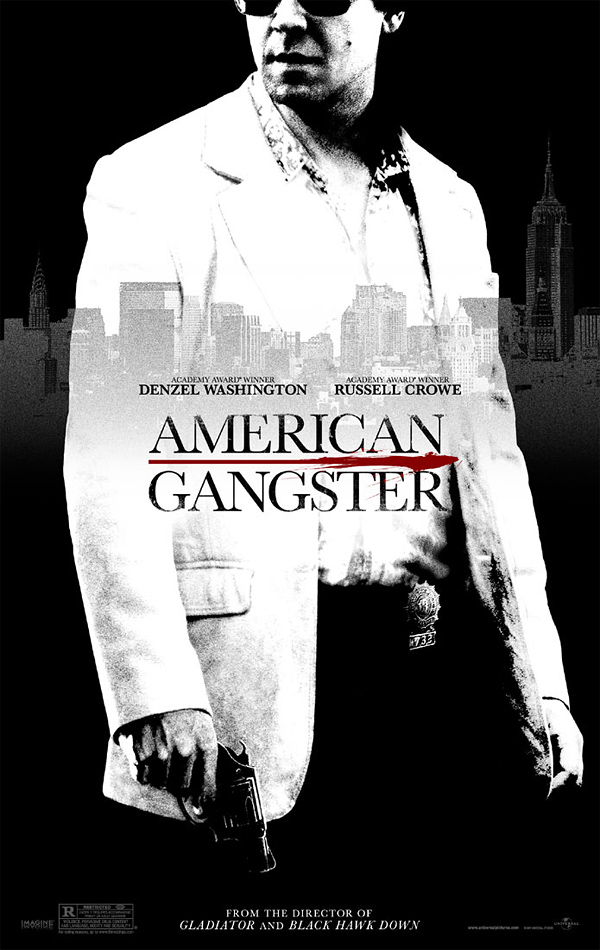
During the Harlem heroin plague of the seventies, few dealers were bigger than Frank Lucas and Leroy “Nicky” Barnes. Both made millions selling dope, lived the wide-brimmed-hat high life, enabled the addiction of whole neighborhoods, and, eventually, got caught. Both were locked up and later cooperated with authorities—some might call it snitching. Now, with Lucas confined to a wheelchair and Barnes in some Witness Protection Program locale, each is the subject of a current film. Barnes reports on his life and times in the flava-full documentary Mr. Untouchable. Lucas hit the ultimate Hollywood jackpot, getting Denzel Washington, no less, to play him in American Gangster (reviewed this week in “The Culture Pages”).

And so, three decades after their heyday, these former street titans are still generating commerce. This makes sense, as both insist they were businessmen, first and foremost. The trick for an ambitious black man in the seventies dope game was to minimize the sway of the Italian distributors who had controlled the Harlem scene for decades. Using sheer volume as an edge, Barnes cut increasingly favorable deals with his Mafia partners. He had the biggest clientele—hundreds of thousands of repeat (and repeat) buyers. It was a captive market, and he was their low-cost retailer. Lucas, more of a boutique operator, managed to bypass the Italians altogether by establishing the grisly but exceedingly lucrative “cadaver connection”—a direct line from Asia’s “Golden Triangle” poppy growers straight to 116th Street, smuggling heroin inside the coffins of American soldiers killed in the Vietnam War.

When the possibility emerged that these two old-school street rivals might be willing to engage in what could only be called a historic conversation—they haven’t spoken in 30 years—it was easy to envision yelling, phone slamming, and maybe even a death threat or two. Lucas, as I knew well (from writing in this magazine the original piece upon which American Gangster is based), could go off at any moment. And Barnes, who likes to quote Moby-Dick and King Lear, mocks Lucas’s “country boy” lack of education and perceived lack of finesse in Mr. Untouchable. When it came down to it, however, the two old drug-kingpins-in-winter revealed a familiarity that bordered on a kind of love. Or at least respect for a fellow tycoon.

NICKY BARNES: Hey, hey, what’s up, playa?

FRANK LUCAS: Hey, Nick.

NB: I heard you’re in a wheelchair. What’s going on?

FL: Broke a leg, Nick. Two places.

NB: Damn.

FL: So what’s with you, man?

NB: Chilling, dude.

MARK JACOBSON: You two guys talking is something of an occasion. Ever think you’d be in the history books?

NB: I don’t know about history—

FL: Hey, Nick! I told everybody and their momma you’ll be hooking up with me in Harlem in the next two years.

NB: You won’t see me in Harlem … I gave up 109 federal felony offenses ’cause I had powder in Brooklyn and the Bronx. Too many people would be gunning for me in New York.

FL: Come on, Nick, you don’t give a damn about them little kamikazes out in the street. I been knowing you for fortysomething years.

MJ: Do you remember when you guys first met?

FL: When was it, Nick? The night you come outta jail. Was that 1970, ’69, ’68?

NB: Yeah, ’70. We met through Jimmy Terrell. Remember Jimmy Terrell? Remember Goldfinger?

FL: ’Course I remember the Goldfinger.

NB: We were in Smalls, drinking. You remember this dude Prat that had that habitual stool right next to—

FL: Yeah, Prat! He didn’t live long after that, did he?

NB: Somebody knocked him over. He owed somebody some money or something.

FL: Right. He was going at somebody’s woman…

MJ: You guys have been described as being competitors. Is that true?

FL: Well, Nick wasn’t gonna catch me—I was paying $4,000 a key. Nick, you was probably paying $65,000 or $70,000, weren’t you?

NB: During that time I was paying $35,000.

FL: And I was paying $4,000. So there was no fight then.¹

MJ: Which one of you guys had the best dope?

FL: Mark, here you go! Stirring shit up. Man, I had the best dope in the world. I had 98 to 100 percent pure.

NB: Frank had a nice package, no doubt. I had to get a pen and a pad and mediate my stuff. But when you took the mix out, my thing was close to his. Close enough for somebody not to wait on one when they could get the other. Frank, you were mostly on 116th Street, right?

FL: Yeah.

NB: Well, I had powder in all five boroughs. Not just uptown.

FL: You were big, Nick, all over.


MJ: Suppose each one of you got a pound. Frank Lucas’s business model against Nicky Barnes’s business model—head-to-head, who’s going to make the most money?

FL: That’s easy. The one who got the best dope, that’s who.

NB: Frank’s right. It is always about the product. Once I had a fight with a guy named Steve Austin. I had better dope. Steve knew it. He came up and knocked on the window of my car. “Yo, dude,” he said, “we don’t want you over here.” I said, “I’m gonna put my foot in your motherfuckin’ ass.” In those days, you didn’t shoot nobody because he was on your turf, you know. You had to have hand-to-hand combat. But the buyers didn’t care, because they followed the powder, not the guys who controlled the neighborhood.

MJ: When the movies come out, there’ll be a lot of controversy about whether you guys are being glorified. What about that?

FL: Nick is a good dude who should be glorified, not me.

MJ: Why do you say that?

FL: Because he’s a hell of a good guy.

MJ: But you were both in the same business.

FL: You in the same business as other writers. You don’t go to slit their throat. Do you?

MJ: Frank. I mean, c’mon.

NB: No one should be elevated because of what they did in the drug business. The way we operated—there was a lot of violence, like, ten to twelve homicides, to keep the whole operation running. You can’t glorify that. It’s not something Frank or I would tell any of our children to get into.

FL: Absolutely right, Nick.

NB: Heroin wreaked a lot of havoc and a lot of pain in the black community. I shouldn’t have done it. Maybe I was aware, but I just didn’t give a fuck. I wanted to make money, and that’s what I did. Looking back, I wouldn’t have made those decisions, but it’s a hell of a lot different and much easier to sanitize yourself after the fact.

FL: In our business, you get paid by fear. When the fear factor comes in, that’s when you start to make money. Violence is part of it. You ain’t gonna sweet-talk no motherfucker.

MJ: Who was more corrupt: the dealers or the cops?

FL: The cops was more corrupt. You shake hands with a drug dealer, you got their word. If they don’t do what they say, they’re gonna die. Everyone knows that.

NB: Yeah, yeah, I go with that.

FL: A drug dealer gonna live to his word. I’m not talking about a junkie. I’m talking about a man like Frank Lucas or Nicky Barnes.

MJ: Rudy Giuliani chased both you guys when he was D.A. What do you think about him running for president?

NB: Giuliani would make a good president because he’s a principled guy.

FL: When Giuliani tells you something, he means it. But I don’t think we’re ready for an Italian president. I don’t think we’re ready for a black president. I don’t think we’re ready for a woman president, but I tell you right now: I think Hillary Clinton will win this thing hands down.

NB: Hillary will be the next president.

FL: No question about it.

MJ: You guys have said some pretty harsh things about each other over the years. Nick, what’s your biggest bitch with Frank?

NB: Well, I read he had this multimillion-dollar contract on my life.

FL: Nick, hold on there! You know me a long time, and you know me well. If I had a contract on you, I’d have been hanged 20 or 30 years ago. You know doggone well that I wouldn’t do that.

NB: This was when they had the grand jury. I was with Matty Madonna and Herbie Sperling. You were on the third floor at the MCC.² Do you remember that, Frank?

FL: Absolutely.

NB: There was a corrections officer who said that Frank Lucas went to one of the other corrections officers and told him that Nicky Barnes was down there, and he was trying to set him up.

FL: You believe that? Nick! Listen to me, and hear me real good: Anybody tells you that, they’re a damn liar. You’ve been too close to me.

NB: Just what I heard.

MJ: Nick, when the New York Times called you “Mister Untouchable,” that even got the president’s attention.³ When you first found out about Carter seeing the paper, what did you think?

NB: I thought I had made a mistake, but it was done then. I still thought that I had a really good chance of winning that case, because there’s a difference between a trial in a federal court and one in a state court.

FL: All the difference in the world.

NB: In federal court, they can railroad your ass, man. In state court, you can get a fair hearing and a fair jury.

MJ: A topic that comes up a lot—it came up at a showing of Nick’s movie, and it will when American Gangster opens—is that you can sell a lot of drugs and kill people—

FL: Stop right there. Nick ain’t ever killed nobody. Me either.

MJ: I know you’re a Gandhi kind of guy, Frank. I’m saying you can do all kinds of crimes, but a lot of people feel if you snitch, that’s worse. What do you guys think about that?

FL: I never in my life, not to this day, testified on nobody. Ain’t no sonofabitch in the world who’s ever gotten put in on account of me. Bad cops, yes. But rat that shit—no, no, no, no, no.

NB: When it comes to testifying, I testified against the guys who were in the Council along with me.4

FL: Like Guy Fisher.

NB: Yeah, Guy Fisher, Frank James, Wally, Coco, Kenny, and you know, a couple of other guys. When I went into the joint, I gave Guy Fisher a woman of mine and told him to look out for her, take care of her. I didn’t expect him to start fucking her.

FL: Guy Fisher’s a punk. What do you expect out of a fucking punk?

NB: I expected him to do what I was askin’ him to do. Not to betray me. Look, he had women of his own who were as attractive as mine.

FL: You had good-looking women, Nick!

NB: I don’t know why he had to bone her, and I don’t know why the other Council members let him live after they knew he did it. That’s why I cooperated. If I couldn’t get out, I could still pull those motherfuckers in with me.

MJ: Any second thoughts, Nick?

NB: No, man. When I realized they left me on the battlefield to die, I said, “Fuck it!” … I said, “I’ll pull those motherfuckers in, let them see what it’s like.” I would rather be out here in the witness program than to be in jail with them. Why would I wanna be in there with them kinda niggers? I don’t regret it. I saw this show on CNN, with Anderson Cooper. Cats were talking about “Don’t snitch, no matter what happens.” Well, I can’t see how a guy can be considered strong if he lets a bunch of assholes walk all over him and he doesn’t respond, just because of some code that a bunch of idiots have cooked up. Anderson Cooper asked this rapper, “Suppose a child was molested and you knew who this molester was. Would you tell the police?” He said, “No.” So that’s what I’m sayin’—the street guidelines are just moron bullshit.

MJ: Frank? Do you think there’s a time when it’s good to cooperate?

FL: I told you before. I never testified on nobody.

MJ: Some cases were made, Frank.

FL: Look! I have remorse about what I did.

NB: Frank, talk a little softer. You’re yelling.

FL: I have remorse. I never sold nothing to a kid in the street, but I found out that my people had. I didn’t want to sell to kids. I didn’t want to make them junkies. I didn’t want to be a part of it. I justify it by saying during my time, I couldn’t get a job on Wall Street, not even washing toilets. I went to school three days and the teacher wasn’t there two of them. I had to make a living. I didn’t want to be just a damn bum in the street. So that’s what I did. But it’s complicated. When you get there, every rat in the goddamned woods is gonna come running to you. And anytime you don’t got no money, everybody disappears. Tell ’em, Nick.

MJ: Most people say you guys hated each other, but it seems like you were buddies. What’s the story?

NB: I’ll tell you what a lot of people don’t understand. See, you read in the paper about people having shooting wars about turf. But both of us operated in that 116th Street area, and it was no problem. If only one of us had had powder out there, every time the police came out, they would have been able to surveil out that one group. But if there’s a lot of people out there …

MJ: Did you ever think there’d be this whole hip-hop thing? You guys are both mentioned in a million rap songs.

FL: Call them songs? When I came along, we had singing. They might make up songs about me, but I don’t have to like them.

MJ: What about you, Nick? You’re like a hip-hop folk hero.

NB: I never thought anything like this would happen. When hip-hop first started, everybody—I mean the music entrepreneurs—predicted that hip-hop would be dead in five years. They said, “Those motherfuckers ain’t gonna make no money.” But hip-hop rolled along, and look what they’re doing now. They got Jay-Z, Damon Dash, Kanye West, 50 Cent. These guys are doing something legitimate.

FL: At least Nick knows the names. I don’t know none of them. I know Puffy Combs, because of his father.

NB: Oh, Melvin! Melvin Combs.

FL: Melvin used to be at my house a couple of times a week. I’m proud to see Melvin’s son like that.

MJ: Nick, are you curious about how you’re portrayed in American Gangster?

NB: Yeah. But when I heard that Cuba Gooding was doing it, I thought it’ll probably be decent. He’s an Academy Award winner.

MJ: What about Denzel as Frank?

NB: I knew if Denzel played the lead, then it wouldn’t be a bullshit part or a fucked-up script.

FL: Denzel Washington did more than a good job, he did a hell of a job. Nobody in the world’s as good as Denzel.

MJ: Man, I thought you guys might be more at odds. This is a love-in.

FL: We are friends, so you’re missing the whole point.

NB: There were a lot of the people who we were both hooked up with who we both like. Jimmy Terrell, for example, and Turtle and Claude, Peter MacDougal, Frank Moten.

NB: What about the guy who died in the mob riot?

FL: Aww, what was his name? Got killed on the George Washington Bridge. What was his fuckin’ name?

NB: I forgot his name, too, but we knew all of these guys. I guess there’s some nostalgia in it.

FL: It was the good old boys back then, that’s what it was.

NB: Frank, are you taking anything for your broken leg?

FL: They gave me a whole bunch of shit.

NB: There’s a Website out there of a guy named Gary Null. He’s an alternative practitioner, and he offers all kinds of vitamin supplements to cure bone injuries. You really ought to go check him out.

FL: Yeah? I’m going to take this down, man.

MJ: The vitamin connect. Hey, what do you want to have on your epitaph? What do you want your legacy to be?

NB: I’ll tell you what I want them to say on mine. I want them to say, “Boy oh boy, he was old. God damn, he was old.”

FL: Fuckin’ old.

1. A “key” is a kilogram of uncut heroin. Lucas brought his prices down by working with Southeast Asian suppliers, while Barnes purchased his keys from Mafia sources.

2. MCC, the Metropolitan Correction Center, held federal prisoners awaiting trial. Matty Madonna and Herbie Sperling were well-known criminals involved in the drug business. Sperling, a man of diminutive stature, was widely known as being “mean as a snake.” Asked about this, Lucas said, “There ain’t no snake that mean.”

3. Barnes posed for the cover of The New York Times Magazine in 1977. When President Carter saw the image, he was said to have personally directed the Feds to crack down.

4. The Council was the name for Barnes’s inner circle.

http://www.celluloidnotes.net/images/american-gangster1.jpghttp://cinemaplus.files.wordpress.com/2007/09/amer-gangster-poster21.jpg
From The Washington Post:
'American Gangster': A Direct Hit

By Stephen Hunter

In "American Gangster," time doesn't fly, it explodes.

The thing is 2 1/2 hours long; it feels like 40 minutes.

Whether it's the next great American crime movie or simply this year's professional stunner will be determined over the next few months. For now, it's enough to say that the story of the rise and fall of an African American drug kingpin is relentlessly told by the English director Ridley Scott ("Gladiator," "Black Hawk Down"); it just keeps on coming.

Starring Denzel Washington as Frank Lucas, a beneath-the-radar Harlem heroin impresario who puts together an astonishing organization before anyone notices, and Russell Crowe as Richie Roberts, the Jersey detective who tracks him, the movie has the aspirations of a crime-and-punishment epic, a superb feel for time and milieu and an almost subliminal feel for myth.

"Is this the end of Rico?" "I ain't so tough." "I'll make him an offer he can't refuse." These iconic lines are from the tradition in which "American Gangster" hopes to find its way. "Either you're somebody or you ain't nobody" seems to be the line it dreams will live forever.

The movie begins by evoking the classic old gangster Bumpy Johnson (dead-eyed Clarence Williams III), the numbers king of Harlem who outlived Dutch Schultz and Lucky Luciano and by the mid-60s was the criminal Yoda of the rough terrain above 125th Street, a bitter old cynic who complained to his driver about the profligacy and the lack of dignity and self-discipline of today's generation of criminals. His driver, just up from North Carolina, was Frank Lucas, and he listened hard and well. When his turn came, he insisted that his organization's minions be low-key, steely-eyed, well-dressed, un-flamboyant. They may have carried .45s but they dressed Brooks Brothers. Frank himself could shoot a competitor in the head, then cross the street and eat breakfast, confident that his sedate coat and tie would shield him from the attention of police investigators who hassled guys with bling around their necks.

Frank had a gimmick. He had a cousin, a well-connected career NCO in Southeast Asia (the war haunts the movie, it should be noted), and via that connection was able to smuggle in pure Chinese-grown smack (Ric Young does a memorable job in brief scenes as an oleaginous Kuomintang generalissimo in the highlands of Thailand). His junk is better and cheaper than anything on the streets and soon enough, by the physics of the market, he controls the streets. The Mafia (repped by Armand Assante dressed in the fashion of Douglas Fairbanks Jr.) has to come to him ! And who opposes him? Hardly the New York Police Department, portrayed as so totally corrupt that the cops are only too eager to keep the drugs flowing as a way to subsidize summer homes in Florida, which dovetails neatly with other period films like "Serpico" and "Prince of the City."

Only one man rises to the challenge. That is Crowe's Richie, complete with Popeye Doyle's scrubby wardrobe and a Jersey accent that sounds like it came from Hoboken out of Perth Amboy. Richie is famously honest, and in Newark he marks himself off from all cops for all time by the simple act of turning in a million bucks he recovered from the back of a mob Cadillac. Big mistake, Richie: No cop in the Newark of the early '60s would work with a guy they knew was tainted by the disease of honesty. So when Richie calls for backup, guess who shows up: nobody. Like Serpico, he goes through the doors alone.

After years of isolation, Richie finally gets a chance to jump to the Feds -- in an early iteration of the Drug Enforcement Administration -- and heads a task force to take down the Harlem heroin lord. But first he has to get a serious enemy out of the way: the New York City Police Department.

Scott, working from a brilliant script by Steven Zaillian ("Schindler's List" among his many other A-list projects), plays the two stories off each other so adroitly that we don't notice that the two antagonists, though defined by the parallel cutting and equal screen time as well as the charisma of the stars, aren't even aware of each other until the movie's second half, and never eyeball each other until the last 20 minutes.

And yet that's not bad, that's good, that's even the heart of the movie's brilliance. Scott gets so much right that it's easy to ignore the singular brilliance of the movie, which is that it gets its star management right. By that I mean Scott and Zaillian are aware of (and dependent upon) the charisma of the stars as they build toward their fated collision. Yet they're also aware that, like so many a gangster movie before, we're secretly in awe of the nominal "bad guy" and that in any case, the rules of movie stardom far outweigh the rules of social morality, at least in the sepulcher of the theater. Thus, while we disapprove of Frank, we don't want to see him destroyed; we want to see him bond with Richie in a way that salvages his soul, destroys a true enemy and send us out on a high note. We want, within the world of chaos, greed and ambition that marks the gangster genre, a happy ending. This is what Scott and Zaillian and Washington and Crowe give us.

Washington is brilliant. He makes sense of a man who could move his mother into a mansion and love the joy on her face, and yet coldly place a Browning 9mm against a competitor's forehead and reply to the question "What are you going to do, Frank, shoot me in front of all these people?" by shooting him in front of all those people. Washington seems to have a secret mechanism by which he turns his face off; it goes from a vibrant, expressive projection of humanity and empathy to a stone-killer executioner's mask so fast it's scary. He makes you fear Frank.

Yet he also makes you love Frank. That's the key to the thing, the charisma of the man who triumphs over the system. And so identified with this theme is "American Gangster" that its other hero, Richie, is also defined as an outsider. The movie seems to be saying: When the inside is so corrupt, you must turn to outsiders.

Does it over-glamorize a man who, after all, sold people drugs for money and their souls, and lived high while they bottomed out in the gutter and were found in the thousands with needle tracks, scabs and hepatitis B in cold Harlem alleyways? In a word: yes.

But that is not its decision alone, it's also ours -- as a society, as a culture, as a civilization we're complicit in the promotion of deviance to heroism. That figure -- the dope dealer, the seller of the Sportin' Life with his powders and his escapes -- has moved from pariah to rock star over the years.

Wishing it weren't so isn't going to make it go away.
A Saga of Corruption, Heroin and Charisma:
Ridley Scott Delivers Socko Entertainment
in American Gangster

by Andrew Sarris

This article was published in the November 5, 2007, edition of The New York Observer.

Sarris-AmericanGangster4H.jpg

Universal Pictures
Amber waves of hair: Russell Crowe goes 70’s in American Gangster.

AMERICAN GANGSTER
Running time 157 minutes
Directed by Ridley Scott
Written by Steve Zaillian
Starring Denzel Washington, Russell Crowe, Cuba Gooding Jr., Ruby Dee

Ridley Scott’s American Gangster, from a screenplay by Steve Zaillian, is based on an 2000 New York magazine article titled “The Return of Superfly,” by Mark Jacobson. The title of the article was derived from one of the last and best manifestations of the short-lived black-controlled-and-directed drug-crime genres, Ron O’Neal’s Superfly (1973), a genre which had been launched only two years earlier by Gordon Park’s Shaft (1971). I say short-lived because black-power advocates of the period denounced the genre out of existence for tarnishing the image of blacks by suggesting that they were implicated in Harlem’s heroin trade. I can still recall being assailed, along with Roger Greenspun of The Times, by black power activist LeRoi Jones for finding delicious humor and hearty drama in black drug dealers. There seems to be no comparable degree of agitation in the 21st century over the screen image of African-Americans. This may be because so many African-American actors, like the stellar Oscar winner Denzel Washington, play both sides of the law for an ever-increasing African-American share of the ever-shrinking number of moviegoers. Besides, the never-ending racial-image game has shifted to the more widely watched television screen.

In any event, the real-life saga of Frank Lucas has taken several years to reach the screen from the time that the film’s eventual executive producer Nicholas Pileggi, who co-wrote the screenplays for Goodfellas (1990) and Casino (1995) with director Martin Scorsese, introduced the legendary crime boss and then ex-con Lucas to journalist Jacobson. Producer Brian Grazer entered the scene by optioning the magazine article, and meeting with Mr. Pileggi and Mr. Lucas for a possible film version of the Harlem legend. The rest is now stop-start-start-stop Hollywood history as screenwriter Steven Zaillian and director Ridley Scott ended up as the final creative combo, with Denzel Washington taking on the role of Lucas and Oscar winner Russell Crowe cast as Richie Roberts, the determined narcotics detective who brings Lucas down—and with him, a small army of corrupt narcotics detectives and Mafia kingpins.

Mr. Washington and Mr. Crowe constitute a richly ironic study in contrasts as, respectively, the well-dressed churchgoing family man, community leader and casually homicidal crime boss Frank Lucas, and the usually unkempt, womanizing failed husband and father, but steadfastly honest narcotics detective, Richie Roberts, who has forfeited the trust of his crooked fellow cops by returning a million-dollar haul from a drug raid up to the evidence room where it belonged. The charisma projected by both Mr. Washington and Mr. Crowe makes American Gangster the most felicitously magnetic dual vehicle of the year. It is also perhaps the most damning account ever of the longest and most disastrous war in our history, the 80-year war on drugs, which has jailed so many of our citizens while, in effect, enriching the criminal gangs around the world and multiplying the menaces of addiction.

Even so, the conjoined stories of Frank Lucas and Richie Roberts and their contemporaries would have been hard to believe if these stories had been purely and completely fictional. To imagine that packets of pure heroin were smuggled into the United States from Vietnam in the false bottoms of coffins containing the bodies of American soldiers killed in a separate futile conflict would strain the credulity of the most heartless shlockmeister.

Yet, this is what apparently happened in real life, with the attendant bribery of Army and Air Force officers and pilots. I always suspected that there was something wrong in the Vietnam War after the troops there reportedly booed Bob Hope on one of his intended morale-boosting visits, but I never realized until now that so much of the Army (as well as so many in the peace movement) were so high on drugs. Or that so many narcotics detectives were on the take from drug dealers like Frank Lucas. Is the situation any better and cleaner today? I don’t expect any movie to tell me if it isn’t anytime soon, as they did before this 1968-1975 scandal hit the screen.

Also hard to believe is that Lucas could put a gun to the head of a rival mobster and shoot him in broad daylight on a crowded sidewalk in Harlem, and walk back at a leisurely pace to the luncheonette table where he had been eating with his gang of brothers, without the slightest concern that any witnesses would come forward to point a finger at him. Could it happen today? Well, there are any number of hip-hop songs with the message “don’t snitch.” And there seems to be a profusion of guns at large just about everywhere. So who knows?

As for the percentage of narcotics detectives on the take today, do we ever know immediately how many people in our capitalist system are taking bribes? Still, I was taken aback by the extent of the corruption in American Gangster. Josh Brolin as Detective Trupo, the most aggressive member of a Manhattan delinquent narcotics squad in protecting his turf for his own profit, adds to his laurels from No Country for Old Men as the most venturesome of the antiheroes arrayed against the superkiller played by potential Oscar winner Javier Bardem. Of course, the odds are still stacked against evil characters, though after Anthony Hopkins’ Hannibal Lecter, who can tell how depraved the Academy has become?

The long-esteemed actress and vibrant force for racial justice, Ruby Dee, now in her feisty 80’s, is alone worth the price of admission as no-nonsense Mama Lucas, who climactically slaps her by now fearsomely vengeful son, and directly diverts him from his utter destruction for killing even crooked cops. Right behind her is the gifted black British actor Chiwetel Ejiofor, as Huey Lucas, Lucas’ main man and younger brother, and Puerto Rican beauty Lymari Nadal as Eva, Lucas’ one and only. Cuba Gooding Jr. as Nicky Barnes, another of Lucas’ drug lord antagonists, and Armand Assante as Lucas’ Mafia partner, do not even begin to round out the huge cast of idiosyncratic performers from many branches of showbiz.

By the very nature of the genre, the males outnumber the females by a ratio of about 10 to 1. Hence, aside from Ms. Dee and Ms. Nadal, the only other actresses with more than walk-ons are Carla Gugino as Roberts’ neglected wife and KaDee Strickland as Roberts’ attorney and sexual conquest. By contrast, the respective members of the Lucas and Roberts entourages involve more than a dozen actors with much more than walk-on parts. Still, in the end it is the combined star firepower of Mr. Washington and Mr. Crowe that drives the two eventually merging sagas to a salutary law-and-order finale.

The bristling cinematography of Harris Savides, the lavish production design by Arthur Max, and the perceptively accurate costume design by Janty Yates have greatly assisted Mr. Scott and Mr. Zaillian in concocting one of the most dramatically explosive gangster movies in years. An added dividend is provided with the score devised by composer Marc Streitenfeld and music supervisor Kathy Nelson, with additional source music written and produced by Hank Shocklee. The trick was to exploit the flip sides of hit records of the late 60’s and early 70’s, thereby approximating the sound of the period without drenching the soundtrack with the familiar strains of golden oldies.

Accordingly, one must applaud American Gangster as the kind of socko entertainment many people thought Hollywood filmmakers had become incapable of. It is not to be missed.

Girardi Introduced as 32nd Yankees Manager

From The New York Times:
Girardi Will Wear Goal on His Back: No. 27

By TYLER KEPNER


The mission statement is summarized in the two numerals that will follow Joe Girardi wherever he goes. The uniform number of the Yankees’ new manager is 27, and the reason is rhetorical.

“How many have they won?” Girardi said, knowing that the answer is 26. Joe Torre finished the last seven seasons of his tenure by chasing a 27th title in vain, and now it is Girardi’s turn.

On the day Torre was officially named as manager of the Los Angeles Dodgers, Girardi was welcomed at Yankee Stadium, where the marquee announced his arrival as the club’s 32nd manager.

The Dodgers chased Girardi before signing Torre, and deep down, the Yankees might have preferred him, too. Although they wanted Torre to accept their one-year contract for a guaranteed $5 million, the Yankees are thrilled to be reunited with Girardi, their former catcher, for three years and $7.8 million.

“There’s a great deal of trust we’ve put in his hands,” said General Manager Brian Cashman, who recommended Girardi over Don Mattingly and Tony Peña. Cashman is entering the final year of his contract, and he needs the 27th championship as much as Girardi.

But spotting a quick fix for a team that now stumbles in October was not why Cashman chose Girardi. Mattingly had more history with ownership, and Peña has more managerial experience. Cashman said he simply believed in Girardi, whom he sees as a vital conduit between the baseball operations department and the clubhouse.

Cashman spoke hopefully of Girardi one day taking part in the Yankees’ instructional league or visiting their academy in the Dominican Republic. Torre, for his part, was so detached that he was usually the only manager in the majors who did not attend the winter meetings.

Yet Torre called Cashman after every game, no matter where the Yankees were playing, and the two had a strong bond. Although they disagreed on some moves last season, especially the use of the bullpen, Cashman usually knew what Torre was thinking before they talked.

“I look forward to having the same kind of relationship with Joe, because that’s what I need,” Cashman said, adding, “I can’t imagine a situation where the G.M. and the manager don’t communicate.”

Actually, Cashman does not have to look far. Girardi was fired by the Florida Marlins after the 2006 season over differences with the front office. Selected by the owner, Jeffrey Loria, Girardi never had the backing of General Manager Larry Beinfest, who criticized his communication skills.

Cashman said things would be different with the Yankees, because Girardi has been a player, a bench coach and a broadcaster for the team.

In his season as the bench coach, Girardi saw how Torre and Cashman interacted.

“I wanted to line up somebody that worked within our structure and understands our structure, because there’s growing pains with every new relationship,” Cashman said.

“So, hopefully, growing pains won’t really exist, because Joe’s worked here.”

Another note of caution is Girardi’s handling of young pitchers. Three rookies from his Florida rotation — Josh Johnson, Ricky Nolasco and Aníbal Sánchez — sustained major arm injuries last season. Cashman was not specific, but he said he was “very comfortable with the knowledge of what went on in Florida.”

Two coaches from Girardi’s Marlins staff — Bobby Meacham, the third-base coach; and Mike Harkey, the bullpen coach — will be with him in New York. Other coaches will be Peña, the Yankees’ first-base coach; Kevin Long, the hitting coach; Dave Eiland, the pitching coach; and Rob Thomson, the bench coach.

It was Cashman, not Girardi, who confirmed the makeup of the staff, pending the completion of contract talks.

Girardi has a reputation for not sharing much information, a sharp contrast to the voluble and folksy Torre.

Yet when the subject turned to his feelings, Girardi was more revealing. Like Torre, he has always exhibited a certain humanity that has made him highly respected wherever he has been.

In his second tour with the Chicago Cubs, in 2002, Girardi made the tearful announcement to the Wrigley Field crowd that there would be no game because of a tragedy. A pitcher on the opposing team, Darryl Kile, had been found dead in his hotel room.

“Joe showed emotion in his sadness for a friend,” said Don Baylor, who was the Cubs’ manager at the time. “If you have a heart, all of your players are pretty much your family.”

Girardi promised to call each of the Yankees players as he gets to know his new baseball family. His actual family includes a father in Chicago who has Alzheimer’s disease.

Girardi said his father had not spoken in a month until his nurse showed him a picture of him as the Yankees’ manager. “Oh, yeah,” Jerry Girardi said.

“This,” his son said yesterday, “means a lot to our family.”

Thursday, November 01, 2007

The image “http://newsimg.bbc.co.uk/media/images/40928000/jpg/_40928196_joe203.jpg” cannot be displayed, because it contains errors.
Watch your back:
Girardi to wear mandate on his uniform


Nov 01, 2007

NEW YORK (AP) -On his first day at Yankee Stadium as New York's manager, Joe Girardi already was watching his back.

When he stepped to the podium and put on his new pinstripes, the number on his jersey was 27. Did it have something to do with World Series titles?

"How many do they have?" he said, knowing the Yankees have been stuck on 26 championships since 2000.

His number will be a constant reminder of his mandate. Still, he wouldn't predict whether his team can win it all next season.

"You don't have all the pieces together, so it's hard to evaluate exactly where we're going to be," he said.

Girardi, who won three World Series titles while catching for the Yankees from 1996-99, talked about how much getting the job meant to him and his father, Jerry.

"I try not to get emotional, but my father hasn't spoke in a month. And when the lady who takes care of my father, he has Alzheimer's, showed him the picture of me as the new Yankee manager, my father said, `Oh yeah,"' he said.

Girardi takes a job held by Hall of Famers Miller Huggins, Joe McCarthy and Casey Stengel. He follows Joe Torre, who quit two weeks ago and on Thursday became manager of the Los Angeles Dodgers.

It didn't take Girardi long to find out what it means to be the Yankees manager.

"I got a call from Yogi last night and you realize the stature of the position when Yogi calls you at your house and says, `Do I still get to come to spring training?"' Girardi said, lowering his voice to mimic that of Hall of Famer Yogi Berra.

Girardi, knowing the Yankees manager is under constant scrutiny, also said he'll change his phone number. Before his news conference, he took a tour of the new Yankee Stadium, under construction across the street and scheduled to open in 2009. He walked by where the clubhouse will be and the path to the dugout.

"Just kind of how your every day would be," he said. "Tremendous time to have this opportunity, to be a part of the history here, and then to be able to be a part of it in the new stadium is really, really unique. As I was walking through it, smelling the new concrete. And the foul poles were up."

He can only hope he makes it to the new ballpark. Owner George Steinbrenner, while receding from the daily operations, can pop up at any time to criticize his manager. One of their bonds is Northwestern - Steinbrenner was an assistant football coach there, and Girardi later was a student.

"I still think the Boss is the Boss. And obviously, I've always enjoyed my time with him, dealing with him. There's times that we've joked about, you know, our Northwestern football vs. Buckeye football and I will continue to enjoy that," Girardi said. "He was very congratulatory. He said: `It's great to have you aboard."'

He had not yet been to his new office, where Torre's belongings had been cleared out and just outside, an oversized 2007 schedule was on the floor. Moving into the office will feel strange "because it's been occupied by a great man," Girardi said.

While he spoke in a restaurant in the bowels of the ballpark, Girardi's name and picture were displayed on the scoreboard behind center field. General manager Brian Cashman presented Girardi's wife, Kim, with a bouquet of roses.

Girardi, who got a $7.8 million, three-year contract, beat out bench coach Don Mattingly and first-base coach Tony Pena for the job. Girardi said he had spoken with Torre, who managed the Yankees to 12 straight postseason appearances.

"Joe had always been a person I always looked up to, respected," Girardi said. "We had a great conversation."

Girardi, who also spent time as a coach and broadcaster for the Yankees, was NL Manager of the Year with the Florida Marlins in 2006, then was fired after he clashed with his bosses. He was vague when pressed on how he will be different from Torre.

"Just give me a chance and you'll find out," he said.

Wednesday, October 31, 2007

Richard Perry/The New York Times
Joe Girardi retired after playing for the Yankees in spring training in 2004.
He returned as the bench coach in 2005.

From The New York Times:
Man in the News
Joe Girardi: Thinking, Always Thinking
By TYLER KEPNER

As a rookie catcher in 1989, Joe Girardi helped guide the Chicago Cubs to the playoffs. His biggest advocate was the Cubs’ colorful manager, Don Zimmer, who sometimes wondered if he was too hard on the 24-year-old engineering graduate from Northwestern.

“One time he had a bruised thumb, and he had that big plastic thing on it so it wouldn’t get bruised more,” Zimmer said from his home in Florida yesterday, after listening with pride to Girardi’s first news conference as the manager of the Yankees.

“He went to reach for a ball with a runner on third, and the ball bounced off his glove and went to the backstop, and I was hot. I mean, he was a young kid, but I got on his rear end and I said, ‘If you want to catch for me the rest of the year, you’ll catch without a plastic guard on that thumb!’

“After I did that, the next day I felt bad, because I really jumped on him, and when you do that to some guys, they melt on you.”

Girardi did not melt. He was highly educated, an avid chess player since age 5, but he was not a stereotypical egghead.

Girardi was tough, right down to the flat-top haircut, and over many years of wearing baseball uniforms — first for the Cubs, then for the Colorado Rockies, then for the Yankees — he became so close with Zimmer that Zimmer said, “He’s almost like a son to me.”

Zimmer quit the Yankees after the 2003 World Series, fed up with second-guessing from the team’s principal owner, George Steinbrenner, and he was not pleased with the way the Yankees handled Joe Torre’s exit.

So Zimmer stayed away from advising Girardi on whether to take the Yankees job, which Girardi accepted yesterday with a three-year, $7.8 million contract. But in Girardi’s first year as manager, for the Florida Marlins in 2006, Zimmer was a confidant.

“We would talk baseball — ‘Would you do this? Would you do that?’ — a little bit of everything,” Zimmer said. “Everything that concerns baseball, we would talk about it. I would tell him what I would do. That doesn’t mean he took everything I told him, but he always asked me questions, and I always gave him answers.”

Players with an intellectual bent can stand out in a baseball clubhouse. Many players have signed contracts out of high school and, understandably, resent condescending teammates. But Girardi, who played until 2003, was less brainy than inquisitive. Teammates saw that as an important distinction.

“Everyone knew he was smart, but he was one of the guys,” the former Yankees reliever Mike Stanton said yesterday. “He didn’t talk down to you. If there was something you didn’t understand, he would explain it. But intelligence doesn’t mean you know everything. Sometimes, it means knowing when to ask a question instead of faking it.”

On the Yankees’ title teams of the 1990s, Stanton said, Girardi was a leader of the best kind: he had an exemplary work ethic but would also challenge pitchers if he noticed their concentration wane. Pitchers always knew that Girardi, a .267 career hitter, put their needs first.

“The way he handled pitchers, I really thought he gave himself up a lot for them,” said Don Baylor, who managed Girardi with the Rockies and the Cubs. “He was a team guy. He put the pitchers before himself.

“I always thought he had the capability to manage if he really wanted to. I told him a couple of times: ‘Keep score here. Look around, because someday, you’re going to be doing this on your own.’ ”

Girardi retired after playing for the Yankees in spring training in 2004. He returned as the bench coach in 2005 and was a regular in the weight room before games; Stanton said he was in even better shape than he was as a player.

As a bench coach, Girardi was meticulous, keeping a binder during games to track tendencies and strategies. He streamlined the information for scouting meetings, making it easy for the catchers to understand the game plan.

When he interviewed for the Marlins’ managing job in October 2005, Girardi studied intensely and quickly won over their owner, Jeffrey Loria. But the Marlins promptly slashed payroll to $15 million after promising Girardi the cuts would not be so extensive, and their relationship was doomed.

Girardi instituted a Yankees-style policy of no facial hair, and he outran many of his players in spring training wind sprints. He coaxed 78 victories out of the team, but his downfall came in August, when he shouted down Loria, who was screaming at the umpire from his box beside the dugout. Girardi was nearly fired then, but Loria waited until the season ended.

“Joe is not returning because it was not a good fit,” General Manager Larry Beinfest said at the time, adding later, “We felt that Joe was not able to integrate himself into the workings of our organization.”

Girardi has never directly returned fire to the Marlins, and he has not discussed the particulars, even with friends. John Flaherty, who caught for the Yankees in 2005 and worked with Girardi for the YES Network, said Girardi was always vague about it.

“I think what really came out of it was that he learned some things about ownership and the front office and the manager all having to get along,” Flaherty said. “But it was very, very vague, nothing specific on what happened.”

After working with Girardi, Flaherty once found himself wondering if there was something wrong with him. Like Girardi, Flaherty is a retired catcher with a young family and enough money to last a lifetime. But unlike Girardi, Flaherty has no desire to be in a dugout anymore.

“With him, or even with a Joe Torre, I think it’s that competitiveness, that desire to compete during a ballgame,” Flaherty said. “You could definitely see it in Girardi. He missed being on the field.”
Wilfredo Lee/Associated Press
Joe Girardi said he was more worried about being himself
than he was about replacing Joe Torre.

From The New York Times:
Girardi Takes First Step Toward a New Legacy

By TYLER KEPNER

All along, it was going to take an extraordinary candidate to make the Yankees say no to Don Mattingly as their next manager. Mattingly is probably the most beloved Yankee of the last 25 years, and his passion and knowledge of the game are unquestioned.

“It was extremely difficult,” General Manager Brian Cashman said yesterday. “It was not a conversation I wanted to have. Donnie is a special individual, a terrific baseball mind.”

Yet when he recommended a successor for Joe Torre, who led the Yankees to 12 consecutive playoff appearances, Cashman turned away from Mattingly. He picked Joe Girardi, and said Girardi’s managerial experience was a factor.

Girardi, who signed a three-year, $7.8 million contract, was the National League manager of the year for the Florida Marlins in 2006. Mattingly has four years of coaching experience, but he has never managed.

“Being a coach is one thing,” Cashman said. “But actually having to make the tough decisions and live with the consequences, whether they work or not, those are all learning tools he has benefited from.”

In replacing Torre, who won four World Series in his first five years, Girardi faces a task that Mattingly, despite wanting the job, had called a “no-win situation.”

As a player, Girardi joined the Yankees in 1996 as the unpopular successor to Mike Stanley, a catcher who hit with more power. Three championship rings later, Girardi had forged his own legacy, and he plans to do so again.

“I can’t be Joe Torre, because I’m made up different,” Girardi said. “I’m a different character. I don’t really worry about how I’m going to replace someone. I’m more worried about being myself and getting the most out of the guys.”

Girardi’s contract will pay him $2.5 million each season, with a $300,000 signing bonus spread over the three years. The deal includes bonuses that could reach $500,000 a year if the Yankees make the World Series.

Tony Peña, the other candidate interviewed last week, will remain with the Yankees as the first-base coach, and the hitting coach Kevin Long is close to signing a three-year, $1 million deal.

Three newcomers are expected to join the staff: Dave Eiland as the pitching coach, Mike Harkey as the bullpen coach, and Bobby Meacham as the third-base coach.

Rob Thomson, a special assignment coach, will inherit Mattingly’s job as the bench coach. The Yankees had offered to let Mattingly stay in that position, but he turned down the job.

“I don’t think it would be fair to anybody who got the job if I were on the coaching staff,” Mattingly said. “Because there’s going to be a stretch of three games and people would start talking, and that’s just not right.”

Mattingly could have a spot on Torre’s staff if the Los Angeles Dodgers hire Torre as their manager. The Dodgers were negotiating with Torre after they and Manager Grady Little cut ties yesterday.

Mattingly did not refer directly to the Dodgers’ opportunity, but he said his departure from the Yankees was liberating, in a way. Mattingly has worked for no other organizations, but he said he still burned to manage and looked forward to challenging himself in another setting.

Yet while Torre left with bitterness, questioning whether he would even want to return to Yankee Stadium, Mattingly said he had no hard feelings.

“Trust me, I’m not going to all of a sudden start rooting for the Red Sox,” Mattingly said. “I’m from Indiana, but I’ve really always believed that I grew up in New York. I consider myself a New Yorker in those terms. That’s how I’ve gotten to this point. I would never look back and say it’s unfortunate.”

Mattingly said it was not true that George Steinbrenner, the Yankees’ principal owner, promised him he would someday be manager when he hired him as the hitting coach for the 2004 season. Mattingly said he would not have wanted to be handed a job without working for it.

“I think I’m ready right now, but somebody doesn’t,” he said. “The Yankees didn’t think that I was the guy for that. So, in a sense, it’s a self-evaluation. You do it as a player. If you’re not getting the job done the way somebody thinks, you look at it honestly. It doesn’t deter me.”

The Yankees put the candidates through an exhaustive process in which they had separate meetings with ownership and with Cashman, who included nine of his staff members in baseball operations.

Cashman said they discussed everything from game strategy and player evaluation to advance scouting and dealing with the news media. Girardi, the Yankees’ bench coach in 2005 and a YES Network broadcaster last season, was extremely well prepared and impressed Cashman.

“He’s been a world champion player, he’s played in this environment, he’s been a coach, he’s been a major league manager, he’s meticulous in his approach,” Cashman said. “I know about him from his playing days to his coaching days, and we followed his career down in Florida. He likes to compete all the time. It’s not just what happens at the first pitch. It’s team first, individual second. We dissected game strategy; we believe he’s mentally tough. Ultimately, a lot of things came up right to help me gravitate to Joe Girardi.”

Hank Steinbrenner, who is running the Yankees with his brother, Hal, was on the conference call with reporters and said he was “in complete agreement with Brian” on Girardi. Hank Steinbrenner has asked that fans be patient with the new manager, but he has also said that he agrees with his father in that only a championship can be considered a success for the Yankees.

“I understand the expectations, and I think that’s the advantage of being a player in New York,” Girardi said. “You understand what’s expected, and I expect it as well.” Then Girardi added the sentence that the Steinbrenner family probably most wanted to hear: “I expect to be playing in the Fall Classic next October.”

From The New York Times:
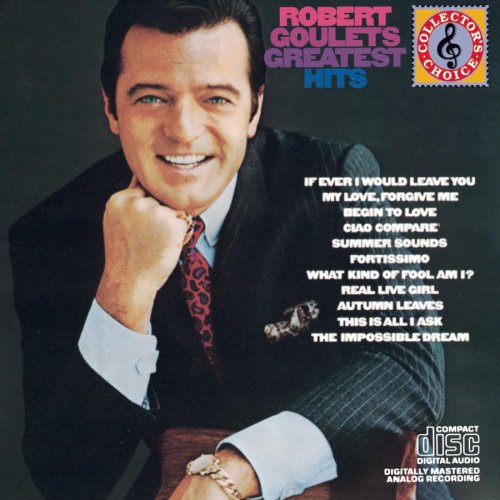
Robert Goulet, Actor, Dies at 73

By DOUGLAS MARTIN

Robert Goulet, who marshaled his dark good looks and thundering baritone voice to play a dashing Lancelot in the original “Camelot” in 1960, then went on to a wide-ranging career as a singer and actor, winning a Tony, a Grammy and an Emmy, died today. He was 73.

The singer died in a Los Angeles hospital while awaiting a lung transplant, a Goulet spokesman said in an e-mail, according to the Associated Press.

In September, Mr. Goulet received a diagnosis of interstitial pulmonary fibrosis, a rapidly progressive, potentially fatal condition, his wife, Vera, said in a statement released on Oct. 25 on Mr. Goulet’s website. On Oct. 13, he was transferred from a hospital in Las Vegas, where he lived, to Cedars-Sinai Medical Center in Los Angeles to await the transplant.

After the “Camelot” triumph, Mr. Goulet was called the next great matinee idol. Judy Garland described him as a living 8-by-10 glossy. He was swamped with offers to do movies, television shows and nightclub engagements. Few articles failed to mention his bedroom blue eyes, and many female fans tossed him room keys during performances. His hit song from the show, “If Ever I Would Leave You,” remains a romantic standard.

“Something in his voice evokes old times and romance,” Alex Witchel wrote in the New York Times Magazine in 1993. “He makes you remember corsages.”

Still, Mr. Goulet left a sense that he might have even been more than he was. For a suave musical theater performer, he arrived late, just after Elvis and just before the Beatles. In 1961, The New York Daily News Magazine called him “just the man to help stamp out rock ’n’ roll.” But it was an impossible assignment.

Moreover, the public had begun to lose its appetite for over-the-top entertainment deities. “We’re no longer something that’s on the dark side of the moon — unattainable,” Mr. Goulet told The Saturday Evening Post in 1963.

So Mr. Goulet did not become a hit-record machine, a perennial on Broadway, a major movie star or, by his own evaluation, a finely accomplished actor. But his more than 60 albums, travels with touring theatrical revivals and many Las Vegas gigs were enough to ensure nearly a half-century of popularity.

In 1982, he was named Las Vegas entertainer of the year. In an article this year, The Las Vegas Review-Journal said he had prized a picture showing the day his name appeared on the marquees of two showplaces: he had just played the Desert Inn and was starting at the Frontier.

“My manager kept me working in those places because he was getting half my money,” Mr. Goulet said in an interview with The Hartford Courant in 2002, “and the money was coming in.”

His Las Vegas success led to roles parodying himself as the consummate lounge singer, a part he played in the movie “Atlantic City” (1980). He was the voice for a character much like himself in a “Simpsons” episode, and he portrayed Robert Goulet in ESPN commercial spots that won a sports Emmy for best promotional shorts in 1996.

“The two sweetest words in the English language after chorus girl — college hoops,” Mr. Goulet said in one ad.

Mr. Goulet’s rise after “Camelot” was swift. In 1962, he won a Grammy award as best new artist for his first two albums, “Always You” and “Two of Us,” and his hit single “What Kind of Fool Am I.” Two years later, his album “My Love Forgive Me” went gold; 17 of his albums between 1962 and 1970 made the charts.

He reached the peak of his popularity in the ’60s. In 1966, he starred in a television adaptation of “Brigadoon,” which won an Emmy as outstanding musical production. He won a Tony for his performance in the 1968 Broadway musical “The Happy Time.” And he appeared frequently on popular television programs like “The Ed Sullivan Show.”

Robert Gerard Goulet was born on Nov. 26, 1933, in Lawrence, Mass. He often spoke of his father, Joseph, a textile-mill guard and fine amateur singer of French-Canadian extraction, who died when Robert was in his mid-teens. Joseph was so moved by Robert’s singing during a church performance that he said (on his deathbed in some versions), “God gave you a voice, and you must sing.”

The family moved to Edmonton, Alberta, after Joseph’s death. Robert took singing lessons, dropped out of high school in his senior year and made his first professional appearance around the age of 16. He took a job as a disk jockey in Edmonton. He next studied opera at the Royal Conservatory of Music in Toronto on a scholarship.

He looked for entertainment work in New York, but ended up selling stationery at Gimbels department store. He returned to Toronto, where he won theatrical parts and was soon cast in the Canadian Broadcasting Corporation’s television production of “Little Women.” He later starred for three years on “Showtime,” a leading television variety program.

Fan clubs formed for the young man they called “Canada’s first matinee idol,” a title Mr. Goulet disliked. Soon a theatrical agent recommended him to Alan Jay Lerner, the librettist, and Frederick Loewe, the composer, for their new musical, “Camelot.”

His audition, in September 1960, went so well that everyone applauded, a rarity, Mr. Goulet recalled in an interview with Music Educators Journal in 1998.

Mr. Loewe asked him, “Parlez-vous francais?”

Mr. Goulet answered, “Oui, certainement.” (Lancelot was French.)

His agent described the deal he had just negotiated: Mr. Goulet would start at $ 750 a week. Mr. Goulet piped up that he would do it for nothing. “Shut up!” the agent snapped.

The show’s tryout in Toronto drew good notices. Variety called Mr. Goulet the “perfect Lancelot.” Broadway critics, too, praised Mr. Goulet, though most were at best lukewarm about the show, which also starred Julie Andrews and Richard Burton. But the public loved it. It ran for 873 performances, closing in January 1963. The cast album, featuring “If Ever I Would Leave You,” topped the charts.

Mr. Goulet’s first marriage, to Louise Longmore, ended in divorce in March 1963. That November, he married the singer and actress Carol Lawrence. The couple were called a real-life Ken and Barbie, but they divorced in 1981 and an acrimonious tell-all book by Ms. Lawrence followed.

Besides his wife, Vera Novak, Mr. Goulet is survived by a daughter, Nicolette, from his first marriage; his sons Christopher and Michael from his second, and two grandchildren.

In the 1990s and beyond, Mr. Goulet continued to sing and act. He also took on novel assignments; in one, he provided the singing voice for Wheezy the Penguin in “Toy Story 2” (1999); in another, he played a mischievous office prankster in a commercial for Emerald Nuts, shown during this year’s Super Bowl.

He spoke widely about his recovery from prostate cancer to encourage men to be tested for the disease. But even with health problems, he could laugh at his own expense. When he had surgery on a split femur in the mid-1990s, he asked the surgeon if he would be able to dance afterward. The doctor said yes.

“That’s good,” Mr. Goulet said, “because I couldn’t dance before.”

Tuesday, October 30, 2007

The image “http://upload.wikimedia.org/wikipedia/en/4/46/EaglesLongRoadOutOfEden.jpg” cannot be displayed, because it contains errors.

The Eagles
Long Road Out of Eden
David Fricke

RS: 3.5 of 5 Stars
User Rating:
4of 5 Stars

"Long Road Out of Eden," the ten-minute centerpiece of this two-CD, twenty-song album, epitomizes everything that is familiar, surprising, overstretched and, in many ways, right about the entire set. The song echoes the title hit of 1976's Hotel California, the Eagles' defining monument to mirage, money and no escape. But this time the desert is overseas and oil is the new champagne. When drummer Don Henley sings, "Now we're driving dazed and drunk" in a grainy, plaintive voice, it is an entire nation at the wheel, "bloated with entitlement, loaded on propaganda."

That is brassy censure from a band that, in the Seventies, embodied Hollywood vainglory, shining its klieg-light guitars and vocals on the low roads through high living with an often wicked insight that only comes from knowing each mile intimately. But there is a potent restraint to "Long Road Out of Eden," in the bleak, hollow mix of acoustic guitar and electric piano in the verses and the overcast sigh of the harmonies. There is empathy, too, for the soldier on night patrol, with dirty work to do and everything to lose. "I'm not counting on tomorrow/And I can't tell wrong from right," Henley sings. "But I'd give anything to be there in your arms tonight." That's not self-interest -- just the purest need.

The resemblance in title between this album and the Eagles' last studio record, 1979's The Long Run, is no coincidence. Henley and singer-guitarist Glenn Frey, the band's surviving founders, have always written and sung about asphalt and distance —: getting as far from responsibility as possible, crawling home, bruised and maybe wiser, when the fun runs out. And making Long Road Out of Eden was a protracted haul in itself. Henley, Frey, guitarist Joe Walsh and singer-bassist Timothy B. Schmit reportedly worked on the album for six years, and the Topanga-country gallop "How Long" goes back much further. Written by veteran compadre J.D. Souther, it is a previously unrecorded relic of the group's early-Seventies live sets.

But the Eagles' original studio albums were all models of clenched-gleam detail, and Long Road suffers from sprawl. "Center of the Universe" makes the most of its bare bones -- the circular-staircase effect of the guitars -- and "Waiting in the Weeds" lets the lyrics carry the impatience ("I heard some wise man say that every dog will have his day/He never mentioned that these dog days get so long"). But Schmit's sweetly sung spotlights are Eighties-ballad sugar. Walsh's "Last Good Time in Town" is a wry cantina-swing sequel to "Life in the Fast Lane" -- staying home apparently is the new going out -- and he cuts through the salsa-lounge grooming with James Gang-era guitar. Seven minutes, though, is a long time to sing about doing fuck-all.

Henley and Frey still find easy pickings in bad behavior. In "Fast Company," Frey affects a Prince-like falsetto over a chilled-funk stroll, playing an old-timer who can't even remember the action he used to get. "Busy Being Fabulous" is classic Eagles saloon-band shine about an errant filly, except this one is a mom who can't tell the difference between raising kids and being one. And Henley may be having a grim laugh at the Eagles' own expense in the materialist rant "Business as Usual": "A barrel of monkeys, a band of renown/But business as usual is breakin' me down."

Nothing, of course, is business as usual in the music industry, and the Eagles, now running their own label, have chosen Wal-Mart as the album's exclusive retailer. There is an inevitable contradiction in buying a record that attacks corporate greed and blind consumerism in songs like "Do Something" and "Frail Grasp of the Big Picture" from a superchain with a bleak record on employee rights and health care. But Long Road Out of Eden is available direct at Eaglesband.com for $11.88, a bargain even with the misfires -- and worth it for the title song alone.

DAVID FRICKE

(Posted: Nov 1, 2007)

The Eagles
Lawrence K. Ho / Los Angeles Times
The Eagles' latest double album provides everything fans want, and all that detractors scorn.

Eagles take smooth ride on rough road
The sprawling double album, peppered with righteous indignation and regret,
offers everything fans want.
By Ann Powers
Los Angeles Times


October 30, 2007

The Eagles, "The Long Road Out of Eden" (ERC)

* * * (three stars)

At a party this weekend on the edge of Santa Monica, one Gen X-er corralling his kids in the backyard said to another, "I've hated the Eagles all my life." Elsewhere in the city, pals just a few years older were probably clinking their mimosa glasses in celebration of the band's first studio album in 28 years.

It's hard to imagine a band more divisive than this: loved by a huge chunk of its own generation for epitomizing the contradictions of the middle-class baby boomer life, detested by as many younger people (and some peevish peers) for the very same thing. "The Long Road Out of Eden" will do nothing to heal this divide.

Sprawling, but pristinely produced, animated by righteous indignation and regret, this double album offers everything fans want and detractors scorn. The sound is Lexus-level luxurious -- beyond the four remaining principals, 12 musicians thicken the atmosphere, adding horns, pedal steel, two percussionists to aid drummer Don Henley, and more.

Those famous harmonies swell to choir-like proportions on the opening track, "No More Walks in the Wood," and when a twangy guitar kicks on the resurrected J.D. Souther rambler "How Long," the effect is bionic -- the old Eagles, even sleeker.

So "Eden" proceeds, eventually overindulging. A couple of country-soul swooners feature Timothy B. Schmit's melty tenor; a couple of stompers play on Joe Walsh's image as the Wacky One. Mostly, though, Henley and Glenn Frey stand up front, still sounding like long-lost brothers as they trade gruff vocal lines and ponder 40 years of baby boomer dominance.

Twenty songs stretched over two discs, with the title jeremiad clocking in at 10-minutes-plus, means that the most irritating and attractive aspects of the band are in full flower. Henley's moralistic rants address not just the war in Iraq but ungrateful trophy wives, clear-cut forests, the death of journalism and high-cholesterol diets. If his social critiques were all this album offered, it would be as fun as a lecture from Dad.

But those harmonies always return, adding honey to the vitriol. The country-rock rhythms choogle along, leaving witty little guitar licks in their wake. Ballads such as "It's Your World Now," written by Frey and longtime Eagles collaborator Jack Tempchin, express the other side of baby boomer entitlement: subtle self-doubt and quiet fatalism.

This is the ocean-sunset side of the Eagles, the sound of privileged guys relaxing within life's often crazy flow. It's what makes "Long Road" and every other Eagles release undeniably pleasurable.

Even Henley's chronic torment is subsumed by the band's effortless professionalism and self-satisfaction, which subdues his efforts at protest more effectively than any deal with Wal-Mart could, and will again repulse those who seek conflict and tension in their guitar-driven rock. But a smooth ride through rough terrain is what many midlifers crave, and they'll be very happy that the Eagles are back to carry them through.

ann.powers@latimes.com
http://www.daybydaycartoon.com/072807.jpg
War, like life, is not a movie
MARK STEYN

As far as I know, the movie "Deliverance" has been featured in political discourse just the once. Back in 1996, Pat Buchanan, hot from his triumph over Bob Dole in the New Hampshire primary, warned the country-club Republicans that he was coming to get them "like a character out of Deliverance." In the film, you'll recall, a quartet of suburban guys spend a nightmare weekend in the backwoods, in the course of which one of their number winds up getting sodomized by a mountain man. ("Squeal, piggy!")

At the time of Pat's remark, I remember thinking: What a great country! In how many other political cultures can a fellow identify himself with a stump-toothed inbred psycho hillbilly homosexual rapist as an applause line? I'd love to think he'd paid some demographic-positioning consultants to focus-group the thing, but it seems more likely it was an impromptu flourish by the candidate.

Now, however, Newsweek has attempted a more sustained political deployment of the movie. In a column headlined "War and Deliverance," their Middle East editor, Christopher Dickey, makes the picture the defining metaphor for "the Mesopotamian quagmire." The Atlanta suburbanites in the picture include Burt Reynolds as the obsessive wannabe back-to-nature survivalist and Jon Voight as "the perfectly ordinary man, the just-getting-by guy," but the one who, in the end, delivers his pals from the hell of their weekend in the country.

Unlike most of us, whose knowledge of the film relies on hazy memories from the 1970s and late-night TV screenings, Dickey knows the story in depth: His dad wrote the novel and the screenplay. And, as he sees it, the Burt Reynolds character with his "untested ersatz fortitude" is "Dick Cheney's closet fantasy of himself," and the Jon Voight character is "the rest of us, just scared and trying to get by." As for the river whose rapids they set out to negotiate, "that's the war in Iraq."

Christopher Dickey paints with a broad brush: "On a grand scale they [the administration] could reinterpret the Constitution until it became meaningless." (Monitoring jihadist phone logs being the reinterpretation into meaninglessness, unlike, say, partial-birth abortion, which is merely an ancient constitutional right the founders had cannily anticipated a need for.) So one's first reaction to this is a faint flicker of surprise that Dickey doesn't see Cheney as the mountain man and the Constitution as his rape victim. One's second reaction is that the metaphor is dishonest. When it comes to "closet fantasies" about toppling Saddam, it's not Dick Cheney versus "the rest of us." Throughout the 1990s and all the way up to the Iraq war resolution, there were a lot of folks auditioning for the Burt Reynolds role: Bill Clinton, Al Gore and almost every other prominent Democrat indulged in just as much "ersatz fortitude" about Iraq and its WMD as Dick Cheney ever did.

But the third and bigger point is that, enjoyable as they are, pop-culture metaphors aren't really of much use, especially when you're up against cultures where life is still defined by how you live as opposed to what you experience via media. It seems to me, for example, that when anti-war types bemoan Iraq as this generation's Vietnam "quagmire," older folks are thinking of the real Vietnam – the Gulf of Tonkin resolution and whatnot – but most anybody under 50 is thinking of Vietnam movies: some vague video-store mélange of "The Full Metal Deer Apocalypse."

Take the Scott Thomas Beauchamp debacle at the New Republic, in which the magazine ran an atrocity-a-go-go Baghdad diary piece by a serving soldier about dehumanized troops desecrating graves, abusing disfigured women, etc. It smelled phony from the get-go – except to the professional media class from whose ranks the New Republic's editors are drawn: To them, it smelled great, because it aligned reality with the movie looping endlessly through the windmills of their mind, a nonstop Coppola-Stone retrospective in which ill-educated conscripts are the dupes of a nutso officer class.

It's the same with all those guys driving around with "9/11 Was An Inside Job" bumper stickers. That aligns reality with every conspiracy movie from the past three decades: It's always the government who did it – sometimes it's some supersecret agency working deep within the bureaucracy from behind an unassuming nameplate on a Washington street; and sometimes it's the president himself – but when poor Joe Schmoe on the lam from the Feds eventually unravels it, the cunning conspiracy is always the work of a ruthlessly efficient all-powerful state. So Iraq is Vietnam. And 9/11 is the Kennedy assassination, with ever higher percentages of the American people gathering on the melted steely knoll.

There's a kind of decadence about all this: If 9/11 was really an inside job, you wouldn't be driving around with a bumper sticker bragging that you were on to it. Fantasy is a by-product of security: it's the difference between hanging upside down in your dominatrix's bondage parlor after work on Friday and enduring the real thing for years on end in Saddam's prisons.

That's the real flaw in Christopher Dickey's "Deliverance" metaphor: If Cheney is Burt Reynolds, and the rest of America is Jon Voight, and the river is Iraq, who are the hillbillies? Well, presumably (for he doesn't spell it out) they're the dark forces you make yourself vulnerable to when you blunder into somewhere you shouldn't be. When the quartet returns to Atlanta a man short, they may understand how thin the veneer of civilization is, but they don't have to worry that their suburban cul-de-sacs will be overrun and reduced to the same state of nature as the backwoods.

That's the flaw in the thesis: Robert D. Kaplan, a shrewd observer of global affairs, has referred to the jihadist redoubts and other lawless fringes of the map as "Indian territory." It's a cute joke but a misleading one. The difference between the old Indian territory and the new is this: No one had to worry about the Sioux riding down Fifth Avenue, just as Burt Reynolds never had to worry about the mountain man breaking into his rec room. But Iran has put bounties on London novelists, assassinated dissidents in Paris, blown up community centers in Buenos Aires, seeded proxy terror groups in Lebanon and Palestine, radicalized Muslim populations throughout Central Asia – and it's now going nuclear. The leaders of North Korea, Sudan and Syria are not stump-toothed Appalachian losers: Their emissaries wear suits and dine in Manhattan restaurants every night.

Life is not a movie, especially when your enemies don't watch the same movies, and don't buy into the same tired narratives. To return to that 1996 presidential race, Bob Dole, apropos Pat Buchanan's experience hosting a CNN talk-show, muttered testily at one point, "I was in the real crossfire. It wasn't on television. It was over in Italy somewhere, a long time ago." Happy the land for whom crossfire is purely televisual and metaphorical. But, when it turns real, it's important to know the difference.

©MARK STEYN