Saturday, December 06, 2008

http://www.thepeoplescube.com/images/Obama_Dizzy.jpg
From Pajamas Media:
A response to the Melanie Phillips column: "Is Obama Stealth?"
Conservatives and the Delusions of the Left
By Ron Radosh

December 5, 2008

Melanie Phillips is a writer whose yeoman work in defense of Israel and whose critique of radical Islam and its threat to the West is second to none. Her [1] book Londonistan is a clarion call for us to wake up and to ignore the threat of radical Islam at our own peril.

I had the pleasure to finally meet her a few weeks ago, and to have the chance to engage in a brief conversation. As much as I admire her I have profound disagreements with her [2] column today in the British Spectator. She came across a [3] blog written by former members of the extremist wing of the 1960’s Students for a Democratic Society, including members of the Weathermen and the Weather Underground.

They make the following claims: Obama was only pretending to lean towards the political center. In fact, he is a committed partisan of the far Left, whose pragmatic centrist strategy is but a shield for the real agenda he will deliver on in the future. Mark Rudd therefore see him as a genius, who understands that a more left-wing Congress will turn against him later. In the meantime, he has the public’s support for small steps, that will become large once momentum is built. It is a strategy of: “feint to the right, move left.” The progressive second string appointments like John Podesta will really be the ones to make policy—not his main Cabinet picks.

Ex Weatherman Jeff Jones agrees. Hillary Clinton is not a hawk; she was picked as a cover for him to adopt an anti-war position. Similarly, his economic team is a cover for extorting a new green industrial revolution in America, and finally, financial resources will be distributed downwards to the people. The centrists are but a “smokescreen” as he co-opts the moderate center and veers to the Left.

As I read the words of these unreconstructed leftwing extremists, I see a group of delusional people living in the dream world of their defunct ideology. The team that Obama has chosen are anything but people of the Left, even though at one time or another in their past, some of them may have been.

What is surprising is that Melanie Phillips actually seems to think that they are correct- that Obama is a stealth Marxist whose appointments are sham fronts meant to allow him to impose a secret left-wing agenda. She writes: “Just like me they believe Obama is practicing stealth politics with a degree of sophistication and success with which ‘even Lenin would be impressed.’…Obama knows that he must be subtle and reassure even the most conservative of his opponents if he is to achieve his radical goals.”

I have a simple retort to this: If you have radical goals, why appoint all your key people from the center and center/right? As David Horowitz has written on his own blog on [4] www.frontpagemag.com (you will find his blog on the left of the website under his photo) “conservatives need to get a grip.” He continues: “Now, as president-elect he has just formed the most conservative foreign policy team since John F. Kennedy, one well to the right of Bill Clinton. ..What is more relevant in his Hillary Clinton pick — her prickly past or the fact that except for Joe Lieberman, she is the Democrat most identified with support for the Iraq War?” And he goes on to note that Obama has appointed a conservative former Marine as his National Security Advisor, and kept Robert Gates on as Secretary of Defense.

But Melanie Phillips is not buying any of this. She argues that people like me and Horowitz have joined the ignorant public and the media and have “fallen for Obama’s stealth politics hook, line and sinker” and hence our “guard is now totally lowered.” But I have one question for Melanie: why, in making your estimate of Barack Obama, do you defer to the delusionary intellectual admonishments of the, far Left—who are and have been so out of touch with America for decades? For anyone of a centrist or conservative bent, the most foolish thing to do is to take your cues from people like these. Rudd and Jones are not “the horse’s mouth.” They are simply ideological thinkers who were proven to be fools a long time ago. We join them at our own folly.

http://www.unc.edu/awmc/images/davis-small.jpg
Pictured: Davis Library Interior

From The News & Observer:
Every year stories like the one below run during the Christmas season while the mainstream media and the left scoff at the idea that there is any organized hostility towards the Christmas holiday. Complaints about external observance of anything explicitly relating to the Christian faith seem to be the only ones that can result in immediate and willing action being taken to comfort the sensibilities of the aggrieved.

UNC-CH libraries leave Christmas trees in storage
Eric Ferreri, Staff Writer

CHAPEL HILL - For as long as anyone can remember, Christmas trees adorned with lights and ornaments have greeted holiday season visitors to UNC-Chapel Hill's two main libraries.

They aren't there this year.

The trees, which have stood in the lobby areas of Wilson and Davis libraries each December, were kept in storage this year at the behest of Sarah Michalak, the university's associate provost for university libraries.

Michalak's decision followed several years of queries and complaints from library employees and patrons bothered by the Christian display, Michalak said this week.

Michalak said that banishing the Christmas displays was not an easy decision but that she asked around to library colleagues at Duke, N.C. State and elsewhere and found no other one where Christmas trees were displayed.

Aside from the fact that a UNC-CH library is a public facility, Michalak said, libraries are places where information from all corners of the world and all belief systems is offered without judgment. Displaying Christian symbols is antithetical to that philosophy, she said.

"We strive in our collection to have a wide variety of ideas," she said. "It doesn't seem right to celebrate one particular set of customs."

Michalak, UNC-CH's chief librarian for four years, said at least a dozen library employees have complained over the last few years about the display. She hasn't heard similar criticism from students, though they may have voiced their concerns to other library staff.

Public libraries generally shy away from creating displays promoting any single religion, said Catherine Mau, deputy director of the Durham County library system, where poinsettias provided by a library booster group provide holiday cheer.

If religious or holiday-themed books are put on display in December, they tend to be broad in range and subject matter, she said.

"It's a conscious decision," Mau said. "We want everyone to feel welcome."

At UNC-CH, student Derek Belcher sees a case of political correctness running amok.

"I don't understand it," said Belcher, a senior from Havelock and president of the university's College Republicans. "We have Christmas as a federal holiday. If we're going to remove the Christmas tree, do we have to remove that holiday?"

http://womanhonorthyself.com/wp-admin/images/ha-massjewvictims.jpg
The Chabad house victims of the Islamaniacs
From OC Register:
Jews get killed, but Muslims feel vulnerable

By MARK STEYN

Shortly after the London Tube bombings in 2005, a reader of Tim Blair, The Sydney Daily Telegraph's columnist wag, sent him a note-perfect parody of a typical newspaper headline:

"British Muslims Fear Repercussions Over Tomorrow's Train Bombing."

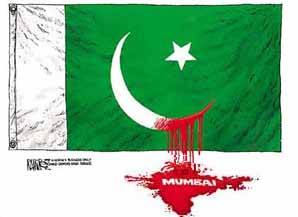
Indeed. And so it goes. This time round – Mumbai – it was the Associated Press that filed a story about how Muslims "found themselves on the defensive once again about bloodshed linked to their religion".

Oh, I don't know about that. In fact, you'd be hard pressed from most news reports to figure out the bloodshed was "linked" to any religion, least of all one beginning with "I-" and ending in "-slam." In the three years since those British bombings, the media have more or less entirely abandoned the offending formulations – "Islamic terrorists," "Muslim extremists" – and by the time of the assault on Mumbai found it easier just to call the alleged perpetrators "militants" or "gunmen" or "teenage gunmen," as in the opening line of this report in The Australian: "An Adelaide woman in India for her wedding is lucky to be alive after teenage gunmen ran amok."

Kids today, eh? Always running amok in an aimless fashion.

The veteran British TV anchor Jon Snow, on the other hand, opted for the more cryptic locution "practitioners." "Practitioners" of what, exactly?

Hard to say. And getting harder. For the Wall Street Journal, Tom Gross produced a jaw-dropping round-up of Mumbai media coverage: The discovery that, for the first time in an Indian terrorist atrocity, Jews had been attacked, tortured and killed produced from the New York Times a serene befuddlement: "It is not known if the Jewish center was strategically chosen, or if it was an accidental hostage scene."

Hmm. Greater Mumbai forms one of the world's five biggest cities. It has a population of nearly 20 million. But only one Jewish center, located in a building that gives no external clue as to the bounty waiting therein. An "accidental hostage scene" that one of the "practitioners" just happened to stumble upon? "I must be the luckiest jihadist in town. What are the odds?"

Meanwhile, the New Age guru Deepak Chopra laid all the blame on American foreign policy for "going after the wrong people" and inflaming moderates, and "that inflammation then gets organized and appears as this disaster" in Mumbai.

Really? The inflammation just "appears"? Like a bad pimple? The "fairer" we get to the, ah, inflamed militant practitioners, the unfairer we get to everyone else. At the Chabad House, the murdered Jews were described in almost all the Western media as "ultra-Orthodox," "ultra-" in this instance being less a term of theological precision than a generalized code for "strange, weird people, nothing against them personally, but they probably shouldn't have been over there in the first place."

Are they stranger or weirder than their killers? Two "inflamed moderates" entered the Chabad House, shouted "Allahu Akbar!," tortured the Jews and murdered them, including the young rabbi's pregnant wife. Their 2-year-old child escaped because of a quick-witted (non-Jewish) nanny who hid in a closet and then, risking being mowed down by machine-gun fire, ran with him to safety.

The Times was being silly in suggesting this was just an "accidental" hostage opportunity – and not just because, when Muslim terrorists capture Jews, it's not a hostage situation, it's a mass murder-in-waiting. The sole surviving "militant" revealed that the Jewish center had been targeted a year in advance. The 28-year-old rabbi was Gavriel Holtzberg. His pregnant wife was Rivka Holtzberg. Their orphaned son is Moshe Holtzberg, and his brave nanny is Sandra Samuels. Remember their names, not because they're any more important than the Indians, Britons and Americans targeted in the attack, but because they are an especially revealing glimpse into the pathologies of the perpetrators.

In a well-planned attack on iconic Mumbai landmarks symbolizing great power and wealth, the "militants" nevertheless found time to divert 20 percent of their manpower to torturing and killing a handful of obscure Jews helping the city's poor in a nondescript building. If they were just "teenage gunmen" or "militants" in the cause of Kashmir, engaged in a more or less conventional territorial dispute with India, why kill the only rabbi in Mumbai? Dennis Prager got to the absurdity of it when he invited his readers to imagine Basque separatists attacking Madrid: "Would the terrorists take time out to murder all those in the Madrid Chabad House? The idea is ludicrous."

And yet we take it for granted that Pakistani "militants" in a long-running border dispute with India would take time out of their hectic schedule to kill Jews. In going to ever more baroque lengths to avoid saying "Islamic" or "Muslim" or "terrorist," we have somehow managed to internalize the pathologies of these men.

We are enjoined to be "understanding," and we're doing our best. A Minnesotan suicide bomber (now there's a phrase) originally from Somalia returned to the old country and blew up himself and 29 other people last October. His family prevailed upon your government to have his parts (or as many of them as could be sifted from the debris) returned to the United States at taxpayer expense and buried in Burnsville Cemetery. Well, hey, in the current climate, what's the big deal about a federal bailout of jihad operational expenses? If that's not "too big to fail," what is?

Last week, a Canadian critic reprimanded me for failing to understand that Muslims feel "vulnerable." Au contraire, they project tremendous cultural confidence, as well they might: They're the world's fastest-growing population. A prominent British Muslim announced the other day that, when the United Kingdom becomes a Muslim state, non-Muslims will be required to wear insignia identifying them as infidels. If he's feeling "vulnerable," he's doing a terrific job of covering it up.

We are told that the "vast majority" of the 1.6 billion to 1.8 billion Muslims (in Deepak Chopra's estimate) are "moderate." Maybe so, but they're also quiet. And, as the AIDS activists used to say, "Silence=Acceptance." It equals acceptance of the things done in the name of their faith. Rabbi Holtzberg was not murdered because of a territorial dispute over Kashmir or because of Bush's foreign policy. He was murdered in the name of Islam – "Allahu Akbar."

I wrote in my book, "America Alone," that "reforming" Islam is something only Muslims can do. But they show very little sign of being interested in doing it, and the rest of us are inclined to accept that. Spread a rumor that a Quran got flushed down the can at Gitmo, and there'll be rioting throughout the Muslim world. Publish some dull cartoons in a minor Danish newspaper, and there'll be protests around the planet. But slaughter the young pregnant wife of a rabbi in Mumbai in the name of Allah, and that's just business as usual. And, if it is somehow "understandable" that for the first time in history it's no longer safe for a Jew to live in India, then we are greasing the skids for a very slippery slope. Muslims, the AP headline informs us, "worry about image." Not enough.

©MARK STEYN

greg-maddux..si.jpg
Greg Maddux always loved the challenge of a fresh count and a fresh hitter,
the same way an artist welcomes the empty canvas.

From SI.com: A great article, putting Maddux in stark contrast with other pitchers of his generation. And no affair with a teenager, either...
Appreciating the genius of Maddux
By Tom Verducci

Baseball is much less interesting today. Greg Maddux, after all these years playing with house money and playing with hitters, took his ball and went home.

The magic show is over. I dislike absolutes, but of this I am sure: Greg Maddux is the most fascinating interview, the smartest baseball player and the most highly formed baseball player I have encountered in 27 years covering major league baseball. There is no one alive who ever practiced the craft of pitching better than Maddux.

Like a grand master in chess, Maddux saw the game on a higher plane than everybody else. Some of his tricks he shared with me, such as knowing how to attack a hitter after watching the hitter take his warmup swings. There was the time he was in the dugout decoding the body language of Jose Hernandez of the Dodgers during an at-bat when he deadpanned to a teammate, "Watch this. The first base coach may be going to the hospital." On the next pitch Hernandez drilled a line drive off the chest of the first-base coach. Well, Maddux was wrong about the hospital part, anyway.

Some of his tricks, of course, he did not share. I learned only this year, for instance, about one trick he used on the mound that just blew me away, a real giveaway to his genius that no one else could possibly think of. I hope someday he lets me share it with you.

Every time I talked with Maddux I learned something, and not always about pitching. He understood hitting as well as any position player I ever met.

Think about the genius of that. If you want to catch a crook, you must think like one rather than a law-abiding citizen.

He is baseball's beautiful mind, and yet Maddux kept his gift covered with a thick blanket of humility. Never in sports will you find this kind of greatness accompanied by such an utter lack of ego and entitlement. In 2004, when I asked him how much longer he might pitch, he told me, "I'm not worried about it. I'm already on extra credit." I replied, "Greg, you've been telling me that for years." He replied, "I've been meaning it for years, too."

I will miss watching him pitch. In his prime, Maddux never received enough credit for the quality of his stuff. Too many people equate power with stuff, but Maddux's fastball, at least back when he was throwing 90 mph, had ridiculous movement -- late, large movement. Think about this: he dominated hitters with no splitter and a curveball that was no better than high-school quality.

That's how good were his fastball and changeup. It wasn't just location.

Moreover, he practically invented a pitch: that two-seam fastball that he aimed at a left-handed hitter's hips, only to have it jerk back over the inside corner just as the batter jackknifes out of the way. It is a standard pitch today only because Maddux popularized it.

More so, I'll miss our conversations, which sometimes picked up months or even a year apart as if only minutes passed between. Here is just a sampling of what I learned from him.

The key to pitching: "Make the strikes look like balls and the balls look like strikes."

• How to get out of a jam: "When you're in trouble, think softer. Take advantage of the hitter's eagerness. Don't throw harder. Locate better."

• Why he throws more warmup and bullpen pitches out of the stretch than the windup: "Think about it: when is it most important to execute a pitch? With runners on base."

• On radar guns: "I'd rather have movement and location than velocity any time."

• On getting to the majors: "In the minor leagues, it was always about getting better. I was never too worried about results."

• On out-thinking hitters: "You have to alter patterns. I don't surprise anybody with what I throw. You just have to mix your pitches up. Even if the hitter is guessing right, if you locate it you won't get hurt. You might give up a single or a double, but it's not the end of the world."

• On how long he wanted to pitch: "As long as I can do it. I don't want to embarrass myself by any means. But I'd rather pitch bad than not pitch."

• On winning with finesse: "It's more stressful, but it's a welcome kind of stress. If you didn't have that every fifth day, baseball wouldn't be fun. If it wasn't hard to win a game it wouldn't be fun."

Maddux pitched all those years and never hurt his arm. That's how perfect were his mechanics and how great was his athleticism that allowed him to repeat those mechanics. He honestly enjoyed every last thing about baseball.

Pitching? Sure, he loved the challenge of a fresh count and a fresh hitter, the way an artist welcomes the empty canvas. But even the mundane elements of the game gave him a charge. In his 40s, for instance, he shagged batting practice balls in the outfield with the zeal of a 12-year-old kid pulled out of the stands. (The only difference, though, was that Maddux never threw a baseball, not even after chashing them during BP, without getting his elbow above his shoulder and forming a perfect L with his throwing arm.)

What, I once asked him, was the best part about baseball?

"Everything," is what he said first. "Winning is an absolute blast.

Getting a hit is an absolute blast. Standing up there and getting a hit off somebody is one of the funnest things you can ever do."

He kept going.

"Watching a game every day. I don't mind watching a game every day. Talking baseball ..."

His "best part" list kept getting longer.

"It's what I know. It's what I do. I enjoy watching other guys ...

Talking on Monday and trying to do it on Tuesday ..."

Now he was at bedrock: the core of the master's joy.

"Some guys just show up on Tuesday. The best part is knowing you're going to do something on Monday and actually doing it on Tuesday. And executing it. You know what? It might be a strike. It might be a foul ball. You might think, If I throw this guy this pitch, he's going to hit it foul right over there, and then to go out there and do it, that's pretty cool. To me. That's fun.

"You're only talking about 10 pitches a game. The other 80 or 90 you're trusting what you see and what you feel. It's still fun playing the game. And strike three is still one of the funnest pitches in baseball."

Maddux was the genuine article, a ballplayer evolved to the highest form. It is fitting that he is the winningest pitcher alive, an honor he should keep up to his very last breath. This appreciation, not by accident, made no mention of any career statistic of Maddux, no more than you would cite records sold to describe the voice of Sinatra. Maddux is synonymous with the art of pitching. He was that good. Never again will we see, or hear, anyone quite like him.

Friday, December 05, 2008

http://ironwhirlygig.files.wordpress.com/2008/04/barakbuilding.png
From Spectator.co.uk: Well, this is encouraging...
Is Obama Stealth?
By Melanie Phillips

Trevor Loudon has got hold of a fascinating analysis of Prez-elect Obama’s administrative appointments by Mark Rudd and Jeff Jones, two former Weather Underground terrorists (chums of Obama’s old ally chance acquaintance, the unrepentant former WU terrorist William Ayers). The two of them are now on the board of Movement for a Democratic society, in turn the parent body of Progressives for Obama, the leading leftist lobby group behind Obama’s presidential campaign. And waddya know – just like me they believe Obama is practising stealth politics with a degree of sophistication and success with which ‘even Lenin would be impressed’. As they say, Obama knows that he must be subtle and reassure even the most conservative of his opponents if he is to achieve his radical goals. Mark Rudd writes:

Obama is a very strategic thinker. He knew precisely what it would take to get elected and didn't blow it...But he also knew that what he said had to basically play to the center to not be run over by the press, the Republicans, scare centrist and cross-over voters away...What he's doing now is moving on the most popular issues -- the environment, health care, and the economy. He'll be progressive on the environment because that has broad popular support; health care will be extended to children, then made universal, but the medical, pharmaceutical, and insurance corporations will stay in place...the economic agenda will stress stimulation from the bottom sometimes and handouts to the top at other times. It will be pragmatic...On foreign policy and the wars and the use of the military there will be no change at all. That's what keeping Gates at the Pentagon and Clinton at State and not prosecuting the torturers is saying. And never, never threaten the military budget. That will unite a huge majority of congress against him.

And I agree with this strategy. Anything else will court sure defeat. Move on the stuff you can to a small but significant extent, gain support and confidence. Leave the military alone because they're way too powerful. For now, until enough momentum is raised. By the second or third year of this recession, when stimulus is needed at the bottom, people may begin to discuss cutting the military budget if security is being increased through diplomacy and application of nascent international law.

* Obama plays basketball. I'm not much of an athlete, barely know the game, but one thing I do know is that you have to be able to look like you're doing one thing but do another. That's why all these conservative appointments are important: the strategy is feint to the right, move left. Any other strategy invites sure defeat. It would be stupid to do otherwise in this environment.

* Look to the second level appointments. There's a whole govt. in waiting that Podesta has at the Center for American Progress. They're mostly progressives, I'm told (except in military and foreign policy). Cheney was extremely effective at controlling policy by putting his people in at second-level positions.

* Read Obama's first book, 'Dreams from My Father.' The second section is the story of his three years doing community organizing in Chicago. It's some of the best writing on organizing I've ever seen. That's all it's about, the core of the book. Obama learned many lessons of strategy and patience. Then read the first section, on his family and growing up in Hawaii and Indonesia. No other president has ever had such intimate experience with class and race. The final section is about his trip to Kenya. No other president has ever had an understanding of not only race, but colonialism and neo-colonialism, even using the terms. It's the whole story he tells of his African family and especially his father, a victim of neo-colonialism. As was his step-father in Indonesia.

This is no stupid guy...Had any of the stupid Republicans read his books, they never could have said, ‘We don't know who this guy is.’ You know every thought he's ever had.

Jeff Jones agrees:
All of this leads me to the same conclusion reached by Mark Rudd: this guy is really SMART. He is setting Hillary Clinton up to be the public face of his effort to end the Iraq war. He is going to successfully extort green concessions from Detroit. He will convince Congress to pass a major stimulus package that will lay the foundation for the development of an alternative energy manufacturing industry. He will do something to help reduce housing foreclosures. He will let the Bush tax cuts for the wealthy expire.

These various initiatives, which will collectively set the nation on a path towards energy independence, ending the war and redistributing financial resources downward, are presented as unconnected pieces of legislation but actually they are interlocking components of Obama's coherent multi-layered agenda. His centrist appointments are a smokescreen; they co-opt the moderate center, but he's still the commander in chief. Even Lenin would be impressed!

The key is the stupidity of so many of Obama’s opponents, amplified by the credulousness and prejudices of the media and the ignorance of the public. The shallow Republicans and their supporters in the media and blogosphere have in large measure fallen for Obama’s stealth politics hook, line and sinker. As a result of his ‘centrist’ appointments which have got them absurdly cooing over people like Clinton and Holder, Gates and Jones (see my posts here, here and here), their guard is now totally lowered. They still don’t know the true nature of what has hit them -- and at this rate will never know until they wake up one morning to a transformed America and a free world that has lost the war being fought against it.

And the more the left shrieks ‘betrayal’, the more American conservatives will wrap themselves in denial. But characters like Rudd and Jones are the horse’s mouth. They know from the inside the manipulative and stealthy game that is being played here. Lenin would be impressed indeed.

Thursday, December 04, 2008


N&O Photo by Robert Willett
From TarHeelBlue.com:
A Taste For Blood

Dec. 4, 2008

By Adam Lucas

DETROIT--Come with me, but watch your step.

Here at Ford Field, the court is treacherous. The site of the 2009 Final Four has an elevated court, which means getting from the playing surface to the Tar Heel bench requires three big steps down.

Sit here, just to the right of the Carolina bench, where the players sprint up the steps to enter the game and trudge down the steps when they're replaced. Roy Williams will be up and down those steps quite often--"I'm not comfortable," he admitted after the game. "It's a different perspective sitting below the court as a coach."

When you sit here, don't watch. Just listen.

"Come on, defense!" That is Williams's raspy shout. He is clinching his fists and clapping his hands and exhorting his team.

It just so happens his team is winning by 30 points in the second half.

"That's too easy, Will!" Williams barks at Will Graves. The sophomore has just committed the egregious error of allowing his man to catch a pass without interference.

Of course, his man is 35 feet from the basket at the time.

With the deficit nearing 35 points, Michigan State inbounds the ball and advances to the frontcourt. Immediately, C.B. McGrath, who had scouting duties on this opponent, bounds off the bench.

"Triple screen!" he shouts, predicting the Spartans' offensive set. Suitably warned, Danny Green shadows his man, reaches in, and gets a deflection.

"That's it, Danny!" McGrath praises.

Williams walks up the sideline to the scorer's table, where Bobby Frasor, Danny Green, Ed Davis, and Larry Drew II are waiting to check into the game. The head coach leans down and says something to his substitutes. With less than nine minutes left, his team has a 29-point lead over one of the top 15 teams in America.


Know what he says?

"I don't want anything sloppy out there."

There have been times over the last two seasons when this group of Tar Heels gets a double-digit lead and coasts to the finish, content simply to win. That counts, too. Wins are wins, of course, and style points are for gymnastics.

But what has become evident over these first eight games is something that should be chilling to the rest of the country: these Tar Heels are developing a taste for blood. There's never been any question that this particular group, most of which has been together for three years, is good enough to beat people. Now it's starting to look like they might be mean enough to demolish people. There is a difference.

"It comes with maturity," said Ty Lawson.

"We're getting the hang of it," Bobby Frasor said. "Let's put our foot on people when they are down. It's fun when you see the lead is at 30 or 35, and we'll say, `Let's get it to 40.' It's the end of the game and you're still excited because you're still trying to reach some goals."

Let's get it to 40. Those are sweet words, indeed.

Of course, Williams teaches his players not to look at the scoreboard. The head coach prides himself on never checking the score in the first half, because he believes it provides him a more accurate impression of how his team is playing, rather than simply basing his thoughts on the numbers on the scoreboard.

But he also realizes there's value to be found up there, too.

"One thing we've been talking about is making statements," Wayne Ellington said. "We've been focusing on that. We're trying to set ourselves apart. We feel like we could be the best team in the country. We've got to keep working to reach our potential."

Notice that? He said the Tar Heels could be the best team in the country. The polls say they are. Michigan State would probably say they are. Notre Dame, too.

None of the Tar Heels have said it. But they're not thinking otherwise, either.

"Did I hear you say earlier you might not be the best team in the country?" a reporter asked Frasor.

Frasor's eyebrows went up as though someone had accused the diehard White Sox fan of favoring Wrigley Field over Comiskey Park.

"Did I say that?" Frasor said. "I don't know if that came out of my mouth."

He didn't say the Tar Heels weren't the best team in the country. He also didn't say they were. Of course he didn't. That would be being satisfied, and that is not allowed. Not yet. Right now there is still defense to be played and rebounds to get and passes to make.

In 40 minutes of a 98-63 victory--the second-worst beating of the Tom Izzo era, one of the nation's great coaches--there was only one very brief moment when anyone on the Carolina bench stepped outside the game for even one second.

Ed Davis was shooting free throws, and the rowdy bunch of white-clad students in the Ford Field end zone organized a cheer. The stadium fell silent, so it was easy to make out what they were saying.

"Roy's been tan-ning!" Clap, clap, clap-clap-clap.

First free throw, good. Still quiet.

Williams took three steps down the sideline. He put his hand to his mouth to block the rest of the crowd, so only the students and his players could hear.

"I just came back from Maui," he shouted. "What do you expect? I've got a grass skirt, too--you want me to put it on?"

He grinned at the students, who laughed appreciatively. Before the laughter had even died down, Williams was back in front of his empty seat. He looked out at the court, where his team held a 35-point lead.

"OK," he barked. "Defense!"

Adam Lucas is the publisher of Tar Heel Monthly. He is also the author or co-author of four books on Carolina basketball.

http://lonestartimes.com/images/2008/02/hillary-obama-creepy.jpg
From TownHall.com:
A Hillary in Your Cabinet

Emmett Tyrrell

Thursday, December 04, 2008

WASHINGTON -- President-elect Barack Obama campaigned intoning the mantra that Washington's political system is "broken." Now with most of his appointments either named or leaked, he has proved it. There is indeed something broken in a political system whose electorate rejects Sen. Hillary Rodham Clinton in the Democratic primaries and nonetheless finds itself saddled with a third Clinton administration at year's end.

Of all the Clintonistas whom Obama has appointed, the most bizarre is the appointment of Sen. Clinton as secretary of state. He himself during the campaign remarked on her lack of foreign policy credentials. "What exactly is (her) foreign policy expertise?" he jeered. Obama's incoming White House counsel, Greg Craig, was blunter still. In a detailed memo last March, Craig explained why, as he put it, "There is no reason to believe she was a key player in foreign policy at any time during the Clinton Administration." The memo led Oliver Willis, a progressive blogger, to note, "This malarkey about Sen. Clinton having all this foreign policy experience strikes me as a serial fabrication on the level of Stephen Glass or Jayson Blair" -- two infamous journalistic frauds.

Those words were chosen wisely. It was in March that at least two of Sen. Clinton's claims to foreign policy credentials were exposed as the sheerest poppycock. She had been presenting herself as having been an indispensable instrument in effecting the Irish peace settlement during her husband's administration. "I was deeply involved in the Irish peace process," she boasted on the campaign trail. Unfortunately for her, Judicial Watch forced the Clintons to release Hillary's heavily redacted White House schedules, from which it was apparent that she had nothing to do with the peace process other than appearing in public with her husband sporting her infamous forced smile.

The charge that Hillary was engaged in "serial fabrication" was validated again when one of the participants in the Irish peace negotiations, Noble Peace Prize winner David Trimble, exclaimed, "I don't know there was much she did apart from accompanying Bill going around." Trimble characterized her empty boasts as a "wee bit silly." Two months earlier, she had fibbed that she "actually went to Northern Ireland more often than (her) husband did" and, on one occasion, "pulled together in Belfast, in the town hall," Catholic and Protestant women whom she persuaded to bury the hatchet so "the hard work of peacemaking could move forward." That whopper provoked the U.K.'s Daily Telegraph to report, "There is no record of a meeting at Belfast City Hall, though Mrs Clinton attended a ceremony there when her husband turned on the Christmas tree lights in November 1995."

It was in last March, too, that our next secretary of state was caught BSing that 12 years before, while traveling through Bosnia as first lady, she had to dodge "sniper fire." This was a tall tale that she had been uttering repeatedly in her campaign to present herself as more experienced than Obama. According to it, the snipers attacked at a planned "greeting ceremony" in Tuzla, which had to be canceled, as the sniper fire rained down and, said Hillary, "We just ran with our heads down to get into the vehicles to get to our base." Actually, the ceremony was held at the base. It was not canceled, and, with scores of journalists and dignitaries standing by, it was videotaped. CBS played the videotape. Once again, a brazen and artless lie by Hillary was her undoing. Said one member of the military, obviously peeved by Hillary's deprecation of the military's security measures, "Getting shot at by snipers is not something you forget -- or make light of."

Well, Hillary trivializes a lot of serious things and is caught BSing often. In fact, except for her husband, I cannot think of another public figure of her stature caught so often in her own lies. About the same time in the primary season as the Tuzla tale, she also was caught lying that she "negotiated open borders to let fleeing refugees into safety from Kosovo." She was caught in fibs about advice she offered her husband during the Rwanda genocide, as well.

Now, all of the above were lies deployed by Hillary to convince the electorate that she is vastly experienced in foreign policy. Apparently, she failed to convince voters, but she seems to have convinced her erstwhile adversary, the president-elect. He should have taken note of her discrepancies and one other thing. By now, he should be aware that both Clintons cause trouble for themselves and for others nearby when there is no apparent reason for the trouble other than the Clintons' bad character. Frankly, Mr. Obama, it is not wise to be too close to these two. You are going to be sitting with Mrs. Clinton in Cabinet meetings. Watch out for sniper fire.
[Review & Outlook]

From The Wall Street Journal:
Eric Holder's Politics

His years at Clinton Justice don't inspire confidence.

One of the media narratives about the Bush Administration has been its "politicization" of the Justice Department. We've always thought most of that was woven out of whole cloth. But since our media friends seem so distressed on this score, they might want to pay special attention to Eric Holder, the man Barack Obama has tapped as his next Attorney General.

Mr. Holder doesn't lack for a résumé. A former trial court judge and U.S. Attorney for Washington D.C. who served as Deputy Attorney General in President Clinton's second term, he was Mr. Obama's senior legal adviser during the campaign and helped with the Vice Presidential vetting. Though he's an orthodox liberal on issues like gun control and has lately taken to denouncing Guantanamo and warrantless wiretaps, he was also among the first to argue that terrorist detainees were not entitled to Geneva Convention protections. If he does become AG, we hope he recovers some of that realism.

Before that, however, Mr. Holder will have to win Senate confirmation, and Members might want to ask about the politicization that took place during his watch at Justice. The first question revolves around Mr. Holder's role in Bill Clinton's pardon of fugitive financiers Marc Rich and Pincus Green, a pardon that even Jimmy Carter denounced as "disgraceful" and "attributable to large gifts." Mr. Rich's former wife, Denise Rich, had donated to the Clinton Presidential Library.

Less than a month after the pardon, Mr. Holder told the House that "efforts to portray me as intimately involved or overly interested in this matter are simply at odds with the facts." But as Journal reporters Gary Fields and Phil Kuntz reported at the time, Mr. Holder had "interceded with prosecutors in New York" on the matter in November 1999, some 14 months before the pardon was issued. When then U.S. Attorney Mary Jo White refused to take a meeting with Jack Quinn, who was Mr. Rich's attorney and a former Clinton White House counsel, Mr. Holder told Mr. Quinn "we're all sympathetic."

Following the pardon, Mr. Holder congratulated Mr. Quinn for doing "a very good job," while urging that "we [should] be better about getting the legal merits of the case out publicly," according to Mr. Quinn's notes of their conversation. It would be interesting to know exactly what Mr. Holder thinks those merits were, especially since he told Congress that the pardon application was "not particularly meritorious." It would also be interesting to know how it was that nobody at Justice -- including Mr. Holder himself, as he claims -- ever actually saw Mr. Rich's pardon application before it was approved. Mr. Holder did admit that "I wish I had ensured that the Department of Justice was more fully informed" of the matter.

That's not the only dubious pardon in which Mr. Holder was involved. In 1999, President Clinton offered clemency to 16 Puerto Rican members of the terrorist FALN, despite a previous warning from Attorney General Janet Reno that the group posed an "ongoing threat" to U.S. security. Here again, Mr. Holder's role seems to have been larger than he has let on. A 1999 New York Times report notes that Mr. Holder and Justice Department pardon attorney Roger Adams met in November 1997 with Democratic House Members to discuss the Puerto Rican case.

"According to Mr. Adams's notes," reported the Times, "Mr. Holder told the members of Congress that because the prisoners had not applied themselves for clemency this could be taken that they were not repentant, and he suggested that a statement expressing some remorse might help." Ultimately, the prisoners were freed having never offered a statement of remorse. The pardon was widely seen as an attempt to curry favor with Puerto Rican voters ahead of Mrs. Clinton's 2000 Senate bid.

Then there is Mr. Holder's role, as U.S. Attorney, in the case of Hillary Clinton health czar Ira Magaziner. Mr. Magaziner, recall, had filed an affidavit insisting that "only federal government employees served as members" of Mrs. Clinton's health-reform task force, a claim later demonstrated as untrue. In November 1994, federal Judge Royce Lamberth described Mr. Magaziner's affidavit as "misleading, at best," and he asked Mr. Holder to investigate Mr. Magaziner for perjury. In August 1995 Mr. Holder announced he would not do so, and even insisted on Mr. Magaziner's innocence in an 18-page letter, despite acknowledging that Mr. Magaziner's statements left him "open to charges that portions were inaccurate." Two years later, Mr. Holder was sworn in as deputy AG.

No doubt reporting this history will seem rude amid Washington's postelection elation. But it certainly is relevant to a President-elect who told voters he wouldn't represent a third Clinton term yet now seems to be populating his Administration with Clinton retreads. For a politicized Justice Department, none can compare to the Clinton Administration's, and the role that Mr. Holder played in it deserves the fullest airing before he is given the opportunity to return.

Wednesday, December 03, 2008

https://www.aquinasandmore.com/images/items/14194lg.jpg
From The American Spectator:
Now the Advent

By Quin Hillyer

12.1.08 @ 6:09AM

Rejoice, rejoice: Emanuel shall come to thee, O Israel.

Here's the situation, people: Politics right now is depressing. The national news is depressing. The government bailouts are depressing. The internecine fights among Republicans are depressing. The internecine fights among conservatives are depressing. The thought of Hillary Clinton as Secretary of State is profoundly depressing. The craziness of Wal-Mart shoppers who would trample a store worker to death is depressing. The horrible terrorism in India is far worse than depressing.

Rejoice, rejoice: Emanuel shall come to thee, O Israel.

This has been an awful year for conservatives. John McCain won the Republican nomination. John McCain ran an utterly inept and dishonorable campaign, and the leftist Barack Obama won the presidency. A Republican president and his appointees at the Federal Reserve and at Treasury badly mishandled a rolling credit crisis, exacerbated rather than healed a panic, and engineered a series of outrageous bailouts and buyouts while saddling generations of taxpayers with the bill.

William F. Buckley died. Tony Snow died. Peter Rodman died. Alexander Solzhenitsyn died. Jesse Helms died. One year and a day ago as I write this (a year and two days ago as you read it), Henry Hyde died. And Bob Novak has been stricken with a brain tumor and we pray for his recovery.

Rejoice, rejoice: Emanuel shall come to thee, O Israel.

Russia has gone authoritarian again, aggressive, and vicious. Iran is going nuclear. China continues to be repressive. Pirates (pirates, in this day and age!) successfully ply the Indian Ocean -- and, to a lesser extent, oceans worldwide, including in the Americas.

Rejoice, rejoice: Emanuel shall come to thee, O Israel.

Israel -- ah, yes, Israel. Israel is beleaguered. Always. But perhaps even more now than usual. Its prime minister is a lame duck, on his way out of office amidst a scandal. Its strongest international supporter, the United States, is hobbled by doubts caused by a financial panic, and the incoming U.S. president's commitment to Israel (a few bits of rhetoric aside) is in some doubt. And Iran rattles its sabers at Israel while Hamas sits perched in Gaza.

Rejoice, rejoice: Emanuel shall come to thee, O Israel.

The world is too much with us, late and soon. The center has not held, and the worst are full of passionate intensity. We are not now that strength which in old days moved earth and heaven. We wind up wounded, and not even dead. I have to turn my head until my darkness goes. The lone and level sands stretch far away…..

And yet…. And yet….

Rejoice, rejoice: Emanuel shall come to thee, O Israel….
Oh Come, thou Wisdom, from on high.

And yet we in the Christian tradition believe that the things of this world pale in comparison to the marvelous things of the spirit which are to come. Especially here in the United States, where we just celebrated Thanksgiving, we see this bleak time of year and can only be grateful, and hopeful, and confident in the Advent of grace and light. In the Jewish tradition, too, Isaiah's teachings (and others) tell of redemption -- in some forms of Judaism, in the shape of a person as Messiah, who has not come yet but surely is coming; and in other forms of Judaism, in a Messianic age. Either way, if Christmas is a uniquely Christian celebration, then Advent, in its broader meaning of an expectant preparation for redemption, is a season where Christians and Jews can share Isaiah's belief that "all the ends of the earth shall see the salvation of our God…announcing peace, heralding good tidings."

We believe, because we already have seen manifold examples of survival despite suffering, of obstacles overcome, of hope rekindled, of joy emerging miraculously from sorrows. In the civic realm, we Americans especially believe, because we have been so mightily blessed already. From Valley Forge we made it to Yorktown. From the burning of James Madison's White House we found victory outside of New Orleans. We bungled Dred Scott but issued the Emancipation Proclamation. Pearl Harbor begat Iwo Jima and D-Day. Sputnik spurred us to Apollo and the Moon. Malaise gave way to Morning in America. And, lest we forget how spectacular a triumph it actually was, we helped a Wall come down while leaving its Soviet sponsors on the ash heap of history.

But again, the civic realm is as nothing next to the gifts of the spirit our faith tells us to believe in. Or, what is more quotidian but still in many ways more important than affairs of state, we spend this season, from Thanksgiving all the way through the New Year's arrival, celebrating hearth and home. The love of human for human may be a weak imitation of the love of our Lord, but it springs from the same source and is itself powerful enough for wondrous things. And if even that love is not enough, Isaiah tells us that "the Lord God shall wipe the tears off every face."

Our blessings as Americans -- freedom, plenty, beautiful lands, great leaders when times were tough -- sustain us, and our faith and faiths sustain us even more mightily. We know we have always had a rendezvous with destiny, and that knowledge gives us solace and strength. Advent is upon us. O come, o come, Emanuel.

Quin Hillyer is an associate editor at the Washington Examiner and a senior editor of The American Spectator. He can be reached at qhillyer@gmail.com.

http://www.redbridgerenet.co.uk/mosque/mosque18.jpg
From The Corner at NRO:
Do Do That Wudhu That You Do So Well

John Derbyshire

I don't know where to start with this one. With Wudhu, perhaps. No, this is nothing to do with sprinkling chicken blood around. Wudhu is an Islamic ritual.

Wudhu involves washing the face, hands, arms and feet three times each, gargling the mouth three times and washing the neck and inside the nose and ears. Some Muslims also wash their private parts.

So far, so good. When is Wudhu performed?

Islam teaches that Muslims are unfit for prayer if they have not performed Wudhu after breaking wind or using the toilet.

Right. And why am I telling you this? Because:

Muslim prayer rooms should be opened in every Roman Catholic school, Church leaders [in the U.K.] have said.

The Catholic bishops of England and Wales also want special toilet facilities in schools to be adapted for Islamic cleaning rituals.

That's what it says here. (Which I got via a link to this excellent Anglican blog, which in turn was passed on to me by a helpful reader in what he refers to as "the Republic of Texas".)

So-o-o … if little Johnny rips one off in class — and let me tell you, having both attended and taught in English boys' schools (including a Catholic one), this is not an unheard-of (and certainly not an unheard) occurrence — it's off to the washroom with him for a full Wudhu.

And you still don't agree with me that the world has gone mad?

Tuesday, December 02, 2008

Eastwood_neigh_kb7ykonc_500

From Breitbart.com:
Eastwood rides into race in 'Gran Torino'

As the final contenders are finally screened this week, one decorated veteran of the Oscar wars just planted another flag in the race.

Clint Eastwood may have had trouble finding the Clarity Screening Room on Monday night, but landing a third best actor nomination should be no problem.

Based on mixed reaction afterward from the normally jaded press corps, his new film's fate in other categories is unclear, but my guess is whatever happens, general audiences are likely to eat it up.

As the press gathered inside the Beverly Hills office building lobby of the Clarity for the Warner Bros.-sponsored "Gran Torino" pre-screening reception, the man of the hour was somewhere outside on Wilshire Boulevard, looking for the party. Eastwood, in typical no-frills Clint fashion, didn't want the de rigueur studio-ordered limo and drove himself (not in a Gran Torino we trust). He eventually managed to sneak in the front door undetected even by the phalanx of Warner publicists waiting for his arrival. He made light of the whole thing in his (very) brief remarks before the film screened, its much-awaited first formal press unveiling.

Producer Rob Lorenz, who had arrived earlier, said the picture (which was still shooting into late summer) was finally locked at 116 minutes and ready for its Dec. 12 release in New York and L.A. (recently moved up a week earlier than originally planned). It will widen around Christmas and go even wider in January following the same successful release pattern of Clint's previous Oscar-winning "Million Dollar Baby." His most recent best picture nominee, "Letters From Iwo Jima," was also, like "Baby," a last-minute December entry, so this is clearly Clint's favorite season.

Shortly after he made his low-key entrance, I asked Eastwood if it's true that "Torino" (which he also co-produced and directed) will be his last acting role.

"Well, there aren't too many parts lying around for 78-year-olds, and I don't intend to start playing 40 anytime soon," he said, smiling.

It wasn't a definite "Yes, this is it," but close enough, although he added, "You're never too old to learn something new," which also serves as his mantra in the new film.

If "Gran Torino" does prove to be his acting swan song, he couldn't have picked a better way to go out. As a grizzled, racist, foul-mouthed ex-Marine refusing to move from an old neighborhood now populated with Asians and overrun by gangs, Eastwood summons up memories from his past roles. As Eastwood's character stands in front of his house pointing his gun at a group of young toughs and utters lines like "Get off of my lawn" or "Did you ever think you would be [expletive] with the wrong guy," you could almost see what Harry Callahan would be like when he hit retirement age.

"Gran Torino's" Walt Kowalski is a proud man who squints and grunts and, like a descendant of some reluctant Western sheriff, takes a town now bullied by "outlaw" Latino, Asian and black gangs and tears them a new one. Giving real dimension to what could have been an unlikeable Archie Bunker-style bigot, not to mention heart and a 21st century enlightenment that we all have to live together, Eastwood has channeled his whole screen persona, taken it to a new place and delivered the ultimate valedictory.

When he croaks the lyrics of the title song (co-written by son Kyle) over the end credits, audiences will be applauding not just a fine performance but also a remarkable screen career.

In a hugely competitive best actor race , sentimental favorite Eastwood faces really stiff competition from a couple of first-rate actors playing politicians, Frank Langella's Richard Nixon and Sean Penn's Harvey Milk (Eastwood directed Penn to his first Oscar in "Mystic River"). There's also other vets in the hunt like "The Visitor's" Richard Jenkins and "Last Chance Harvey's" Dustin Hoffman, along with Brad Pitt, Leonardo DiCaprio, Will Smith and Mickey Rourke, to name just a few.

Although he has four Oscars already on his mantel, Eastwood has never won one for acting despite nominations for "Unforgiven" and "Million Dollar Baby." In fact, his nod for "Baby" was a surprise contender in a similarly super-competitive 2004 best actor race and indicated just how much love there is for him in the academy actors' branch.

Amazingly, "Torino" doesn't even represent Clint's first serious awards contender this season. Universal sent out screeners last week for his Angelina Jolie starrer, "Changeling." He co-produced and directed the October release, which he shot in about 35 days, not even using all the alloted time the studio had given him for principal photography. DVD screeners of "Gran Torino" began arriving in the mailboxes of various awards groups Tuesday despite the fact that the film has not yet opened.

Whatever fate Oscar has in store this year for the remarkably prolific Mr. Eastwood, this 2008 twofer is a major feat for anyone at ANY age.

--Pete Hammond

(Photo courtesy Anthony Michael Rivetti / Warner Bros.)

Che
(Photo: David Gonzalez/The New York Times)

From The New York Times: Shockingly, a Times article containing
goodly amounts of irony and skepticism towards the Cuban
thug.

Che, or a Statue of an Actor Playing Che
By David Gonzalez

Che Guevara has been put on a pedestal in Manhattan. This is something not lacking in irony, since Manhattan might not exist today had the Argentine-born, Cuban-tested revolutionary had his way and unleashed the Soviet nukes against the United States during the 1962 missile crisis.

Are New Yorkers really allowing such an homage to occupy the southeast corner of Central Park? Technically, no. The statue actually depicts a Barcelona street performer portraying Che, part of three bronze sculptures by Christian Janowski, which were recently installed by the Public Art Fund.

Such distinctions may be lost on passers-by, who may well think the temporary installation is a marketing stunt for the upcoming Benicio del Toro movie, “Guerrilla.”

Monday morning, passers-by whipped out cellphones to snap quick shots of the statue. Some tourists put down their maps long enough to stand next to the statue and flash a peace sign. Most assumed the bronze was of Che (even if the figure was thicker and bore little facial resemblance to the real thing).

“That’s Che Guevara, right?” said Sean Kelly, who was visiting from Ames, Iowa. “I’m kind of interested in his beliefs and the kind of stuff he did.”

There were the executions when he presided over the prison at La Cabaña. Or his stated willingness to have let the missiles fly had they been under Cuban control, according to a newspaper interview cited by the biographer Jon Lee Anderson. And as several conservative commentators have noted, soon after the 1962 crisis, Che was preparing to export revolution while Cuban diplomats in New York were implicated in a plot to blow up, among other targets, department stores in New York City on the day after Thanksgiving. (More examples can be found in Humberto Fontova’s book “Exposing the Real Che Guevara and the Useful Idiots Who Idolize Him.”)

For some, the statue might call to mind the recent controversy over a banner depicting Stalin at Cooper Union. Arguably, one does not have to be politically conservative to be appalled by idolization of Che Guevara; just being a New Yorker ought to be reason enough. Instead, his face is a common sight on T-shirts, posters and watches (the latter sold, briefly, in the gift shop at the New York Public Library).

“I am always fascinated to see all the examples of how, I don’t know, foolish and ill-informed people are,” said a man who gave his name as Peter. “I’m a student of the idiocy of Che Guevara worship, and I bet 99 percent of the people who see this think, wow, that’s cool. But he was just a thug. A butcher.”

So, what is the appeal?

“He fought for the ideals of the people,” said David Araya, a bike messenger who is originally from Costa Rica. “He believed in socialist liberation for people who were oppressed by corrupt governments at the time in South America.”

He added that now today’s Cuba might fall into that category, too, considering that the Castro brothers have been in power for almost half a century. For some Cubans, liberation means rolling the dice on a raft trip across the Florida Straits.

There are no statues erected to them in New York. But remember, the piece in the park is not of Che. Only of someone portraying Che.


From Jewish World Review:
The Mumbai atrocity is a wake-up call
for a frighteningly unprepared world

By Melanie Phillips

Western commentators still don't grasp what the free world is facing. This was not merely a distant horror

Around the world, people have reacted with horror to the vile atrocities in Mumbai.

For three days, our TV screens transmitted images of carnage and chaos as the toll of murder victims climbed to upwards of 190 people, with many hundreds more injured.

Despite the fact that Western citizens were caught up in the attacks, there is nevertheless a sense that this was nothing to do with us — a horrible event happening in a faraway place.

Among commentators, moreover, there has been no small amount of confusion.

Were these terrorists motivated by the grievance between Muslims and Hindus over Kashmir, or was this a broader attack by Al Qaeda?

If British and American tourists were singled out over Iraq — which many assume is the motive for such attacks — why were Indians targeted in the Victoria railway station?

And why was an obscure outreach centre geared to Jews marked for slaughter?

Such perceptions and questions suggest that, even now, Western commentators still don't grasp what the free world is facing. This was not merely a distant horror.

We should pay the closest possible attention to what happened in Mumbai because something on this scale could well happen here.

But because we don't understand what we are actually up against, we are not doing nearly enough to prevent this — or something even worse — occurring; and if it were to happen here, we would be unable to cope.

The Mumbai atrocities show very clearly what too many obdurately deny — that a war is being waged against civilization.

It is both global and local. It is not 'our' fault; it has nothing to do with Muslim poverty, oppression or discrimination.

The Islamic fundamentalist fanatics use specific grievances — Kashmir, Iraq, Palestine, Chechnya — merely as recruiting sergeants for their worldwide holy war against all 'unbelievers'.

The Mumbai attackers targeted British, American and Indian citizens simply because they wanted to kill as many British, American and Indian 'unbelievers' as possible.

Where they found Muslims, they spared them.

They also singled out for slaughter the occupants of an outreach organization geared to Jews with no Israeli or political agenda — underscoring the point that at the core of the Islamists' hatred of Israel festers their hatred of the Jews.

This was not, as is so often described, 'mindless violence'.

On the contrary, the terrorists precisely calibrated both their choice of targets and the way in which they attacked them. This tells us many things.

India was chosen in order to further two aims. First was to foment greater tension between India and Pakistan.

No less important was the wish to destroy the ever more vital strategic alliance between India and the West in common defense against the Islamist onslaught.

That was why British and American visitors in those two grand hotels were singled out.

And that was why Mumbai itself was chosen — as the symbol of India's burgeoning commerce and prosperity and its links with the West.

The manner of these attacks also carried a message.

Many hostages were taken, but no attempt was made to use them to demand redress of any grievances. They were simply killed.

That made a statement that the terrorists' agenda is non-negotiable.

The attacks demonstrated, above all, the reach of the perpetrators and the impotence of their designated victims.

Those who believe that Islamist terror can be halted by addressing grievances around the world are profoundly mistaken.

With these atrocities, moreover, Islamist attacks have moved much closer to war than conventional terrorism.

The Iranian-born foreign affairs specialist Amir Taheri has pointed out that the Mumbai attacks embody the plan outlined by a senior Al Qaeda strategist after the U.S. decided to fight back following 9/11 — a decision that the Islamists had not expected.

This new strategy entails targeting countries with a substantial Muslim presence for 'low-intensity warfare' comprising bombings, kidnappings, the taking of hostages, the use of women and children as human shields, beheadings and other attacks that make normal life impossible.

Such a simultaneous, multi-faceted onslaught quickly reduces a city and a country to chaos. It can be repeated anywhere — and our cities must be among the most vulnerable.

Monday, December 01, 2008

http://images.theage.com.au/2008/11/03/255369/svSPRINGSTEEN-420x0.jpg
From The New York Post:
MEET THE NEW BOSS
By KYLE SMITH

November 30, 2008 --

Bruce Springsteen is a man who reaches across the political divide and across the eras, a guy who howls the truth with his electric despair, his stadium-filling voids, his catchy alienation. Nothing is more exciting than spending 45 minutes crawling into and out of the Meadowlands parking snarl to hear Bruce sing about bustin' loose on the open road.

Right now, though, the streets aren't burning. The night isn't lonely. It isn't some infested summer in a dead man's town with nothing but boring stories of glory days. A bright new day is percolating across the land. What will Bruce do for material? From now on, as Springsteen foretold when he campaigned for Obama in Cleveland on Nov. 2, there will be, "economic and social justice, America as a positive influence around the world." And the new president is finally going to fulfill "the right of every American to a job, a living wage, to be educated in a decent school, to a life filled with the dignity of work, promise, and the sanctity of home." So: 100% employment and 0% substandard schools? Sounds good for the country but alarming for Springsteen fans.

There is a bracing consistency in Springsteenian gloom, from the Ford years ("The street's on fire, a real death waltz") to Carter's ("Lately there ain't been much work on account of the economy") to Reagan's ("This old world is rough, it's just getting rougher") to the first Bush's ("Ain't no mercy on the streets of this town, ain't no bread from heavenly skies") to Clinton's ("Oh brother are you gonna leave me wastin' away on the streets of Philadelphia?") to the second Bush's ("Woke up Election Day, skies gunpowder and shades of gray"). If the Boss has a motto, it has always been this: No hope, no change, no way.

What's his next song going to be called - "Goodlands"? Will universal pre-K childcare give us "Junglegymland?" I for one am not looking forward to "Tenth Avenue Love-In," "Happy Heart" or "57 Channels (and a Lot of It Is Really Interesting Interviews with Cabinet Members About How They're Going to Improve Everyone's Job, School, and Personal Dignity)." Instead of looking for inspiration to John Steinbeck to make "Ghost of Tom Joad" or to Pete Seeger for covers of one of the old let's-make-a-union-that'll-one-day-destroy-the-car-industry songs, could Bruce take a Lauperian turn and surmise that we're all just "Born to Have Fun"? All of these fears were realized on Monday, when Springsteen released his new single, "Working on a Dream." The first line: "Out here the nights are long, the days are lonely. I think of you - I'm working on a dream!"

There isn't a lot of doubt about who that "you" is. Springsteen hasn't written a lot of love songs about Patti Scialfa, and now that they've been married for 17 years, they might be working on not finishing each other's sentences, they might be working on home maintenance and domestic staffing issues, but they're pretty far past working on a dream.

Springsteen debuted the song at an Obama event, and he's releasing the new album of the same title on Jan. 27, exactly a week after the Obama inauguration.

The song goes on, "My hands are rough from . . . workin' on a dream!" Springsteen used to need escape, freedom, catharsis. Now he needs a bottle of Jergens lotion.

Then comes the really twisted part: "Tweet-tweet-tweet-tuh-tweet-tweet-tweet!" Bruce Springsteen whistles? It's as if Sylvester Stallone took up tap dancing or Andy Rooney suddenly became funny.

Has Springsteen ever whistled before? "Nothing's coming to mind," says Chris Phillips, the editor of the fansite Backstreets.com. "There are shouts and moans and howls and falsettos. All sorts of vocal tricks, but I can't thing of any recordings where he's whistled."

If Bruce is channeling the theme from "The Andy Griffith Show," there's no telling what might happen next. There could be an Iraq war movie in which George Clooney plays a US colonel who helps liberate a country from an evil dictator. Sean Penn could play a CIA agent who devises a way to save thousands of lives using domestic surveillance and rendition of suspects.

But my fellow Americans, it will be a dark moment in our nation's history if Bruce Springsteen turns into Ned Flanders. I'm dreading the next time he sings the lyrics to "Atlantic City" and changes the chorus to, "Everything die-diddly-dies, and that's a factoroonie!"

Kyle.Smith@nypost.com
http://graphics8.nytimes.com/packages/images/photo/2008/11/26/1127-MUMBAI/25962244.JPG
From National Review Online:
Lost Illusions
What really happened in Mumbai.

By Arthur Herman

It’s been fascinating, but also disheartening, to watch the mainstream media completely miss the real story about the 60-hour terrorist rampage in Mumbai, India — which may have killed as many as 300 people, and has certainly injured hundreds more. What died in Mumbai — besides scores of innocent people in their hotel rooms and at the Mumbai Jewish Cultural Center and on the blood-drenched platform at Chatrapathi Sivaji railway terminal — were certain illusions about the war on terror, and how to deal with terrorists.

One of those illusions is about who is fighting whom in the war on terror.

Many put the blame for the attack on years of Indian-Pakistani hostility and tension. In fact, relations between the two countries have never been warmer. This past month, Pakistan’s new president stunned and delighted Indians by publicly renouncing any first use of nuclear weapons. Violence in Kashmir, the principal bone of contention between India and Pakistan since 1947, is on the decline. Before the Mumbai attacks, politicians were scheduled to start talks on permitting trade across the region’s Line of Control, so that Hindu farmers in Indian Kashmir can sell their wheat or a used tractor to Muslim farmers in Pakistani Kashmir.

This is precisely what the terrorists don’t want, of course. It’s the fact that tensions over Kashmir are diminishing that prompted them to attack on the November 28 — just as al-Qaeda blew up Samarra’s Golden Mosque in Iraq back in 2006 in order to keep Shias and Sunnis hating and killing each other. The illusion that formal agreements between peoples and governments — whether between India and Pakistan or Israel and the Palestinian Authority — can somehow defuse the terrorist problem was the among the first casualties in Mumbai. Terrorists see it the other way around: the relaxation of tensions is a problem requiring bloodshed.

Islamic terrorists don’t want justice or respect for their beliefs, or restoration of some imaginary homeland. They want violence and death. The duty of every government is to make sure that terrorists get them before they can deal them out. Pakistanis will never know peace, or peace with their neighbors in Afghanistan and India, until they finally and ruthlessly root out the terrorists in their midst.

The same goes for India. That was the second illusion that died in Mumbai: that democratic nations can somehow opt out of the war on terror. India has largely operated on that assumption since 2001, even though it is home to the second-largest Muslim population in the world after Indonesia, and wedged between two neighbors — Pakistan and Bangladesh — where Islamic terrorist groups operate in relative freedom.

The media here and in India seem to have forgotten that this was not the first round of mass death in Mumbai. Bombings rocked the city back in the summer of 2005, killing more than 200, followed by bloody attacks on Jaipur and India’s high-tech capital, Bangalore, earlier this year.

In spite of this, India’s record on counterterrorism is abysmal, almost deliberately so. The government in New Delhi steadfastly maintains a wall of separation between law-enforcement agencies like the one that used to separate the FBI and CIA before the Patriot Act, and keeps counterterrorist units underfunded and undermanned. It has repeatedly given way to the demands of Islamic radical groups and fundamentalist lobbyists in the name of “cultural sensitivity.” India was the first non-Islamic country to ban Salman Rushdie’s Satanic Verses back in 1988.

India has no preventive detention laws; no laws to protect the identity of anti-terrorist witnesses; and no laws to allow domestic wiretapping without court order. In 2004, the new Congress Party government revoked India’s version of the Patriot Act, even as the Indian media was loudly condemning the U.S. for “torture” at Gitmo and Abu Ghraib.

In short, the Indian government has waged the war on terror in much the same way that liberals and many Democrats have been urging the U.S. to carry it out. The result is that more than 4,000 Indians have died in attacks since 2004 — more than any other nation in the war on terror besides Iraq.

At the Sivaji rail platform on the November 28, eyewitnesses told the Belfast Telegraph that armed Indian police refused to shoot back when the terrorists opened fire. Even when the terrorists stopped to reload their guns, someone screamed at the police: “Shoot them, they’re sitting ducks!” But the police did nothing, only to be gunned down like everyone else.

Sitting ducks. One reason the Mumbai terrorists sought out Brits and Americans to kill is that they can’t get at them in their own countries. The latest report is that those “evil” U.S. intelligence agencies had actually intercepted threats about possible attacks on hotels in Mumbai, and passed them on to their Indian counterparts — who then failed to take action.

Britain and the United States have learned how to deal effectively with terrorism the hard way. Maybe this time Indians will, as well.

— Arthur Herman is the author of Gandhi and Churchill: The Epic Rivalry That Destroyed an Empire and Forged Our Age, published this year by Bantam/Dell.

Sunday, November 30, 2008

http://tickettransaction.com/EventImages/02088-002/killers.jpg
From The Telegraph (UK):
Brandon Flowers:

'The Killers can be bigger than U2'

There are no limits to the ambition of Brandon Flowers
and his band, the Killers - yet in person the singer,
songwriter and devout Mormon is a fearful man।
He talks to Neil McCormick

Last Updated: 12:01am GMT 27/11/2008

'Las Vegas was a great preparer," says Brandon Flowers of the town where he formed his band the Killers. "Really, being a Mormon in Las Vegas prepared me for the lion's den. It is sin city. The things that go on, the lights, it's the ultimate rock and roll stage. Without Las Vegas, I would be a wreck."

The Killers are one of the great groups of modern American rock: a tight unit rich with hooks, style, passion, imagination and the commitment to go truly stratospheric. This week they released their third album, Day and Age, and it's another belter, a highly-strung, disco-meets-new-wave synth-pop epic. But, like many great groups, the Killers are constructed out of conflict and tension, built on the fault lines of their singer and lead songwriter, the walking contradiction that is Brandon Flowers.

A devout Mormon from Nephi, Utah, with a fascination for the earthly pleasures of the neighbouring city of Las Vegas, Nevada, Flowers wants his band to be the biggest in the world. He has, he confesses, "a drive bordering on obsession". He talks about bumping U2 off their pedestal. "They're unbelievable but they're getting old. It feels like it's time."

Yet there is a part of him that is like a rabbit caught in the glare of oncoming headlights. In interviews, he is constricted and uptight, as if fighting nervousness and innate shyness. He seems almost fearful of life. "I struggle," he admits. "It's a daily thing for me."

At 27 years old, he is married, with a baby son back in Vegas. "My son is growing up somewhere right now and he doesn't see me. That is wrong. At the same time, I can't wait to come back here and play Wembley Stadium one day."

The choice of venue is instructive. The Killers are not yet a stadium band. But Flowers does not doubt that day is coming. "I saw Paul Weller slagging off Fleetwood Mac, he referred to it as 'stadium rubbish'. Well, I'll take Fleetwood Mac any day. That's just my preference. We wanna see where this will take us. It doesn't make any sense to place restrictions. We write these songs as human beings, and they affect us, and we put them out there in the hope that they will affect other human beings, that they transcend any limitations.

"It doesn't have to be mindless. It's not all gold and glitz. There are universal themes, and if you can connect to them with brains and heart, and do it on a big scale, it can be a really powerful thing, to bring people together, band and audience, and create moments of clarity."

For a man driven by the uniting power of music, Flowers is oddly reluctant to illuminate the content of his songs, which can be poetically opaque, and dense with religious imagery. You won't hear a catchier single this year than the addictive Human, but he refuses to offer a clue to its central metaphor, the curious hookline "Are we human, or are we dancer?"

"For me it makes perfect sense, but everybody's gonna have their own version of what 'dancer' is. There's been occasions when other people's interpretations have been better than mine. I would love to write a song like John Lennon's Imagine, to have something as cut and dried as that, you wouldn't want to change a word, but that's another gift, it is all to be celebrated."

Killers songs tend to be almost overloaded, crammed with twists and turns. Just when you get used to the verse and chorus, they step up a gear and head off into the ether. "Songs keep me up in the middle of the night," he says of writing. "It's exciting. You never know what's going to happen."

Their last album, Sam's Town, was a Sprinsteen-esque epic, evoking Flowers's nostalgic yearning for a purer, mythical America. Day and Age is more colourful, frothy and electronic. Produced by Madonna's English collaborator Stuart Price, its an album whose musical touchstones include Bowie, Roxy Music and the Pet Shop Boys.

Flowers describes it as "looking at Sam's Town from Mars". Yet his romantic take on American dreams remains consistent. "I got an email from an English friend on US election night saying, 'America's awesome again.' It's always been awesome to me. I think it was a little bit narrow-minded to act the way everyone did towards America because of who was in office. It's a big place, and there's a lot of good people there."

One song, Dustland Fairytale, relates the story of how Flowers's parents met as 15-year-olds living on a trailer park. "It explodes at the end into something that's a lot bigger than my mom and dad. It's what they represent, their devotion to each other. They've been together 50 years. It strikes a chord with me, it's something I want to have with my family. It's not very rock and roll."

He is almost apologetic about this, but what could be more rock and roll than a struggle for your immortal soul? "God and the Devil, I got one on each shoulder. Always. It's always there."

What keeps him pursuing something about which he is obviously so conflicted, I wonder? "I've tasted the blood now. We've had amazing gigs, where we can do no wrong. I call it the veil, it's one of the doors to the stage, something happens when you walk through it, I can't explain but it's life changing. And now I just want that every night."

And what is his ultimate ambition? "To write the best song of all time," he replies, with complete sincerity. "It's exciting for me that that's a possibility, and I do believe it's a possibility. I'm a believer."

  • 'Day and Age' (Mercury) is out now.