Saturday, May 17, 2008

The image “http://www.theodoresworld.net/pcfreezone/Cartoons_about_Islam_freaks.jpg” cannot be displayed, because it contains errors.
Politically Correct Terror Terminology

Louisville, KY -- The term “politically correct,” is defined by the American Heritage Dictionary thus: “Of, relating to, or supporting broad social, political, and educational change, especially to redress historical injustices in matters such as race, class, gender, and sexual orientation.” Add to that litany of “historical injustices” the title of my New York Times bestseller: “American Heroes in the Fight Against Radical Islam.”

In recent weeks, the vocabulary police opened a new front in the war on terror by issuing a list of “do’s” and “don’ts” for terrorism terminology. In an effort to fight a “kinder, gentler” war on Islamic radicals, the Office for Civil Rights and Civil Liberties at the Department of Homeland Security (DHS), in consultation with unnamed Islamic interest groups, has issued a paper entitled, “Terminology to Define the Terrorists: Recommendations from American Muslims.”

This policy document warns U.S. government officials against “using theological terms, particularly those in Arabic even if such usage is benign or overtly positive. Islamic law and terms come with a particular context, which may not always be apparent.” Homeland Security’s paper counsels: “It is one thing for a Muslim leader to use a particular term; an American official may simply not have the religious authority to be taken seriously, even when using terms appropriately.”

In other words, we infidels have no “street cred” in the Islamic world.

We are told that we should no longer use words and phrases such as “jihadist,” “Islamic terrorist,” “Islamist,” and “holy warrior.” Using the word “Islamic,” the experts have advised us, may “concede the terrorists’ claim that they are legitimate adherents of Islam.”

At best, this advice is seriously flawed. At worst, it is an ominous recipe that invites defeat, for it begs us to ignore who it is that has declared war against the West in general -- and the U.S. in particular. The authors urge us to disregard the first axiom of war: if you don’t know your enemy -- you will lose.

In an interview with Bernard Lewis, the dean of Mid-East scholars, for FOX News’ War Stories, he contrasted the way we fought fascism during World War II with the current conflict. He said, “Then we knew who the enemy was. We knew who we were. Nowadays…we have great difficulty in defining the enemy. We have to be careful not to offend anybody. We don't even seem to be able to define our own cause, let alone the enemy’s. This kind of uncertainty makes it very difficult to carry on any sort of struggle.”

Unfortunately, the DHS policy paper -- drafted with the help of anonymous “influential Muslim Americans” -- not only makes the current struggle more difficult -- it is also riddled with outright falsehoods. The document states, that “The civilized world is facing a global challenge, which transcends geography, culture, and religion.” That statement defies reality. We didn’t label Al Qaeda, Hamas, Hezbollah, Jamiyah Islamiyah and Mahdi Army murderers -- to name just a few of the groups I have seen in action -- Muslim holy warriors -- they did. We didn’t call their savage suicidal bombing campaign an Islamic jihad -- they did.

The Homeland Security document insists that “Islam and secular democracy are fully compatible -- in fact, they can make each other stronger. Senior officials should emphasize this positive fact.” That “positive fact” simply isn’t. Save for Iraq and Afghanistan where U.S. troops have become the protectors of Muslim women and nascent representative political institutions, there is no Islamic majority country where “secular democracy” flourishes. We didn’t create these realities -- Muslim leaders did.

Reality has little to do with this new wave of political correctness -- and it goes well beyond this new DHS policy document. Muneer Fareed of the Islamic Society of North America told the Washington Times that he has contacted Senator John McCain’s office to urge him to “rethink word usage that is more acceptable to the Muslim community.” Mr. Fareed is upset that McCain consistently refers to “radical Islamic extremism.”

In London, the British government’s Home Office has advised government officials that they should use words such as “violent extremism” instead of “terrorism.” When fanatics carry out horrific attacks on innocent civilians in the name of Islam, the perpetrators should be referred to as “criminals” instead of “terrorists.”

Not to be outdone in the political correctness department, the European Union has come up with guidelines on how to talk about terrorists who are literally dying to kill us. It warns that, “Unintended stigmatization resulting from an ill-considered choice of words may have serious negative psychological effects and thus contribute to the process of radicalization.” In other words, it’s all our fault.

If we succumb to this kind of mindless mumbo-jumbo and double-speak to describe the Islamic radicals who are trying to kill us, we’re courting uncertainty and defeat. Or, as one very politically incorrect soldier put it plainly during a book signing this afternoon, “we’re screwed.”

Lt. Col. North (Ret.) is a nationally syndicated columnist and the author of the FOX News/Regnery books, "War Stories: Operation Iraqi Freedom," "War Stories II: Heroism in the Pacific" and "War Stories III: The Heroes Who Defeated Hitler."

From The Bruce Springsteen Special Collection:
A Map of the Future:
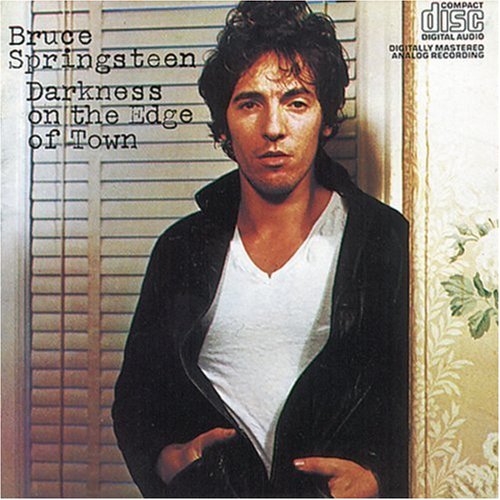
"Darkness on the Edge of Town" at 30

By Joyce Millman

"Here be dragons." According to legend, medieval map-makers used that phrase to signal the dangers of unexplored realms. In 1978, Bruce Springsteen drew a map and wrote "here be dragons" on it - except his warning read, "Darkness on the Edge of Town." The "darkness" haunts this album like a living, often fire-breathing, presence. On the title track, "dreams are found and lost" within its shadows. On "Streets of Fire," when Springsteen yowls, "In the darkness, I hear somebody call my name," it's as if his anguished character has imagined the voice of darkness itself. On "Adam Raised a Cain," the narrator is swallowed up by an abyss of adolescent pain: "In the darkness of your room, your mother calls you by your true name/ You remember the faces, the places, the names/ You know it's never over/ It's relentless as the rain." "Darkness" has many meanings on the album. It's temptation and salvation. It's what we desire and what we fear. It's a crucible through which our true selves are revealed. It's the sin we hide deep in our souls.

In the 1998 book "Songs," Springsteen wrote that he envisioned the characters of "Darkness" as "a community under siege" from the emotional and financial struggles of working-class life. Thirty years after the album's June 2, 1978 release, Springsteen is still guided by his old map, still squinting at the darkness on the edge of town. His most recent album "Magic" (2007) returns to a community under siege, but, this time, the siege is literal. On "Magic," the darkness takes the monstrous shape of governmental arrogance, and the toll of that arrogance hangs over the Springsteenian Anytown landscape like a soul-chilling fog. The gypsy biker is returning home in a flag-draped coffin. There are bodies hanging in the trees. Our own worst enemy has come to town. Through the prism of "Magic," we can now see that "Darkness on the Edge of Town" was Springsteen's great transitional and transformative album. It broached thematic territory to which he would return again and again: the struggle to live up to the promise of our better natures as individuals and as a society. And, musically, it charted a new course that he would follow for the rest of his career.

Springsteen's first three albums, "Greetings from Asbury Park, N.J." (1973), "The Wild, the Innocent and the E Street Shuffle" (1973) and "Born to Run" (1975), were big, tumultuous blends of eclectic rock/jazz/soul orchestrations, cascading boardwalk poetry and technicolor turnpike psychodrama. These records owed a debt to '60s radio, Bob Dylan and Martin Scorsese's operatic vision of Italian-American manhood, "Mean Streets." But "Darkness" was something else entirely, a break with the past so sharp and unsentimental it looked more like an escape.

Take the album cover, for a start. The scraggly-bearded scamp of the previous records was gone, replaced by an unsmiling, (relatively) clean-shaven Springsteen gazing straight into the camera, sleepy-eyed and defiant. Dressed like vintage Brando or James Dean in a white T shirt and black leather jacket, Springsteen is incongruously posed against faded-pink flowered wallpaper and graying Venetian blinds in an old house. On the front and back cover shots, photographer Frank Stefanko positions Springsteen in a nook right up against the blinds, so he seems too large for that small, stifling space. The message is clear: You can't go home again. And indeed, Springsteen had left home. "Darkness" followed a messy legal emancipation from manager and producer Mike Appel; it was the first album made solely with new producer/mentor Jon Landau, the former rock critic who had proclaimed him the "rock and roll future" a few years earlier.

The mood of the music inside the album sleeve matches those broody, yet vulnerable, photos. On his previous records, Springsteen surrounded himself with a gang of lovable losers: Hazy Davy, Killer Joe, Spanish Johnny, Crazy Janey, the Magic Rat. But his lyrics for "Darkness" contain no such cameraderie. His characters here are anonymous, intensely alone and isolated. "I live now, only with strangers/ I talk to only strangers/ I walk with angels that have no place," Springsteen sings on "Streets of Fire." Clarence Clemons' sax solos, the sound of warmth and kinship on previous albums, only appear on three of the 10 cuts on "Darkness." Springsteen's vocals are gruff and growly, the guitar solos savage and scalding. Danny Federici's dirty-blues organ riffs on "Prove it all Night" and "Adam Raised a Cain" hark back to the rumbling working-class anthems of the early Animals. The stately ballad "Factory" and the harmonica-driven "The Promised Land" reflect Springsteen's new (and lasting) interest in Hank Williams, Woody Guthrie and other country and folk musicians. Lean where "Born to Run" was grand, "Darkness" jump-starts the straight-ahead, roots-rock sound that would hit full throttle on Springsteen's fifth album, "The River" (1980), the studio release that best captures the spontaneity of the E Street Band in concert.

With "Darkness," Springsteen also unveiled a stunning new songwriting style, with language that was newly spare and stripped-down, but no less vivid or poetic for its terseness. The songs were no longer exclusively set on urban turf. "Lights out tonight/ Trouble in the heartland" goes the first line of the first song, "Badlands," and from the "rattlesnake speedway in the Utah desert" of "The Promised Land" to the "dusty road from Monroe to Angeline" of "Prove it all Night," "Darkness" crosses the Jersey state line to embrace prairies and plains and a wider, all-encompassing version of America. As if we couldn't guess from the literary-looking typewriter font of the album cover and lyric sheet, Springsteen had set out not to make just a great rock album, but to write his version of the great American novel. And in many ways, he did.

In its vinyl incarnation, "Darkness" comprises 10 songs, five on each side, perfectly mirroring one another in theme and mood. "Darkness" is a looped tale; finish one side, turn it over, and you find different characters in exactly the same emotional, if not physical, place as their brethren on the opposite side. And that's the whole point: The struggle to realize our dreams, to break out of pinched, repressive or hopeless circumstances, is a universal one, repeated from generation to generation, relentless as the rain. Springsteen sings most of the songs in the guise of a restless Everyman, but the ferocious "Adam Raised a Cain" stands apart as a close-to-home confession. Steeped in Catholic guilt and alluding to both biblical Genesis and Steinbeck's "East of Eden," "Adam" is the first song Springsteen recorded that nakedly depicts his turbulent relationship with his father.

But, then, all of the characters on the album share a desire to escape the dead-end, dead-eyed "workin' life" of their fathers (so succinctly and chillingly articulated on "Factory"). These people long to be somewhere, and, often, someone, else. And while all the songs on "Darkness" take place after sundown, this is not the sensual, liberating summer night of "Born to Run," but, rather, a darkness ambiguous and impenetrable, in which the characters drive around and around "chasing some mirage." But for all its car and road imagery, "Darkness" is really about the illusion of movement. Few of these characters truly get anywhere, except in their dreams.

The ones that do make it are haunted by the cost - betrayals, severed ties, disappointment - of pursuing their desires and ambitions, for "wanting things that can only be found/ In the darkness on the edge of town." On the heartbreaking "Racing in the Street," the narrator - possibly the kid from "Thunder Road," who lured Mary off her front porch and into his front seat, crowing "it's a town full of losers / And I'm pullin' out of here to win" - has failed the girl he loves. He promised her a better life, but they've ended up back where they started, "on the porch of her Daddy's house." The girl's "pretty dreams are torn"; the guy races cars to keep from "dying little by little, piece by piece" - to keep moving, even if he knows he's just spinning his wheels. And yet, the song ends with the possibility of redemption and escape: "Tonight my baby and me, we're gonna ride to the sea/ And wash these sins off our hands."

Battered, tenacious faith in the promise of a better life - that's the glimmer of light at the heart of "Darkness," and it shines brightest on each side's opening tracks, "Badlands" and "The Promised Land." Indeed, these two songs are the foundation of the populist spirit that has become an integral part of Springsteen's music. Against a churning beat, the narrator of "Badlands" is "caught in a crossfire" of emotions and impulses. He wants to get out of this nowhere life, take control of his future, but he wonders if it's possible to realize his heart's desire without losing his soul. Is it preordained that to succeed in America, you have to succumb to selfishness and cynicism and adhere to the social and economic facts of life that dictate, "Poor man wanna be rich/ Rich man wanna be king/ And a king ain't satisfied/ Till he rules everything"? The narrator considers going over to the dark side, but his heart isn't in it; the pull of youthful idealism and innocence remain too strong. He keeps coming back to these two words: "I believe." In the emotional crescendo of the song, Springsteen sings, "I believe in the love that you gave me/ I believe in the faith that can save me/ I believe in the hope/ And I pray, that someday it may raise me/ Above these badlands."

The assertion "I believe" recurs in "The Promised Land." The scenario is similar to "Badlands" - the young narrator works in his "daddy's garage" by day and drives around aimlessly by night. He feels weak and trapped and longs for a purifying "twister to blow everything down/ That ain't got the faith to stand its ground." But, he hasn't yet given up hope in what might wait shimmering for him in the wreckage: "Mister, I ain't a boy, no, I'm a man/ And I believe in a promised land."

That use of "Mister" in "Promised Land," as if the story is being told to an observer just out of our view, brought a documentary dimension to Springsteen's songwriting; he would pursue the "Mister" (or "Sir") structure further in the sparse and spooky modern folk music of his 1982 solo masterpiece, "Nebraska." But, in hindsight, "The Promised Land" may well have been Springsteen's first true folk song. Like Woody Guthrie's "This Land Is Your Land," "The Promised Land" is a subversive - a people's - national anthem. It suggests the breadth and natural majesty of the land (that "dark cloud rising from the desert floor" is one of the most hauntingly visual images in all of Springsteen's songwriting) and the resilience of working-class optimism. But it's shadowed with the dark side of the American Dream - the socioeconomic inequalities, the "lies that leave you nothing but lost and brokenhearted." In "The Promised Land," we can find the seeds of two bittersweet latter-day Springsteen folk songs, "Land of Hope and Dreams," a passionate invocation of an America more generous and inclusive than the one we're living in, and "American Land," a rambunctious Irish-flavored salute to - and defense of - the immigrants who have followed their dreams to our supposed land of opportunity.

The question is, after eight years of the Bush Administration, after Iraq, torture, wiretaps, the erosion of the Constitution, the loss of moral standing in the eyes of the world, the disappearance of the middle class and the scapegoating of immigrants, legal and illegal, is it still possible to believe in America as the promised land? Springsteen thinks so, if his April 16 endorsement of Sen. Barack Obama for President is any indication. Springsteen wrote of Obama, "He speaks to the America I've envisioned in my music for the past 35 years, a generous nation with a citizenry willing to tackle nuanced and complex problems, a country that's interested in its collective destiny and in the potential of its gathered spirit."

But even if Springsteen had not written those words, his faith in the "gathered spirit" would have been evident from the pivotal set list positions he gave "The Promised Land" and "Badlands" on the 2007-08 legs of the E Street Band's "Magic" tour. "Magic" is an autumnal record, with references to ill winds and gray skies and a pervasive sense of identities, personal and national, breaking down. The deceptively upbeat "Livin' in the Future" is a litany of all the things that have fallen apart during the Bush years: "The earth it gave away/ The sea rose toward the sun . . . My ship Liberty sailed away … The groundskeeper opened the gates and let the wild dogs run." While the choruses repeat, "We're livin' in the future and/ None of this has happened yet," it's clear that this is only wishful thinking; to borrow a line from "Prove It All Night," this ain't no dream we're livin' through tonight. In nearly every concert of the initial North American portion of the "Magic" tour, "Livin' in the Future" was followed - and contradicted - by "The Promised Land." The latter song's sweet harmonica intro rose up in the wake of the bleak imagery of "Livin' in the Future" like a cleansing rain after a long, punishing dry spell. The words "I believe in a promised land" never sounded so cathartic, so welcome and so urgently necessary.

On the "Magic" tour, "Badlands" usually made its appearance at the end of the first set, immediately following "Long Walk Home," a cornerstone of the "Magic" album. On "Long Walk Home," Springsteen turns the map around, so that he's coming home out of the darkness - "in the distance I could see the town where I was born." He's out of the car and walking, just like Woody Guthrie in "This Land Is Your Land," but as he enters the heart of town, he sees that something has gone very wrong. The diner is shuttered, the VA hall is abandoned, the townspeople are "rank strangers." Once upon a time, his father proudly told him, this town - which is, of course, America itself - was a "great place to be born," and the flag flying over the courthouse "meant certain things are set in stone/ Who we are, what we'll do/ And what we won't."

The closing repetition of the wistful line, "It's gonna be a long walk home," alludes to the daunting work of reversing the moral, psychological and physical damage of the past eight years ("a great American reclamation project," Springsteen called it in his Obama endorsement). But "Badlands," with its holy trinity of belief in love, faith and hope, and its exhilarating assertion that "it ain't no sin to be glad you're alive," reassures us that the task is not insurmountable. In concert, placed after "Long Walk Home," the fervent declaration "I wanna spit in the face of these badlands" became a rejection of the moral wasteland of the Bush years, a refusal to remain a community under siege.

In "Songs," Springsteen wrote that "Darkness on the Edge of Town" was the record on which he found his "adult voice." But it's now clear that this was the record on which he found his political voice as well. "The Promised Land" and "Badlands" are simple yet profound affirmations of democratic ideals; they remain relevant today as commentaries on the darkness of cynicism and the dragons of endless war that threaten to wipe our town off the map. Like the whole of "Darkness," these songs were built on a faith that can stand its ground.

© 2008 by Joyce Millman

About The Author

Some people are inspired to pick up a guitar after seeing their first Bruce Springsteen concert. Joyce Millman (http://www.joycemillman.com/) was inspired to pick up a typewriter. Springsteen's first Boston show of the "Darkness on the Edge of Town" tour (May 29, 1978, the Music Hall) enabled her to imagine her rock 'n' roll-writing future. Since there were no actual rock criticism classes at her school (Boston University), she taught herself the art by reading a lot of great critics (like Ariel Swartley, Dave Marsh and Greil Marcus, who also happened to be Springsteen admirers). She began her career as a rock critic for the Boston Phoenix, after summoning the courage to approach the music editor at a Springsteen concert at the Boston Garden in 1980. Her long association with the paper included a cover review of the first New England show of the 1984 "Born in the U.S.A." tour. In 1987, she relocated to the Bay Area to become the television critic for the San Francisco Examiner. While at the Examiner, she was a two-time finalist for the Pulitzer Prize in criticism (1989 and 1991). In 1995, she was a founding staff member of the online magazine Salon.com. Currently a freelance pop culture critic, essayist and author ("The Great Snape Debate," Borders/BenBella, 2007), she lives in San Mateo, California with her husband and teenage son. She is honored to be a part of the Bruce Springsteen Special Collection's celebration of "Darkness on the Edge of Town" and to have this chance to finish the essay she has been writing in her head for 30 years.
Friday, May 16, 2008

http://www.livecity.co.il/image/users/56167/ftp/my_files/flag%20near%20kotel1.jpg
The Lost Tribes of Israel
by Patrick J. Buchanan

Posted 05/16/2008 ET

As Israel enters its 61st year, Israelis may look back with pride. Yet, the realists among them must also look forward with foreboding.

Israel is a modern democracy with the highest standard of living in the Middle East. In the high-tech industries of the future, she is in the first rank. From a nation of fewer than a million in 1948, Israel's population has grown to 7 million. In seven wars -- the 1948 War of Independence, the Sinai invasion of 1956, the Six-Day War of 1967, the Yom Kippur War of 1973, and the Lebanon wars of 1982 and 2006 -- Israel has prevailed, though some of these wars were, as Wellington said of Waterloo, "a damn near-run thing."

Israel has revived Hebrew, created a new currency, immersed her children in the history, ancient and modern, of her people, and established a homeland for Jews from all over the world, millions of whom have migrated there to settle. Israel is now home to the largest concentration of Jews anywhere on earth.

Here, however, we come to the heart of the existential crisis.

Israel became home to the largest Jewish population on earth in part because American Jews in the 1990s fell in number from 5.5 million to 5.2 million, a loss of 300,000, or 6 percent of the U.S. Jewish population.

According to Charles Krauthammer, by 2050, the U.S. Jewish population will have shrunk another 50 percent to 2.5 million. American Jews are slowly vanishing. How and why is this happening?

It is the collective decision of American Jews themselves, who have led the battles for birth control and a woman's right to choose.

As Jews were roughly 2 percent of the U.S. population from Roe v. Wade to today, perhaps 2 percent of the 50 million legal abortions since Roe were likely performed on Jewish girls or women, resulting in 1 million lost members of the Jewish community in 35 years.

And if demography is destiny, Israel's future, too, appears grim.

As former Ambassador Zalman Shoval writes, Israel's population of 7 million is 80 percent Jewish. But the Palestinian population of Israel has risen to 20 percent and is growing much faster.

One Israel blogger, using Shoval's totals, writes that among the Israeli population between 1 and 4 years old, roughly 30 percent is Arab. The future of Israel is thus increasingly Arab and less Jewish.

According to the United Nations, by 2050, Israel will have 10 million people.

By then, the Arab population, at present birth rates, is likely to be close to 30 percent of the Israeli population. On the West Bank and Gaza, today's 4 million Arabs are to explode to 10 million, far outstripping the growth in Israel. Jordan's population of 5 million, 60 percent Palestinian, will also double to 10 million.

Thus, not even counting Palestinians in Lebanon, Egypt, Saudi Arabia, Syria and the Gulf states, Israel's 7 million to 8 million Jews in 2050 will be living with 13 million Palestinians in Israel, Jerusalem, Gaza and the West Bank. If Israel is to survive as a Jewish state, a separate and independent Palestinian state would seem an imperative.

Yet, as Israelis continue to build outposts and expand and add settlements, the possibility of a Palestinian state recedes. Indeed, many Israelis, seeing what an end to the occupation produced in Gaza, refuse to consider any pullout at all from the West Bank.

Such a policy of holding on and digging in is sometimes the best one -- but only if time is on one's side. Is time on Israel's side?

According to the world population statistics from the National Policy Institute, the worldwide Arabic population in 1950 was only 94 million, less than 4 percent of the world population. But by 2050, it will be 700 million, 7 percent of a world population of almost 10 billion.

According to U.N. population experts, Lebanon's population will grow to 5 million in 2050, but Syria's will almost double from today's 20 million to 34 million. The population of Saudi Arabia will rise from 24 million to 45 million. Egypt will grow by more than 50 million to 121 million Egyptians by 2050. The Islamic Republic of Iran, 71 million today, is expected to reach 100 million at mid-century.

And, demography aside, the Islamic faith of Israel's neighbors is becoming militant. Hamas now controls Gaza. Hezbollah now controls Southern Lebanon and is becoming the power in Beirut. While Egypt is headed by a pro-American autocrat, the principal rival for power is the widely popular Muslim Brotherhood.

Those who do not like the Saudi monarchy should consider what is likely to rise in its place, should the House of Saud fall. The same is true of the Jordanian and Moroccan monarchies, and the sheikdoms, emirates and sultanates of the Persian Gulf.

In any struggle of generations, the critical question is often: Whose side is time on? As President Bush celebrates Israel's 60th birthday, and is celebrated in turn as Israel's best friend ever, it is a fair question to ask.

Mr. Buchanan is a nationally syndicated columnist and author of "The Death of the West," "The Great Betrayal," "A Republic, Not an Empire" and "Where the Right Went Wrong."
http://i.a.cnn.net/si/2006/writers/albert_chen/05/02/greg.maddux/t1_maddux_getty.jpg
From The Chicago Sun-Times:
With Clemens' tumble, Maddux best of his time
By Jay Mariotti

The warmest ovation on a cold day wasn't for Ryan Dempster, who finally is living up to that Marisa Miller bear hug. Or Kerry Wood, who saved the six-hit shutout and 4-0 win. Or once-reviled newcomer Jim Edmonds, who made peace with nemesis Carlos Zambrano, heard rousing cheers after a single, then was hooted with predictable post-strikeout boos in his official wishy-washy welcome to Cubdom.

No, the moving tribute Thursday was reserved for a pitcher who had been bludgeoned for 11 hits and four runs in 4 1/3 clumsy innings. Before he could take the ball from his manager, the applause began, rising from the backstop bricks to the flags atop the grandstand. Looking weary, looking worn, looking like a man who might be leaving the Wrigley Field mound for the last time, Greg Maddux walked slowly to the San Diego dugout, allowing himself a long peek at the fans who were standing and cheering, every one of them, until he vanished without a wave or tip of the cap.

Why no gesture? Mad Dog, always the competitor, was angry at himself.

"Nah, it was nice. I appreciate it. I was just kind of too (ticked) at the time to appreciate it," he said. "But it was cool. People here are special. The fans are a huge part of Wrigley Field and why this is such a great place to play. I'm sure I'll never forget it."

If this was Chicago's final glimpse of the pitching savant, the seam surgeon who has accomplished more with fewer natural gifts than anybody who ever played baseball, the crowd handled the scene with the appropriate tone and reverence. You don't want to go too crazy, for Maddux never has been a rock star. You don't want to be overtheatrical, because you never know if he'll waive his trade clause and end up with the Braves ... or the Cubs again, for the third time. You simply stand, pay your respects and make certain he remembers the moment. And assuming he never passes this way again, it's important he grasps the scope of his magnitude after 23 seasons, 350 wins, four Cy Young Awards, 17 Gold Gloves and a World Series championship.

He is now, unequivocally, the greatest pitcher of his time.

It wasn't long ago when Maddux usually lost that argument, whether the debate was in a corner bar or on a national TV program. He'd lose to Roger Clemens, whose dominance and endurance as a power pitcher trumped the intelligence, finesse and athleticism of Maddux. But then came one of the damndest things we've seen in American life, the sudden crash and burn of The Rocket mystique, a free-fall that began when Clemens was named in the Mitchell Report and exploded into scandal when he arrogantly challenged everyone in his path. Shamed in a Congressional hearing that never would have happened had he simply apologized and explained his steroids use, Clemens has joined Barry Bonds in the front row of the Disgraced Idiots Club. Only he's looking worse than Bonds these days, somehow, with the possibility not only of being jailed for perjury but being remembered as a steroids cheat and family-man fraud who gave new meaning to mixing up his pitches. Mindy McCready? John Daly's ex-wife? Talk about your bad country-western ballad.

Stunningly, the so-called greatest pitcher and slugger of modern times are stuck in lying limbo. But if there's one saving grace regarding the Steroids Era, it's found in the checks and balances. For every revelation about a filthy player, we now have a fonder respect for those who achieved Hall of Fame eminence without steroids. Maddux is not a perfect guy -- as a prankster, he's the king of passing gas in clubhouses -- but I'd bet my life that a 6-foot, 170-pound man with double chins and a little belly has NEVER, EVER used anything remotely resembling a performance-enhancing substance.

The man is too smart to be that dumb. And when I say smart, I mean psychic-smart, international-spy-smart. Ever read the story in ESPN The Magazine from 2006, after he was traded from the Cubs to the Dodgers? Seems pitching ace Brad Penny was so fond of Maddux's innate knowledge that he asked him to call pitches from the dugout during a September game. With Maddux sending signals by looking at different parts of the stadium, Penny threw seven scoreless, walkless innings in a 6-0 victory.

Over the Cubs.

But don't be mad at him. He did plenty of favors for mates in his second Wrigley tour. Zambrano's maturity as a pitcher is partially linked to Maddux, with Big Z relating, "One of the best pitchers in the history of baseball told me he preferred to throw with more sinkers and movement than fastballs. Any time I want to throw 95, 96 (miles per hour), I can. But it's not how hard you throw. It's how you locate your pitches. It's how you learn to pitch."

The feelings were echoed Thursday by Dempster, the converted closer who can make travel plans for the All-Star Game if his 5-1 record and 2.35 ERA are real. "[Maddux} is probably the greatest teammate I've ever had," he said. "Just his ability to truly go out to the mound and take it one pitch at a time -- no matter what the situation, what inning it is, how many people are on base, what the score is -- just keep trying to execute pitches. That's what I've been trying to do. He really took that to its fullest."

Dempster hopes Maddux, 42, keeps pitching forever. I don't agree. It was difficult watching his four-inning dismantling, and who wants to see a legend run on fumes for another two or three years? Conventional wisdom whispers that this is his last season, whether he stays with the Padres or agrees to one final pennant race. Either way, I can't imagine him continuing on like the old man in the "Major League" movie, Eddie Harris. "The one inning, I gave up three hits and a wild pitch, and they didn't score? I didn't pitch down enough -- too many balls were up," Maddux said. "It would have been nice to pitch better, but I got outpitched. [Dempster] threw a great game. It would have been nice to see him finish it, but he threw a great game."

Maddux, too, wanted to see a fellow starter get his complete game. Once a good teammate, always a good teammate.

His romance with Cubdom has been bittersweet, of course. The Tribune Co. allowed him to flee to Atlanta in his early-'90s prime, and his most recent stay ended without a postseason trip during the Dusty Baker years. But if this was Maddux's final hurrah at Wrigley, where he debuted at age 20, he left with pleasant parting thoughts about the current Cubs.

"Definitely, they're very good," he said. "Good defense. Pitching staff is good. Bullpen's pretty good. They've obviously got a chance. They're gonna score runs. Sometimes, it's hard here to score runs, but they're going to. If they pitch and catch, they're probably going to end up doing all right."

He seemed to say it wistfully.

http://www.israelcelebrates60.com/images/buy60/postcard_lg.jpg
The Miracle, at 60
By Charles Krauthammer

WASHINGTON -- Before sending Lewis and Clark west, Thomas Jefferson dispatched Meriwether Lewis to Philadelphia to see Dr. Benjamin Rush. The eminent doctor prepared a series of scientific questions for the expedition to answer. Among them, writes Stephen Ambrose: "What Affinity between their (the Indians') religious Ceremonies & those of the Jews?" Jefferson and Lewis, like many of their day and ours, were fascinated by the Ten Lost Tribes of Israel, and thought they might be out there on the Great Plains.

They weren't. They aren't anywhere. Their disappearance into the mists of history since their exile from Israel in 722 B.C. is no mystery. It is the norm, the rule for every ancient people defeated, destroyed, scattered and exiled.

With one exception, a miraculous story of redemption and return, after not a century or two, but 2,000 years. Remarkably, that miracle occurred in our time. This week marks its 60th anniversary: the return and restoration of the remaining two tribes of Israel -- Judah and Benjamin, later known as the Jews -- to their ancient homeland.

Besides restoring Jewish sovereignty, the establishment of the State of Israel embodied many subsidiary miracles, from the creation of the first Jewish army since Roman times to the only recorded instance of the resurrection of a dead language -- Hebrew, now the daily tongue of a vibrant nation of 7 million. As historian Barbara Tuchman once wrote, Israel is "the only nation in the world that is governing itself in the same territory, under the same name, and with the same religion and same language as it did 3,000 years ago."

During its early years, Israel was often spoken of in such romantic terms. Today, such talk is considered naive, anachronistic, even insensitive, nothing more than Zionist myth designed to hide the true story, i.e., the Palestinian narrative of dispossession.

Not so. Palestinian suffering is, of course, real and heart-wrenching, but what the Arab narrative deliberately distorts is the cause of its own tragedy: the folly of its own fanatical leadership -- from Haj Amin al-Husseini, the grand mufti of Jerusalem (Nazi collaborator, who spent World War II in Berlin), to Egypt's Gamal Abdel Nasser to Yasser Arafat to Hamas of today -- that repeatedly chose war rather than compromise and conciliation.

Palestinian dispossession is a direct result of the Arab rejection, then and now, of a Jewish state of any size on any part of the vast lands the Arabs claim as their exclusive patrimony. That was the cause of the war 60 years ago that, in turn, caused the refugee problem. And it remains the cause of war today.

Six months before Israel's birth, the U.N. had decided by a two-thirds majority that the only just solution to the British departure from Palestine would be the establishment of a Jewish state and an Arab state side by side. The undeniable fact remains: The Jews accepted that compromise; the Arabs rejected it.

With a vengeance. On the day the British pulled down their flag, Israel was invaded by Egypt, Syria, Lebanon, Transjordan and Iraq -- 650,000 Jews against 40 million Arabs.

Israel prevailed, another miracle. But at a very high cost -- not just to the Palestinians displaced as a result of a war designed to extinguish Israel at birth, but also to the Israelis, whose war losses were staggering: 6,373 dead. One percent of the population. In American terms, it would take thirty-five Vietnam memorials to encompass such a monumental loss of life.

You rarely hear about Israel's terrible suffering in that 1948-49 war. You hear only the Palestinian side. Today, in the same vein, you hear that Israeli settlements and checkpoints and occupation are the continuing root causes of terrorism and instability in the region.

But in 1948, there were no "occupied territories." Nor in 1967 when Egypt, Syria and Jordan joined together in a second war of annihilation against Israel.

Look at Gaza today. No Israeli occupation, no settlements, not a single Jew left. The Palestinian response? Unremitting rocket fire killing and maiming Israeli civilians. The declared casus belli of the Palestinian government in Gaza behind these rockets? The very existence of a Jewish state.

Israel's crime is not its policies but its insistence on living. On the day the Arabs -- and the Palestinians in particular -- make a collective decision to accept the Jewish state, there will be peace, as Israel proved with its treaties with Egypt and Jordan. Until that day, there will be nothing but war. And every "peace process," however cynical or well-meaning, will come to nothing.

letters@charleskrauthammer.com

Copyright 2008, Washington Post Writers Group

Thursday, May 15, 2008

The image “http://ecx.images-amazon.com/images/I/51%2B2TINEdWL._SL500_AA240_.jpg” cannot be displayed, because it contains errors.
From The New York Times:
Memoirs of a Girl From the East Country

(O.K., Queens)

By ANTHONY DeCURTIS

IT is one of the most evocative images of Greenwich Village in the 1960s. An attractive young couple are walking down the middle of a snow-covered street. His head is down and tilted toward her. He’s wearing an artfully half-buttoned brown suede jacket, but his hands are stuffed in his jeans’ pockets against the cold. She is smiling, huddling against him. Shot in February 1963, the photo would come to epitomize the romantic youth culture of the time — its freedom and fragility, its rootlessness and sense of purpose.

The couple is Bob Dylan and Suze Rotolo, then his girlfriend, and the photograph graced the cover of Mr. Dylan’s groundbreaking second album, “The Freewheelin’ Bob Dylan” (Columbia), which came out three months later. “Freewheelin’ ” — which includes songs like “Blowin’ in the Wind,” “A Hard Rain’s A-Gonna Fall” and “Masters of War” — established Mr. Dylan, who had just turned 22, as the spokesman of his generation.

Last month, more than 45 years after that photograph made her a nationally known figure, Ms. Rotolo, now 64, stood on the spot on Jones Street where it was taken and eyed the reporter accompanying her warily. “I don’t do re-enactments,” she said, laughing.

After rarely discussing her relationship with Mr. Dylan since they broke up in 1964, Ms. Rotolo has looked back, mostly with affection. Her book “A Freewheelin’ Time: A Memoir of Greenwich Village in the Sixties” comes out this week, and a similar photo from the “Freewheelin’ ” session serves as its cover.

Looking elegant in a lightweight black coat, a long gray skirt and black boots, Ms. Rotolo, who is now a visual artist, recalled the original photo shoot. “We were facing this way,” she said on Jones Street, as she pointed north toward Fourth Street. “I figured they’d choose one of Bob by himself, so it was astounding, really surprising.”

With her long light-brown hair, Ms. Rotolo became a model to emulate for young women and an object of desire for men at the time. She does not recall it that way, however. “It was freezing out,” she said. “He wore a very thin jacket, because image was all. Our apartment was always cold, so I had a sweater on, plus I borrowed one of his big, bulky sweaters. On top of that I put a coat. So I felt like an Italian sausage. Every time I look at that picture, I think I look fat.”

In “A Freewheelin’ Time” Ms. Rotolo walks a delicate line between not wanting to exploit her relationship with Mr. Dylan but needing to address people’s understandable curiosity about it. “Feeding the beast” is how Ms. Rotolo describes the futility of trying to gratify the endless hunger of Dylan fanatics. “When you know that someone is human, to make them godlike is disconcerting,” she said. “I’m not a rapacious Dylan junkie.”

When the couple first met in July 1961 at a folk concert at Riverside Church at which Mr. Dylan performed, they were just two of countless young people who had made their way to Greenwich Village to reinvent themselves. He had left his native Minnesota to pursue his dream of following the path blazed by his idol Woody Guthrie. Ms. Rotolo meanwhile had grown up in Queens, the daughter of working-class Italian Communists during the height of the McCarthy era. Well read, artistically inclined and intellectually adventurous, she yearned for an environment in which her interests did not seem weird, let alone dangerous, for a 17-year-old girl. In the 20-year-old Mr. Dylan she encountered a “kindred spirit,” she said.

They lived together in a small apartment on West Fourth Street and fed each other’s ravenous hunger for meaning. “We created this private world,” Ms. Rotolo recalled over lunch in an Italian restaurant on Waverly Place. “We were searching for poetry, and we saw that in each other. We were so ultrasensitive, both of us. That’s why it was a good relationship, but also why it was difficult.”

Mr. Dylan has been a gnomic figure for so long that it’s sometimes hard to recollect the Chaplinesque aspect that characterized him in his youth. His boundless enthusiasm proved a delight for the more reserved Ms. Rotolo. For his part Mr. Dylan soaked up her passion for the likes of William Blake, Bertolt Brecht and Arthur Rimbaud; he inscribed a paperback edition of Byron’s poems to her “Lord Byron Dylan.” Equally important, her political activism, particularly in the civil rights movement, spurred his thinking and writing about those issues.

“She’ll tell you how many nights I stayed up and wrote songs and showed them to her and asked her: ‘Is this right?’ ” Mr. Dylan told his friend and eventual biographer Robert Shelton. “Because I knew her father and mother were associated with unions and she was into this equality-freedom thing long before I was.”

Their romance, then, began on the basis of an equality that became impossible to sustain. She would soon feel overwhelmed by the obsessive attention the world focused on Mr. Dylan. Having made the symbolic journey across the East River to discover herself and what she might become, she felt lost once again, reduced to being Mr. Dylan’s chick and urged even by her most well-intentioned friends to accommodate her life in every way to his genius.

In approaching Ms. Rotolo about doing the book, Gerry Howard, an editor at Broadway Books, mentioned “Minor Characters,” a memoir by Joyce Johnson, who had been Jack Kerouac’s lover at a similar stage in his career. “I’m a great fan of ‘Minor Characters,’ and I thought Suze stood in exact relation to Dylan as Joyce Johnson did to Kerouac,” Mr. Howard said. “They were present at liftoff and then had to live in the backwash of all that.”

It turned out that Ms. Rotolo too was a fan of “Minor Characters,” which is something of a pre-feminist classic, and saw her story in similar terms. In part for that reason she chose to write the book herself rather than with a collaborator. (Disclosure: I share a book agent with Ms. Rotolo.)

For his part Mr. Dylan was no less disoriented by his rising success than Ms. Rotolo was, and he resented Ms. Rotolo’s need for distance. A nearly six-month trip she took to Europe with her mother in 1962, for example, left him distraught. The pained letters he sent her (“Yes maybe I wish maybe you didn’t cut your hair — it’s so good ... it’ll grow back tho huh?”) reveal a vulnerable side of Mr. Dylan that has rarely been seen.

In the grip of his own struggle, he turned to other women for support, most notably Joan Baez, who, having become a star herself when she was barely 20, could help him negotiate this strange new terrain. Their romantic involvement, which included Ms. Baez’s frequent requests that he perform with her, also significantly expanded his audience, a fact not lost on Mr. Dylan.

“He needed somebody who could guide him,” Ms. Rotolo said. “I could not be the person he needed at that time. I needed that myself. I was still finding out who I was. I had no sense of mission or dead-on ambition, whereas he did. It’s a male-female thing, and it’s also of the time. I knew I was an artist, but I loved poetry, I loved theater, I loved too many things. Whereas he knew what he wanted and he went for it.”

When Ms. Rotolo became pregnant, she and Mr. Dylan agreed that she would have an abortion, which was illegal (and often dangerous) at the time. That further strained their relationship.

“The alliance between Suze and me didn’t turn out exactly to be a holiday in the woods,” Mr. Dylan wryly concludes in his 2004 memoir, “Chronicles, Volume One.” (Mr. Dylan declined to be interviewed for this article.) But he describes their first meeting in more glowing terms: “She was the most erotic thing I’d ever seen. She was fair skinned and golden haired, full-blood Italian. The air was suddenly filled with banana leaves.”

He often wrote about their love affair, most prominently in “Don’t Think Twice, It’s All Right,” “Tomorrow Is a Long Time,” “Boots of Spanish Leather” and “One Too Many Mornings,” and most caustically in “Ballad in Plain D,” in which he castigates her mother and older sister, who did not approve of him. In his liner notes to “The Times They Are A-Changin’ ” (1964), Mr. Dylan wrote, “ah but Sue/she knows me well/perhaps too well/an is above all/the true fortune teller of my soul.”

On a perfect spring afternoon Ms. Rotolo agreed to stroll through Greenwich Village and reminisce about some of the sites she writes about in “A Freewheelin’ Time.” After the stop on Jones Street, she walked toward Fourth Street, where the drones of a man playing a sitar floated from the Music Inn, a crowded instrument store that looked unchanged from the ’60s. “Musicians would just come and play at Allan Block’s,” she said, referring to the famed sandal store and folkie hangout that had been next door, “the way they would at Izzy Young’s Folklore Center on MacDougal Street. If they didn’t have an instrument, they could go to the Music Inn and borrow one.”

A few doors east stood 161 West Fourth Street, where she lived with Mr. Dylan in a two-room walk-up for $60 a month. “Well, some things have changed,” she notes, as she eyes the “exotic novelties” shop that has replaced Bruno’s Spaghetti Store on the ground floor. Their apartment “was in the rear,” she said, “and we looked out on this little garden. There was a pizza place somewhere, so there was always a smell of stale sauce.”

Further west on Sheridan Square she pointed out the newspaper stand on a small island in Seventh Avenue where she and Mr. Dylan awaited the early edition of The New York Times that included Mr. Shelton’s review, now legendary, of Mr. Dylan’s performance at Gerde’s Folk City. The rave, which ran on Sept. 29, 1961, led to Mr. Dylan’s record contract with Columbia Records.

Ms. Rotolo still lives nearby, in the East Village, where she bought a loft, she said, “when they were giving them away.” She has been married many years, and her son, Luca, is a musician and guitar maker who also lives in the city. She has been an illustrator and a painter, and now calls herself a “book artist,” work she described in an e-mail message as reinterpreting “the book as an art object” and combining “drawing, painting, collage, and found objects.” “Reliquaries,” an exhibition of her work, will be on display through mid-July at the Medialia Gallery in Manhattan.

At the Italian restaurant Ms. Rotolo explained how “No Direction Home,” the 2005 documentary that Martin Scorsese directed about Mr. Dylan, inspired her to tell her own story. She is in occasional, if infrequent, touch with Mr. Dylan, and is extremely respectful of his privacy. That he would sanction Mr. Scorsese’s film, in which she appears, and publish his own memoir made her feel more secure about coming forward.

“The feeling I had was, sure, it’s about Dylan, he’s the focal point, but it was my life,” she said about “No Direction Home.” “This is what we all lived through, and what an exciting and pivotal time it was. I came to grips with the fact that this is important, and I should stop being so private.”

Still, she is not nostalgic. “All this indulgence of the ’60s, ay-yi-yi, get over it,” she said. Every era and place hold magic for people willing to live intently in them, she believes. “Everything occurs again, just differently,” she said. “There will always be creative people who feel that they’re different and create a community of some kind. Whether it’s a physical neighborhood or an Internet neighborhood, in Bushwick or in Greenwich Village, it’s not over."

http://www.neoconnews.com/wp-content/uploads/2008/02/cheobama.jpg
From National Review Online:
Barack Obama’s America
Fast forward to 2012.
By Michael Novak

One of the wisest American former officials I know asked me a few nights ago: “Michael, put on your thinking cap, and tell me where the United States will be four years from now, if Barack Obama is president.”

I had been trying to avoid that question in my own mind. I have tried to tell myself the old proverb (told me by my father), “God takes care of children, drunks, and the United States of America.” I have tried to imagine that Obama will not be president.

But I should try to do the responsible thing: follow the trail from Obama’s announced principles and policies to their probable effects, based on how we have learned that the world actually works.

The number one issue, orders of magnitude greater than others, is what will happen in Iran, Saudi Arabia, and other sources of worldwide terrorism — suicide bombers, haters of Israel, and would-be destroyers of the United States and her allies. What will happen in Iraq? What will happen in Iran? What will happen in Pakistan?

Our Democratic party ever since George McGovern’s candidacy in 1972 has wished and wished, like an undisciplined child, for a benevolent world of peace, in which we could “talk to” and “reason with” those leaders whom earlier administrations had learned they could neither trust nor deal with as rational, benevolent partners. Earlier administrations had also hoped that other leaders of nations respected us, and meant us well. Events like the bombing of the World Trade Center, the attack on the USS Cole, and September 11, 2001, plus the subsequent fury and irrational cruelty of jihadists around the world, disillusioned them. But not, apparently, Obama; nor many members of the left-wing generation he represents.

The partisans of the welfare state demand peace, in order to pay for its insatiable need to keep handing out more and more benefits. That is why left-wing statists take peace as their natural inheritance. They cannot go on without it. They do not intend to pay any price for it; there are no funds left for that.

Given the historical record of the last 200 years (and more), what can we expect from this nursery-room fantasy? An untypical, even unprecedented era of peace? Or, on the contrary, the salivating determination of enemies to celebrate our visible moral weakness, and to slay their hated enemy while we bow our heads, standing there as weak and frightened supplicants? When a head is lowered from weakness, they strike it off.

In my experience, unwillingness to fight earns one contempt, further furies of terror, and truly bitter war. But perhaps other observers trust human nature more than I.

If the United States shows signs of weakness, surrender, and a one-sided departure from Iraq, the rejoicing of those who predicted that they would in the end defeat us will profoundly strengthen their resolve for the next battle. Further, without an offensive thrust in Iraq, any military forts or airfields of ours would be sheltered in a defensive enclave — announcing to those who hate us that they should keep killing two or more Americans every day, drip, drip, drip, until the American people cannot stand it any more. Weakness once shown invites fiercer aggression.

Iran will thus have its nuclear weapon by 2012, secure in the knowledge that Americans have no heart to do battle to prevent it.

In Pakistan, forces of economic and political development will know that they can no longer count on the Americans as a last resort. They would soon — to save their families — begin to yield more and more space to jihadists, terrorists, and promoters of sharia law. Free nations by 2016 will be far weaker than now, with far less space in which to alter the direction of terrorism.


Domestic Policy
Meanwhile, if Obama keeps his pledge to raise taxes on the top 10 percent of income earners (or even on the top 2 percent), he will give them enormous incentives to alter their behavior, so as to show lower income. Since the top 1 percent of earners pay over 35 percent of all income taxes paid by all Americans, any decline in their income means a steep decline in tax revenues. Obama seems to have no comprehension that raising tax rates at the top dramatically lowers revenue coming in. He will learn the hard way.

His policies on quasi-universal health care will change all the incentives in our current health system — and for the worse. Studies show that a high proportion of demands for health care are the result of personal behaviors — eating or drinking too much, not exercising enough, leading a dissipated life, not taking advantage of preventive care, spending health dollars heedlessly (because they are paid by the State, not the responsible individual).

Many older doctors will leave medical practice rather than become employees of the State, constantly regulated, badgered, and demeaned. The idea of medicine as a proud, independent, inventive profession will be profoundly wounded. In hospitals, paying benefits for patients (even if they practice irresponsible behaviors) will demand ever more dollars, which must necessarily be pulled out of research and invention. Long bureaucratic lists of those needing particular operations will force even the neediest patients to wait long months before they can get care.

Neither Obama nor his party seems to understand how incentives motivate human behavior — not force, not coercion, not mockery, not nursery-school regulation, but real possibilities of good fruits up ahead for free and responsible actions. They do not understand the wellsprings of a virtuous, free, and prosperous society. They are still entangled in the fantasies of the European Left of 150 years ago.

Thus, Obama is now the creature and the prisoner of the American far Left, which has learned nothing from the failures of socialist and statist and anti-capitalist ideas during the past hundred years. Many leftists learn nothing, know nothing, and propel themselves not with practical wisdom, but with outrage and contempt and a desire to punish those who do not agree with them.

My friend himself thought, he finally revealed, that the West has come to an epochal axial point in history. From now on, economic and political progress would grow far less quickly than ever before, and a long-lasting, precipitous decline is about to begin. Overseas, and also at home.

Morally, too, virtue and character and responsibility for oneself would be mocked and discouraged. The State would take over more and more of life. Although licentiousness would be glorified on big screen and small screen (the Democrats favor the Hollywood view of the world, and vice versa), neither self-directed liberty nor self-mastery nor responsibility for the consequences of one’s own behavior would be encouraged. These would be treated as retrograde ideas. All virtue would be attributed to the motherly caring State — and to its political managers. Woe to the “right-wing” dissenters!

Well, maybe I am wrong. But that is how I see things, admittedly through a cloudy glass.

My only two suppositions are (1) that Obama will do exactly what he now says he will do; and (2) that we may dimly discern the consequences likely to flow from his words and actions, based upon what we have seen happen in other decades and other generations.

My most hopeful moments derive from imagining that Obama, as president, will be dissuaded from acting as he now says that he will. In that way, God will once again take care of those who are drunk on statist illusions, and He will once again take care of the United States, despite itself. It is when I take Obama at his word that pessimism floods over my heart.

— Michael Novak is the winner of the 1994 Templeton Prize for progress in religion and the George Frederick Jewett Scholar in Religion, Philosophy, and Public Policy at the American Enterprise Institute. Novak's own website is www.michaelnovak.net.

Wednesday, May 14, 2008

LIBERTAS REVIEW: The Chronicles of Narnia:
Prince Caspian

anna_popplewell41.jpg

All 140 minutes of The Chronicles of Narnia: Prince Caspian are vastly superior to its predecessor. The crucial difference is that unlike The Lion, The Witch and the Wardrobe (2005), Caspian is not a C.S. Lewis picture, it’s a director’s picture — it‘s an Andrew Adamson picture. Wardrobe was overly cautious and entirely too tentative in bringing to life a beloved children’s book. Good intentions, while appreciated, don’t always make for great storytelling and Wardrobe had a precious, sterile quality which only served as a kind of serviceable entertainment; a film that didn’t betray the source material but whose fear of doing so kept us at arm’s length. With Prince Caspian, Adamson steps out with confidence and creates an epic and magnificent adventure that engages and exhilarates from opening scene to closing credits.

Only a year has passed for the four Pevensie siblings, who after growing to adulthood as kings and queens in Narnia are now having trouble adjusting as everyday children in the real world of WWII-era London. However, in Narnia, a full 1300 years have passed and the four siblings and their kingdom of wondrous talking animals have melted away into history — into the kind of legend found on cave drawings. Narnia’s now ruled by General Miaz, the power-hungry uncle of Prince Caspian — the rightful heir to the throne.

warwick_davis7.jpg

The story opens on the birth of Miaz’s son — a son who would be king were it not for Caspian. After narrowly escaping an assassination attempt, Caspian finds himself exiled and protected by the wondrous creatures he thought only existed in the folk tales taught to him by his mentor.

Relentlessly hunted by Miaz’s soldiers, Caspian uses Susan’s magic horn, drawing Peter, Susan, Edmund, and Lucy from a London subway station back to their beloved Narnia. It takes a while for the four children to adjust to a Narnia they no longer recognize, but events soon force them into another confrontation with evil that will require from them even more than when they confronted the White Witch.

princecaspian_aslan.jpg

Caspian avoids the episodic plotting of its predecessor by immediately setting up a momentum towards a coming battle which looms within the subtext of every scene. Plenty of time is taken to introduce new characters and re-introduce old ones, but make no mistake, Caspian is a war film and everything is about preparing for that final confrontation.

While the special effects are much improved over those in Wardrobe, which were often cheesy, the characters are never lost in the grand spectacle. The plot is refreshingly simple, but the characters and their relationships are not, and even during the grandest of battle scenes, which are exceptionally well-choreographed and shot, the humanity of the people fighting the battle remain the focus.

prince.jpg

Each of the four leads is given an opportunity to shine. These are the highlights of the film because of an exceptional script which keeps the moments essential to the story, faithful to the themes being explored, and important to the development of each character. It also helps that since the first film the four children have grown remarkably both as actors and in a natural ability to command the screen. As Prince Caspian, Ben Barnes is the most pleasant of surprises. All my concerns that he was just another hollow piece of Hollywood tween-bait faded quickly. He brings more to the table than a pretty face.

Other notable performances include The Mighty Peter Dinklage as the dwarf Trumpkin, who suffers the patronizing indignity of his size with a series of memorable laugh-out-loud asides. His best moment, however, comes at the end when the cynic is finally made to understand what he was really fighting for. If you loved Shrek’s Puss n’Boots, get ready for Eddie Izzard’s hilarious and warm interpretation of the gallant mouse Reepicheep who should be charged with felony scene stealing.

princecaspian_reepicheep.jpg

A more fitting title for this wonderful sequel might have been, The Chronicles of Narnia: The Lie Of Kumbaya. Caspian’s themes of honor, faith, nobility, and self-sacrifice all come to a single point: confronting and destroying an evil that will not be appeased or negotiated with. This is often a dark adventure, and one that doesn’t ask us to turn the other cheek when it comes to confronting evil — even through war.

Like a great 1940s swashbuckler, Caspian never crosses the line from action into violence, and yet there’s still plenty of suspense and a sense of the real stakes involved in life and death. In the breathtaking climax, which rivals those in the Lord of the Rings trilogy, the thrills are a result of your affection for the characters not from anything visceral.

prince2.jpg

The Christian theme is not only stronger in Caspian than in Wardrobe, but integrated more naturally into the story — slowly building with events until it perfectly climaxes at the end for maximum emotional effect. This is not some new-age Christian allegory where if you fall to your knees in some sun-dappled field and raise your hands to Jesus all your problems will go away. As in life, God is not a deus ex machina. There’s a bigger picture at work — a master plan — and it’s up to us to find our place within that plan, not the other way around. What Would Aslan Do? No. What Would Aslan Want Us To Do.

Everything you could possibly ask for in an adventure film Caspian offers and then some. Photographed with style to spare and set to a rousing score worthy of an Errol Flynn classic, Caspian delivers any number of wonderful, well-defined characters you care about, strong and worthy themes, warmth, humor, and a driven plot determined first and foremost to entertain. With Iron Man I was sure the best film of the summer was already behind us. I do love it when I’m wrong.

stars_3-5.gif

http://hurryupharry.bloghouse.net/archives/hezbollah%20salute.jpg
From The New York Post:
ENABLING HEZBOLLAH
By RALPH PETERS

May 14, 2008
-- AS Hezbollah's terror army dismantles Lebanon, the world whistles "Ain't That a Shame."

With its heavily funded proxies marching through an Arab democracy's ruins, Iran has arrived on the Mediterranean, outflanking Israel.

Syria's surrogates punish Beirut. Lebanon's crippled government cringes at the whims of Hassan Nasrullah, Hezbollah's strongman. Terror rules.

And not one civilized country lifts a finger.

This doesn't mean that war will be avoided at the "negligible" cost of Lebanese lives and freedom. It just means that the inevitable showdown with Hezbollah will be a bloodier mess when it finally comes.

When will we face reality? Hezbollah can't be appeased. Hezbollah can't be integrated into a democratic government and domesticated. And Hezbollah, whose cadres believe that death is a promotion, can't be deterred by wagging fingers and flyovers.

Hezbollah, our mortal enemy, must be destroyed. But we - Israel, the United States, Europe - lack the will. And will is one thing Hezbollah and its backers in Iran and Syria don't lack: They'll kill anyone and destroy anything to win.

We won't. We still think we can talk our way out of a hit job. Not only are we reluctant to kill those bent on killing us - we don't even want to offend them.

Hezbollah's shocking defeat of Israel in 2006 (when will Western leaders learn that you can't measure out war in teaspoons?) highlighted the key military question of our time: How can humane, law-abiding states defeat merciless postnational organizations that obey only the "laws" of bloodthirsty gods?

The answer, as Iraq and Afghanistan should have taught us, is that you have to gut the organization and kill the hardcore cadres. (Exactly how many al Qaeda members have we converted to secular humanism?).

Entranced by the military vogue of the season, we don't even get our terminology right. Defeating Hezbollah has nothing to do with counterinsurgency warfare - the situation's gone far beyond that. We're facing a new form of "non-state state" built around a fanatical killing machine that rejects all of our constraints.

No one is going to win Hezbollah's hearts and minds. Its fighters and their families have already shifted into full-speed fanaticism, and there's no reverse gear. Hezbollah has to be destroyed.

But we're not going to do it. And Israel's not going to do it. We both lack the vision, the guts, the strength of will. Hezbollah has all three. In spades.

As for Europe stepping in, it's got just enough UN peacekeepers in Lebanon to serve as hostages, but not enough to set up a convincing roadblock. (All the United Nations has done has been to direct traffic for Hezbollah arms smugglers.)

And Europeans won't fight to protect Jews. Even now, Europeans, high and low, wish they could find an excuse to pile on against Israel. The continent's shamelessly anti-Israeli media is doing all it can to give its audiences that excuse - witness the pro-Hezbollah propaganda reported as ground truth in 2006 - but Europe's still a bit too embarrassed by its recent past to actively aid in Israel's destruction.

Meanwhile, Israel's bumbling Prime Minister Ehud Olmert and his government remain focused on the chaos in Gaza generated by Hamas - another Iranian tool - while trying to ignore the existential threat metastasizing on its northern border. The "world community" wrings its hands about Tehran's nuclear ambitions, but does nothing - as Iran methodically sets the stage to launch volleys of medium-range missiles into Israel when the hour of reckoning comes.

The extremists running Iran today would destroy Israel. No matter the cost. And Hezbollah's happy to help.

Until that day comes, Tehran and Damascus are convinced that no one will stand up for Lebanon. They're savvier strategically than we are.

Before Israel squandered its credibility in the 2006 war, it briefly looked as though its Sunni Arab neighbors might rouse themselves to action to help thwart Tehran's ambitions. Those hopes have dissolved. Meanwhile, Jordan's rulers seem blithely unaware that they're next: Once Lebanon is under Hezbollah's thumb, Iran and Syria's next step will be to destabilize Jordan, surrounding Israel with active enemies.

Is there a good solution? No. Is there any solution? Yes. Backed by US air and naval power, Israel must strike remorselessly, destroying Hezbollah without compromise and ignoring the global save-the-terrorists outcry.

It's not going to happen. We lack the strength of will to do this right.

Israel or even the United States may feel compelled to intervene at some point. But we'll do too little too late and stop too soon.

Hezbollah would sacrifice women and children by the thousands to win. We rely on that fatal narcotic, diplomacy, as Lebanon shatters and our enemies pick up the pieces.

We're not Hezbollah's enemies. We're its enablers.

Ralph Peters' new book, "Looking For Trouble: Adventures in a Broken World," comes out July 4.

Tuesday, May 13, 2008

The image “http://www.oftwominds.com/photos07/burma-ad.gif” cannot be displayed, because it contains errors.
From Christianity Today:
'Destroy the Christian Religion'
Campaign against Christians presses problem with refugee resettlement.

A campaign to wipe out Christians and ethnic minority groups in Myanmar is creating a refugee crisis and new challenges for the U.S. government.


According to a leaked document obtained by Christian Solidarity Worldwide (CSW), Myanmar's military regime has embarked on a plan to rid the country of Christians through force and persuasion.

"The Christian religion is very gentle—identify and utilize its weakness," explains the plan, titled "Program to Destroy the Christian Religion in Burma."

The document, believed to have originated in the Ministry of Religious Affairs, circulated widely in the capital city of Yangon.

"Virtually every kind of human-rights violation is taking place," said Benedict Rogers, CSW's advocacy officer for South Asia. Rogers and activists from Myanmar recently visited Washington, D.C., as part of a worldwide tour to brief senior officials on the plight of minorities in the country, formerly known as Burma.

In February, the state-run New Light of Myanmar newspaper published statements from the Myanmar Council of Churches and Catholic Bishops Conference that denounced the CSW report. However, Rogers said these groups have not always supported government religious policy. In 1999, they reported that government officials had expelled ministers, arrested Christians, compelled them to renounce their faith, and prohibited them from evangelizing and worshiping.

Ethnicity, religion, and politics combine to fuel a civil war between the government and minority ethnic groups. Myanmar's military rulers wield Buddhism as a political weapon against predominantly Christian minority ethnic groups, such as the Karen, Chin, and Kachin.

Human-rights groups estimate that at least 500,000 displaced persons take refuge in eastern Myanmar along the border with Thailand. Another 140,000 live in nine refugee camps in Thailand. Most of these refugees are Christians with connections to the Karen National Union (KNU), which has been fighting the military regime for independence.

While the U.S. government has sought to resettle small numbers of persecuted refugees on American soil, antiterrorism laws have blocked many from entering. The U.S. Patriot Act classifies as terrorists those refugees who have offered "material support" to an armed rebel group.

"These are people who are … supporting groups that are protecting them from being slaughtered by a dictatorial regime," said Edward Neufville, a lawyer who is seeking U.S. asylum for two Chin refugees.

"The government is slowly recognizing the problems with the law, but they don't want to be accused of being soft on terrorism. In the meantime, those most in need of protection are suffering."

Last year, the U.S. government granted special waivers to more than 1,800 mostly Karen refugees and resettled them. After Christian organizations protested that the government unfairly excluded many refugees, the Department of Homeland Security announced in January it would consider applications from refugees who provided material support "while under duress." It also announced that the agency would exercise discretion with regard to eight groups, including the KNU, when considering material support cases.

According to Jenny Hwang, director of advocacy and policy for World Relief's refugee and immigration program, the Department of Homeland Security can waive the rule "for those who gave material support to the KNU," but the department cannot waive the rule for "those who were actual members or combatants."

News of Myanmar's continued campaign against Christians, Hwang said, will "provide a greater sense of urgency for the United States to start resettling refugees in larger numbers."

Copyright © 2007 Christianity Today.
[unit.jpg]

From Nikki Finke's Deadline Hollywood: Fantastic news...
'The Unit' On CBS Renewed

CBS renewed The Unit at an appropriate time: the drama series' cast is over in the Persian Gulf for a week to visit with U.S. soldiers. (See photos below). I hear Robert Patrick arranged the tour through the USO. He and other Unit actors Michael Irby, Max Martini, and Dennis Haysbert landed in Kuwait last Thursday to spend quality time with troops. The actors are sharing stories about the show, signing autographs and posing for pictures.

uso-photos-2.jpg

uso-photos-1.jpg

http://roadsassy.com/wp-content/uploads/2008/03/obeyobama.jpg
From Real Clear Politics:
The Obama Rules

By Rich Lowry

If Barack Obama gets his way, the Oxford English Dictionary will have updated its definition of "distraction" by the end of the campaign: "Diversion of the mind, attention, etc., from any object or course that tends to advance the political interests of Barack Obama."

After his blowout win in North Carolina last week, Obama turned to framing the rules of the general election ahead, warning in his victory speech of "efforts to distract us." The chief distracter happens to be the man standing between Obama and the White House, John McCain, who will "use the very same playbook that his side has used time after time in election after election."

Ah, yes, the famous distractions with which Republicans fool unwitting Americans. Ronald Reagan distracted them with the Iranian hostage crisis, high inflation and unemployment, gas lines and the loss of American prestige abroad. Then, the first George Bush distracted them with the notion of a third Reagan term, as well as the issues of taxes, crime and volunteerism. After a brief interlude of national focus during two Clinton terms, another Bush arrived wielding the dark art of distraction.

Forget "bitter"; Obama must believe that most Americans suffer from an attention-deficit disorder so crippling that they can't concentrate on their own interests or values.

Obama has an acute self-interest in so diagnosing the American electorate. His campaign knows he's vulnerable to the charge of being an elitist liberal. Unable to argue the facts, it wants to argue the law -- defining his weaknesses as off-limits.

The campaign can succeed in imposing these rules on the race only if the news media cooperate. Newsweek signed up for the effort in a cover story that reads like a 3,400-word elaboration of the "distraction" passage of Obama's victory speech. "The Republican Party has been successfully scaring voters since 1968," it says, through "innuendo and code." McCain "may not be able to resist casting doubt on Obama's patriotism," and there's a question whether he can or wants to "rein in the merchants of slime and sellers of hate."

Here are the Obama rules in detail: He can't be called a "liberal" ("the same names and labels they pin on everyone," as Obama puts it); his toughness on the war on terror can't be questioned ("attempts to play on our fears"); his extreme positions on social issues can't be exposed ("the same efforts to distract us from the issues that affect our lives" and "turn us against each other"); and his Chicago background too is off-limits ("pouncing on every gaffe and association and fake controversy"). Besides that, it should be a freewheeling and spirited campaign.

Democrats always want cultural issues not to matter because they are on the least-popular side of many of them, and want patriotic symbols like the Pledge of Allegiance and flag pins to be irrelevant when they can't manage to nominate presidential candidates who wholeheartedly embrace them (which shouldn't be that difficult). As for "fear" and "division," they are vaporous pejoratives that can be applied to any warning of negative consequences of a given policy or any political position that doesn't command 100 percent assent. In his North Carolina speech, Obama said the Iraq War "has not made us safer," and that McCain's ideas are "out of touch" with "American values." How fearfully divisive.

We could take Obama's rules in good faith if he never calls John McCain a "conservative" or labels him in any other way. If he never criticizes him for his association with George Bush. If he doesn't jump on his gaffes (like McCain's 100-years-in-Iraq comment that Obama distorted and harped on for weeks). And if he never says anything that would tend to make Americans fearful about the future or divide them (i.e., say things that some people agree with and others don't).

This is, of course, an impossible standard. Obama doesn't expect anyone to live up to it except John McCain.

© 2008 by King Features Syndicate

The image “http://graphics8.nytimes.com/images/2007/04/22/us/600-obama.jpg” cannot be displayed, because it contains errors.
Race Cards and Speech Codes
by Patrick J. Buchanan

"Give me a break. This whole thing is the biggest fairy tale I've ever seen."

So said Bill Clinton in New Hampshire of Obama's claim to have been a constant opponent of the war. Clinton cited Obama's voting record, which was the same as Hillary's in his early Senate years.

Yet, for this, the ex-president, designated by Toni Morrison as "our first black president," was charged with playing the race card.

Clinton spent days explaining the "fairy tale" remark.

Came then the morning of the South Carolina primary, where Barack was rolling up a smashing victory. Bill volunteered: "Jesse Jackson won in South Carolina, twice, in '84 and '88. And he ran a good campaign, and Sen. Obama's running a good campaign."

That broke it. Bill Clinton was openly "playing the race card."

Now, undoubtedly, Clinton was trying to belittle, to diminish the importance of the South Carolina vote for Obama. But why is it racist to say what Clinton was implying: That, in a Southern state where a huge share of the Democratic vote is African-American, a strong black presidential candidate can be expected to do well?

Political history proves this. What is racist about saying it?

Aware of the truism, every political analyst was looking closely at the racial breakdown of the South Carolina vote.

Last week came Hillary's turn. After her victory in Indiana and loss in North Carolina, which pundits said rang down the curtain on her presidential bid, she advanced an argument candidates have used since primary elections began. "I can win -- and my opponent can't."

The argument was made against Goldwater, Nixon, Reagan.

In an interview with USA TODAY, Hillary argued that the coalition she has put together would be stronger against John McCain than the coalition Barack has cobbled together.

She began by relating an AP article "that found how Sen. Obama's support among working, hard-working Americans, white Americans, is weakening again, and how whites in both states who had not completed college were supporting me."

"There's a pattern emerging here," said Hillary. "I have a much broader base to build a winning coalition on."

This shot Eugene Robinson of The Washington Post into low orbit.

"As a rationale for why Democratic Party super-delegates should pick her over Obama, it's a slap in the face to the party's most loyal constituency -- African Americans -- and a repudiation of principles the party claims to stand for. Here's what she's really saying to party leaders: There's no way that white people are going to vote for the black guy. Come November, you'll be sorry ...

"Clinton implies but doesn't quite come out and say ... that Obama is black -- and that white people who are not wealthy are irredeemably racist."

But Hillary was saying no such thing. Describing her coalition, she was implying that Obama's coalition -- a George McGovern-Jesse Jackson combine embracing 90 percent of African-Americans, plus liberals, students and cause people -- has less chance of beating McCain than does she and her more Middle American coalition.

Democrats, not liberal Democrats, are the swing votes who decide presidential races. Here Hillary beats Obama three to two or two to one, North and South.

Has she no right to make this argument? Can Brother Robinson explain exactly how Hillary can describe her Ohio-Pennsylvania coalition without using the dread word "white"?

Some of the reaction to the Clintons, whose once-universal support among African-Americans has crashed, is due to the immense stake black Americans have come to invest in the Obama candidacy. But some of this is something else, something more sinister.

Bill and Hillary Clinton are not playing a race card. Rather, the liberal media and some black journalists with sentimental, emotional or ideological investments in Obama are playing the intimidation card.

They are setting limits around what may and may not be said about Obama. They are seeking to censor robust adversarial speech where Barack is concerned, by branding as racists "playing the race card" any who make Barack run the same paces as anyone else.

The Clintons are today victims of a double standard that has long been employed against conservatives.

Even African-Americans critical of Obama are feeling the lash. In Saturday's Washington Post article, "Black Community Is Increasingly Protective of Obama," reporter Darryl Fears writes, "Standing in the path of Obama's campaign has been dangerous" for prominent blacks.

Bill and Hillary have lost luster and sustained damage to their reputations because, in the Democrats' universe, such smears stick. The question for Republicans is whether they will let themselves be intimidated, as they too often are, from using legitimate political weapons to defend what they still have.

It is thus a sign of trouble ahead that John McCain declared the Rev. Wright off limits and berated the North Carolina GOP for bringing him up. Let your adversaries circumscribe the content of your campaign, and you usually end up losing your campaign.

Mr. Buchanan is a nationally syndicated columnist and author of "The Death of the West," "The Great Betrayal," "A Republic, Not an Empire" and "Where the Right Went Wrong."
http://english.chosun.com/media/photo/news/200410/200410190017_01.jpg
From Opinion Journal:
The Challenge From China

By MARK HELPRIN

May 13, 2008

Even as our hearts go out to the Chinese who have perished in the earthquake, we cannot lose sight of the fact that every day China is growing stronger. The rate and nature of its economic expansion, the character and patriotism of its youth, and its military and technical development present the United States with two essential challenges that we have failed to meet, even though they play to our traditional advantages.

The first of these challenges is economic, the second military. They are inextricably bound together, and if we do not attend to both we may eventually discover in a place above us a nation recently so impotent we cannot now convince ourselves to look at the blow it may strike. We may think we have troubles now, but imagine what they will be like were we to face an equal.

China has a vast internal market newly unified by modern transport and communications; a rapidly flowering technology; an irritable but highly capable workforce that as long as its standard of living improves is unlikely to push the country into paralyzing unrest; and a wider world, now freely accessible, that will buy anything it can make. China is threatened neither by Japan, Russia, India, nor the Western powers, as it was not that long ago. It has an immense talent for the utilization of capital, and in the free market is as agile as a cat.

Unlike the U.S., which governs itself almost unconsciously, reactively and primarily for the short term, China has plotted a long course, in which with great deliberation it joins economic growth to military power. Thirty years ago, in what may be called the "gift of the Meiji," Deng Xiaoping transformed the Japanese slogan fukoku kyohei (rich country, strong arms) into China's 16-Character Policy: "Combine the military and the civil; combine peace and war; give priority to military products; let the civil support the military."

Japan was able to vault with preternatural speed into the first ranks of the great powers because it understood the relation of growth to military potential. A country with restrained population increases and a high rate of economic expansion can over time dramatically improve its material lot while simultaneously elevating military spending almost beyond belief. The crux is to raise per-capita income significantly enough that diversions for defense will go virtually unnoticed. China's average annual growth of roughly 9% over the past 20 years has led to an absolute tenfold increase in per-capita GNP and 21-fold increase in purchasing-power-parity military expenditure. Though it could do more, it prudently limits defense spending, with an eye to both social stability – the compass of the Chinese leadership – and assimilable military modernization.

As we content ourselves with the fallacy that never again shall we have to fight large, technological opponents, China is transforming its forces into a full-spectrum military capable of major operations and remote power projection. Eventually the twain shall meet. By the same token, our sharp nuclear reductions and China's acquisitions of ballistic-missile submarines and multiple-warhead mobile missiles will eventually come level. The China that has threatened to turn Los Angeles to cinder is arguably more cavalier about nuclear weapons than are we, and may find parity a stimulus to brinkmanship. Who will blink first, a Barack Obama (who even now blinks like Betty Boop) or a Hu Jintao?

Our reductions are not solely nuclear. Consider the F-22, the world's most capable air dominance aircraft, for which the original call for 648 has been whittled to 183, leaving, after maintenance, training, and test, approximately 125 to cover the entire world. The same story is evident without relief throughout our diminished air echelons, shrinking fleets, damaged and depleted stocks, and ground forces turned from preparation for heavy battle to the work of a gendarmerie.

As the military is frustrated and worn down by a little war against a small enemy made terrible by the potential of weapons of mass destruction, the shift in the Pacific goes unaddressed as if it is unaddressable. But it is eminently addressable. We can, in fact, compete with China economically, deter it from a range of military options, protect our allies, and maintain a balance of power favorable to us.

In the past we have been able to outwit both more advanced industrial economies and those floating upon seas of cheap labor – by innovating and automating. Until China's labor costs equal ours, the only way to compete with its manufactures is intensely to mechanize our own. Restriction of trade or waiting for equalization will only impoverish us as we fail to compete in world markets. The problem is cheap labor. The solution, therefore, is automation. Who speaks about this in the presidential campaign? The candidates prefer, rather, to whine and console.

We must revive our understanding of deterrence, the balance of power, and the military balance. In comparison with its recent history, American military potential is restrained. Were we to allot the average of 5.7% of GNP that we devoted annually to defense in peacetime from 1940-2000, we would have as a matter of course $800 billion each year with which to develop and sustain armies and fleets. During World War II we devoted up to 40% of GNP to this, and yet the economy expanded in real terms and Americans did not live like paupers.

The oceans have been our battlefields since the beginning; we invented powered flight; and our automobiles still await us on the surface of the moon – our métiers are the sea, air and space. Thus, we have been blessed by geography, for with the exception of South Korea our allies in the Pacific are islands. With Japan, Australasia, our own island territories, and Admiral Nimitz's ocean, we can match and exceed indefinitely any development of Chinese strategic power – which, by definition, must take to the sea and air.

* * *

And there we will be, if we are wise, not with 280 ships but a thousand; not eleven carriers, or nine, but 40, not 183 F-22s, but a thousand; and so on. That is, the levels of military potential that traditional peacetime expenditures of GNP have provided, without strain, throughout most of our lives. As opposed either to ignominious defeat without war, or war with a rising power emboldened by our weakness and retirement, this would be infinitely cheaper.

And yet what candidate is alert to this? Who asserts that our sinews are still intact? That we can meet any challenge, especially when it can be answered with our historical strengths? That beneath a roiled surface is a power limitless yet fair, supple yet restrained? Who will speak of these things in time, and who will dare to awaken them?

Mr. Helprin, a senior fellow at the Claremont Institute, is the author of, among other works, "Winter's Tale" (Harcourt) and "A Soldier of the Great War" (Harcourt). This piece was adapted from a speech given at Stanford University's Hoover Institution.