Saturday, January 27, 2007

From Deadspin:

Serena Rampages Through Australia

Playing like a slightly more masculine version of Roger Federer, Serena Williams spanked Maria Sharapova in the finals of the Australian Open yesterday, winning 6-1, 6-2. It is the third biggest upset in Australian Open history, sort of. Serena came into the tournament ranked 81st in the world. Turns out, her ranking was slightly misleading. Sharapova called her "flawless."
"It was an awesome win, because I had so many critics. So many people ... saying negative things," Williams said. "Saying I wasn't fit, when I felt that I was really fit, and I could last three sets.

"It's always like, tell me no and I'll show you that I can do it. I get the greatest satisfaction just holding up the Grand Slam trophy and proving everyone wrong."I see she's going through her "Patriot" phase.

This is all very bad news for every other female on the planet who thinks they can play tennis. Serena missed almost all of last year with a knee injury, and had just three competitive matches under her belt before mowing through a major championship like Maurice Clarett goes through the cookies in the commissary.

The image “http://www.mvps.org/st-software/Movie_Collection/images/9436f.jpg” cannot be displayed, because it contains errors.
Now this is the kind of thing the CIA needs to be doing. Where are the Arabic language versions of the life of Muhammad?

The Plot Thickens
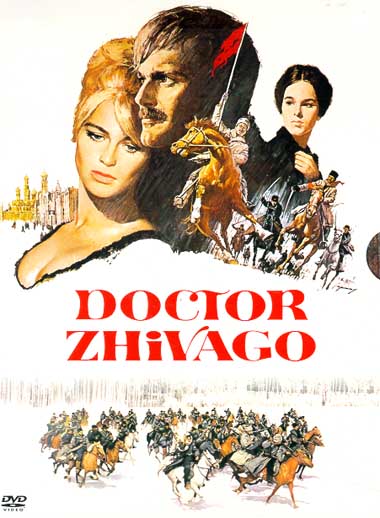
A New Book Promises an Intriguing Twist to the Epic Tale of 'Doctor Zhivago'

By Peter Finn


Washington Post Foreign Service
Saturday, January 27, 2007

MOSCOW Into one of the most sordid episodes in Russian literary history, the Soviets' persecution of Boris Pasternak, author of "Doctor Zhivago," a Russian historian has injected a belated piece of intrigue: the CIA as covert financier of a Russian-language edition of the epic novel.

Ivan Tolstoy, who is also a broadcaster for Radio Liberty and Radio Free Europe, writes in a forthcoming book that the CIA secretly arranged for the publication of a limited Russian-language edition of "Doctor Zhivago" in 1958 to help Pasternak secure the Nobel Prize in Literature that year.

"Pasternak's novel became a tool that was used by the United States to teach the Soviet Union a lesson," Tolstoy said in a telephone interview from Prague, where he works as a Russian commentator for the U.S. government-funded radio stations. The novelist knew nothing of the CIA's action, according to Tolstoy and the writer's family.

Tolstoy said his book, "The Laundered Novel," is based on more than a decade of research and will be released later this year, the 50th anniversary of the publication of "Doctor Zhivago." He previewed its contents in a recent lecture in Moscow.

A CIA role in printing a Russian-language edition has been rumored for years. Tolstoy offers the first detailed account of what would rank as perhaps the crowning episode of a long cultural Cold War, in which the agency secretly financed literary magazines and seminars in Europe in an effort to cultivate anti-Soviet sentiment among intellectuals.

A CIA spokesperson said the agency would have no comment on Tolstoy's account. The agency's files on its cultural underwriting in Europe remain closed, historians said. An official at the Swedish Academy, which chooses the Nobel winner in literature, said that materials on the prize committee's internal deliberations are sealed for 50 years. The Pasternak file will not become public until 2009.

The CIA connection has dismayed Pasternak's family and sparked a feud with Tolstoy, himself the grandson of an acclaimed Soviet-era novelist, Alexei Tolstoy.

"It is a detail hardly worth mentioning, a cheap sensation," said Yevgeny Pasternak, the author's 84-year-old son and an editor of his collected works, in an interview at his Moscow apartment. "I can add that my father knew nothing about this game. There is no doubt he would have won the prize anyway -- in 1959."

Pasternak, also a renowned poet, finished "Doctor Zhivago" in 1955 and submitted the novel to a Soviet publishing house for consideration. The story of a man torn between two women against the backdrop of the Russian Revolution was rejected.

But Soviet-era documents published in 2001 show that even in unpublished manuscript form it was hardly ignored. "Boris Pasternak's novel is a malicious libel of the USSR," wrote Soviet Foreign Minister Dmitry Shepilov in an August 1956 memo to members of the Central Committee of the Communist Party. In a memo of its own, the KGB offered the opinion that "a typical feature of his work is estrangement from Soviet life and a celebration of individualism."

Other Soviet papers show that the KGB knew that Pasternak was looking abroad as well and had reached a deal with the Italian publisher Giangiacomo Feltrinelli to issue the novel in Italian.

In the months leading up its publication date in late 1957, the Soviet authorities called on Italian communists to urge Feltrinelli, himself a communist, not to go forward with it.

Pasternak was pressured into sending Feltrinelli telegrams telling him he was withdrawing his consent for publication. But Pasternak sent separate, secret letters to Feltrinelli urging him to go ahead despite what his officially encouraged cables might have said, according to extensive correspondence between the two that is quoted in a memoir of Feltrinelli by his son, Carlo.

In early November 1957, just days after Feltrinelli received a letter from Pasternak scolding him for lack of decency because of his determination to publish, Pasternak secretly wrote how happy he was that the Italian was not "fooled by those idiotic and brutal appeals accompanied by my signature (!), a signature all but false and counterfeit insofar as it was extorted from me by a blend of fraud and violence.

"We shall soon have an Italian 'Zhivago,' French, English and German 'Zhivagos' -- and one day perhaps a geographically distant but Russian 'Zhivago'!"

Pasternak had been nominated for the Nobel Prize for his poetry every year between 1946 and 1950. The novel, which after the Italian edition appeared in English and French, received almost universal acclaim abroad, rekindling interest in Pasternak as a potential laureate. In 1958, he was nominated again for the prize by the previous year's winner, the French writer Albert Camus.

But there was still no Russian-language edition of "Doctor Zhivago," and the Swedish Academy required that any work under consideration be submitted in its original language, Tolstoy said. Soon a Russian "Zhivago" appeared at the academy, bearing the name of Feltrinelli as publisher. But the Italian house had not printed it.

In the memoir, Carlo Feltrinelli wrote that his father had suspected a CIA hand in the pirated edition. The agency "allegedly photographed the typescript at the Malta airport when the plane Feltrinelli was traveling in made a bogus emergency landing," the younger Feltrinelli wrote in his book "Feltrinelli: A Story of Riches, Revolution, and Violent Death."

Later, in a 1970 article for the Sunday Times of London, the elder Feltrinelli wrote that "while the literary world was acclaiming 'Doctor Zhivago' and its author, I became aware of the first signs of a battle between me and a number of persons and institutions (all connected with the same circle of anti-Soviet activities that in one way or another were connected to the CIA). It would seem that someone had printed an edition at the request of some Russian emigres in Paris who had certain ties with Americans."

According to Tolstoy, among those seeking a Russian-language copy in 1958 was Nikolai Nabokov, secretary-general of the Congress for Cultural Freedom. The organization, based in Paris, was exposed in the 1960s as a leading vehicle of the CIA's attempt to woo anti-Soviet intellectuals in Europe.

Carlo Feltrinelli remains skeptical that any such secret publication was aimed at the judges in Stockholm. "If there were some fake copies, if there was some CIA edition, I still don't see the connection with the Nobel Prize," he said in a phone interview from Milan, where he runs the company founded by his father.

Tolstoy said that he tracked down the Russian emigre who typeset the book, found the publishing house that printed it, and interviewed ex-CIA operatives to unravel a web of agency deceptions behind the publication. The forthcoming book "has all concrete details," said Tolstoy, who added he was not going to steal his own thunder by revealing all his evidence in advance of publication.

The Soviets, certainly, had no doubt that the writer had Western promoters. "In the summer of 1958, a large campaign to award Pasternak a Nobel prize was initiated by Americans and launched in the West," wrote a KGB official in a memo to the Central Committee of the Communist Party. "All reactionary and anti-Soviet forces took an active part in this campaign."

Pasternak won the prize on Oct. 23, 1958, "for his notable achievement in both contemporary poetry and the field of the great Russian narrative tradition."

"Infinitely grateful, moved, proud, amazed and confused," wrote Pasternak in a telegram hurriedly sent to the Swedish Academy.

"He was very happy for a few hours," recounted his son.

But Soviet authorities quickly unleashed a torrent of abuse on the celebrated author. He was forced to turn down the honor and was expelled from the Writers' Union, where 29 members, including some old acquaintances, spoke against him.

Tolstoy argues that the Nobel Prize kept Pasternak out of prison because such a punishment would have been too embarrassing internationally for the Soviets. "The KGB wanted to destroy him," said Tolstoy. "A Russian publication and a Nobel Prize were necessary to save him."

That is an interpretation that Pasternak's son contests. He said the writer's health, already fragile, buckled under the official onslaught. Boris Pasternak died of cancer in 1960 at the age of 70.

"Some of his friends believed that it would be fine if he got the prize one year later -- the scandal would be over and everything would be quieter," said his son, who accepted the honor on his father's behalf in 1989. "I don't know."

Friday, January 26, 2007

This summary is not available. Please click here to view the post.
http://www.sharpshooter-maj.com/Images/bv14/aatc_2.jpg
From ACC Now blog at The News & Observer:

Shouldn't there be extra credit for this?
By Robbi Pickeral


Friday, January 26, 2007

TUCSON, Ariz. — After a two-hour practice on Friday morning, UNC's basketball team visited the 162nd Fighter Wing Arizona Air National Guard at the Tucson International Airport.

Five players — Wes Miller, Danny Green, Marcus Ginyard, Tyler Hansbrough, and Bobby Frasor — were particularly looking forward to the experience because they are taking a naval weapons class as an elective this semester.

"We’ve been hearing about all kinds of military stuff and aircraft and different kinds of warfare for the last couple weeks in class,'' Miller said before the trip. "So I think it will be a good way to apply the different things we see in class to actual knowledge.

"I just think it’s fascinating. I’m someone that tries to keep up with what’s going on around the world, every day, and to go out there and see an F-16 and talk to fighter pilots, and those kinds of things, that’s pretty cool.

"And plus, Top Gun was my favorite movie growing up."

The team, which plays at Arizona on Saturday, was hosted by pilot Steve Haase — the older brother of assistant coach Jerod Haase.
http://www.carolinajournal.com/edwardshouse-low.jpg
Edwards Home County's Largest
By Don Carrington

The 28,200-square-foot home also Orange County's most valuable


RALEIGH - Presidential candidate John Edwards and his family recently moved into what county tax officials say is the most valuable home in Orange County. The house, which includes a recreational building attached to the main living quarters, also is probably the largest in the county.

The Edwards residential property will likely have the highest tax value in the county,- Orange County Tax Assessor John Smith told Carolina Journal. He estimated that the tax value will exceed $6 million when the facility is completed.

The rambling structure sits in the middle of a 102-acre estate on Old Greensboro Road west of Chapel Hill. The heavily wooded site and winding driveway ensure that the home is not visible from the road. "No Trespassing" signs discourage passersby from venturing past the gate.

Don Knight, Orange County building plans examiner, told CJ that, including the recreational building, the Edwardses' home would be one of the largest in Orange County.

Knight approved the building plans that showed the Edwards home totaling 28,200 square feet of connected space. The main house is 10,400 square feet and has two garages. The recreation building, a red, barn-like building containing 15,600 square feet, is connected to the house by a closed-in and roofed structure of varying widths and elevations that totals 2,200 square feet.

The main house is all on one level except for a 600-square-foot bedroom and bath area above the guest garage.

The recreation building contains a basketball court, a squash court, two stages, a bedroom, kitchen, bathrooms, swimming pool, a four-story tower, and a room designated "John's Lounge."

Edwards was the Democratic candidate for vice president in 2004 and a former N.C. senator.

Thursday afternoon, the Edwards for President press office was unable to provide information on any additional buildings planned for the estate.
http://www.newscopy.org/images/hillaryvillage_1.jpg
From timesonline.co.uk:

The vaulting ambition of America's Lady Macbeth
By Gerard Baker

Hillary Clinton’s shameless political reconstructive surgery


You can measure the scale of an American president’s troubles by the number of skutniks he deploys during his State of the Union address.

Every year during his big set-piece speech to Congress, the president will digress from the main thrust of his remarks to offer fulsome praise to some member of the audience in the gallery. This person will have been carefully selected in advance by the president’s speechwriters as an exemplar of some virtue and placed there for the purpose. The television producers will have been alerted in advance so that at the right moment, as the president talks about the heroics of this American Everyman, he or she can rise self-consciously and receive the praise of a grateful nation. This now obligatory part of a constitutional ritual is called a skutnik after the name of the first person so honoured.

One January evening in 1982, Lenny Skutnik, a government employee, dived into the freezing waters of the Potomac River to rescue a victim of a plane crash. Two weeks later, during his second State of the Union address, with the US mired in recession, Ronald Reagan had Mr Skutnik sit in the gallery and paid a moving tribute to his heroics.

This week, for his penultimate State of the Union, Mr Bush had a veritable galaxy of skutniks — soldiers, military people, a firefighter. Whatever you might feel about the wisdom of Mr Bush’s Iraq policy or the feasibility of his plans to wean Americans off petrol, you can’t help but stand and cheer the good works of a decent person.

But there was something unusual about this year’s constellation of ordinary American heroes, beyond the sheer numbers. Usually the skutnik is a presidential privilege. But so intense already is the competition for the 2008 presidential race that others have muscled in.

And so Senator Hillary Rodham Clinton had a skutnik of her own. She arranged for the son of a New York policeman sick with lung cancer to be there. As it happened, the man’s father died that day, and the son’s grief became a sad and very visible coda to the event.

This little incident, the skilfully choreographed exploitation of a human tragedy, the cynically manipulated deployment of public sympathy in service of a personal political end, offered a timely insight into the character of the politician who this week launched the most anticipated presidential election campaign in modern history.

There are many reasons people think Mrs Clinton will not be elected president. She lacks warmth; she is too polarising a figure; the American people don’t want to relive the psychodrama of the eight years of the Clinton presidency.

But they all miss this essential counterpoint. As you consider her career this past 15 years or so in the public spotlight, it is impossible not to be struck, and even impressed, by the sheer ruthless, unapologetic, unshameable way in which she has pursued this ambition, and confirmed that there is literally nothing she will not do, say, think or feel to achieve it. Here, finally, is someone who has taken the black arts of the politician’s trade, the dissembling, the trimming, the pandering, all the way to their logical conclusion.

Fifteen years ago there was once a principled, if somewhat rebarbative and unelectable politician called Hillary Rodham Clinton. A woman who aggressively preached abortion on demand and the right of children to sue their own parents, a committed believer in the power of government who tried to create a healthcare system of such bureaucratic complexity it would have made the Soviets blush; a militant feminist who scorned mothers who take time out from work to rear their children as “women who stay home and bake cookies”.

Today we have a different Hillary Rodham Clinton, all soft focus and expensively coiffed, exuding moderation and tolerance.

To grasp the scale of the transfiguration, it is necessary only to consider the very moment it began. The turning point in her political fortunes was the day her husband soiled his office and a certain blue dress. In that Monica Lewinsky moment, all the public outrage and contempt for the sheer tawdriness of it all was brilliantly rerouted and channelled to the direct benefit of Mrs Clinton, who immediately began a campaign for the Senate.

And so you had this irony, a woman who had carved out for herself a role as an icon of the feminist movement, launching her own political career, riding a wave of public sympathy over the fact that she had been treated horridly by her husband.

After that unsurpassed exercise in cynicism, nothing could be too expedient. Her first Senate campaign was one long exercise in political reconstructive surgery. It went from the cosmetic — the sudden discovery of her Jewish ancestry, useful in New York, especially when you’ve established a reputation as a friend of Palestinians— to the radical: her sudden message of tolerance for people who opposed abortion, gay marriage, gun control and everything else she had stood for.

Once in the Senate she published an absurd autobiography in which every single paragraph had been scrubbed clean of honest reflection to fit the campaign template. As a lawmaker she is remembered mostly, when confronted with a President who enjoyed 75 per cent approval ratings, for her infamous decision to support the Iraq war in October 2002. This one-time anti-war protester recast herself as a latter-day Boadicea, even castigating President Bush for not taking a tough enough line with the Iranians over their nuclear programme.

Now, you might say, hold on. Aren’t all politicians veined with an opportunistic streak? Why is she any different? The difference is that Mrs Clinton has raised that opportunism to an animating philosophy, a P. T. Barnum approach to the political marketplace.

All politicians, sadly, lie. We can often forgive the lies as the necessary price paid to win popularity for a noble cause. But the Clinton candidacy is a Grand Deceit, an entirely artificial construct built around a person who, stripped bare of the cynicism, manipulation and calculation, is nothing more than an enormous, overpowering and rather terrifying ego.

The image “http://ec1.images-amazon.com/images/P/B000GB75CO.01._SS500_SCLZZZZZZZ_V63897801_.jpg” cannot be displayed, because it contains errors.

Is Hollywood too timid for the war on terror?

Thanks to political correctness, you don't see much about the greatest conflict of our time on the big screen.

By Andrew Klavan
ANDREW KLAVAN's most recent novel is "Damnation Road."

January 26, 2007

I RECENTLY attended "FBI 101," a G-man seminar for Hollywood writers. I do this kind of thing a lot: law enforcement seminars, ride-alongs, citizen academies and the like. It's a simple deal. The writers get information and research contacts; the lawdogs get a fighting chance at being portrayed realistically and maybe, on occasion, even sympathetically.

Now, in my case, the federales were preaching to the converted. Any agency with a record of battling gangsters, communists and dirty pols can show up as good guys in my work anytime. And never mind just their record. Since 9/11 — chastened by blunders from within and above — the FBI has reinvented itself as a thin gray line against Islamic terrorism. Pulling 16-hour days, volunteering for repeated tours of duty at FBI outposts in the Middle East, constantly aware that their failures will be remembered when their successes are forgotten, the G-people are clearly heroes.

But if they're hoping that their seminar will win them props from filmmakers in general — a picture or two celebrating their courageous work in the war on terror — I suspect they are going to be disappointed. In the history of our time as told by the movies, the war on terror largely does not exist.

Which is passing strange, you know. Because the war on terror is the history of our time. The outcome of our battle against the demographic, political and military upsurge of a hateful theology and its oppressive political vision will determine the fate of freedom in this century.

Television — more populist, hungrier for content and less dependent on foreign audiences — reflects this fact with shows such as "24" and "The Unit." But at the movies, all we're getting is home-front angst and the occasional "Syriana," in which "moderate" Islam is thwarted by evil American interests. But the notion that this war is about our moral failings is comfort fantasy, pure and simple. It soothes us with the false idea that, if we but mend ourselves, the scary people will leave us alone.

The real world is both darker than that and lighted brighter in places by surprising fires of nobility. It's darker because our enemies were not created by the peccadilloes of free people and will not melt away before a moral perfection that we, in any case, can never achieve. It's brighter because there are heroes like the FBI, the military and the cop on the corner who will give up everything, even their lives, to stop these madmen.

That kind of rousing story seems tailor-made for films. So why aren't they telling it? It's not just about left and right, blue and red; it really isn't. You don't have to like President Bush or support our efforts in Iraq to understand the threat of conspirators plotting to kill your children in the name of jihad.

In all fairness, moviemakers have a legitimately baffling problem with the nature of the war itself. In order to honestly dramatize the simple truth about this existential struggle, you have to depict right-minded Americans — some of whom may be white and male and Christian — hunting down and killing dark-skinned villains of a false and wicked creed. That's what's happening, on a good day anyway, so that's what you'd have to show.

Moviemakers are reluctant to do that because, even though it's the truth, on screen it might appear bigoted and jingoistic. You can call that political correctness or multiculturalism gone mad — and sure, there's a lot of that going around. But despite what you might have heard, there are sensible, patriotic people in the movie business too. And even they, I suspect, falter before the prospect of presenting such a scenario.

We cherish the religious tolerance of our society, after all. Plus, we're less than a lifetime away from Jim Crow and, decent people that we are, we're rightly humbled by the moral failures of our past. We've become uncomfortable to the point of paralysis when reality draws the limits of tolerance and survival demands pride in our traditions and ferocity in their defense. We can show homegrown terrorists in, say, "Déjà Vu" or real-life ones, as in "United 93," but we can't bring ourselves to fictionalize the larger idea: Islamo-fascism is an evil and American liberty a good.

Which is a shame. It's a shame for so powerful an art form to become irrelevant because we can't find a way to dramatize the central event of our time. It's a shame that we live under the tireless protection of lawmen and warriors and don't pay tribute to them. And purely in artistic terms, it's a shame that so many great stories are just waiting to be told and we're not telling them.

But thanks, anyway, to the men and women of the FBI, for the seminar and, oh yeah, for trying to keep me alive and free. You truly have my gratitude. Just don't expect to see it at the movies

Thursday, January 25, 2007

http://www.johnlennon.it/beatles%20pics/beatles-shea-stadium.jpg

Wear your Beatles memorabilia


WASHINGTON – One day, a little over five years ago, Russ Lease decided that what the world needed was historically accurate, reasonably priced reproductions of Beatles clothing: Stitch-for-stitch copies of the distinctive outfits the famous musicians wore in concert.

Luckily, Russ was in the position to provide them. With his brother, he had owned the Pants Plus clothing store in a suburban Maryland mall from 1976 until the mall closed in 2001. Russ knew the clothing industry. And he knew the Beatles. A fan since childhood, he’s a leading collector of high-end Beatles memorabilia: Signed letters, rare albums, old performance contracts, one of “The Beatles” drumheads from the front of Ringo’s bass drum.

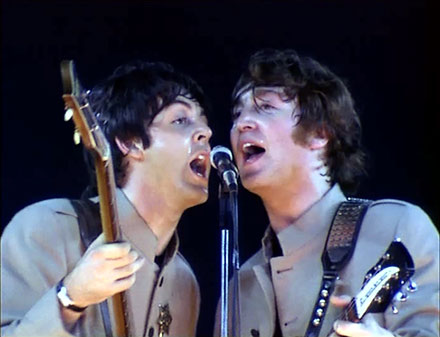
At a Sotheby’s auction in 1994, Russ had paid about $5,000 for a tailored tan jacket, size 39 regular, with epaulets, pleated breast pockets and Nehru collar. It was the so-called “Shea jacket,” the very jacket Paul McCartney wore when the Beatles performed at Shea Stadium on Aug. 15, 1965.

Recently, Russ, 50, slipped on a pair of white cotton gloves and eased a headless mannequin out of a locked display case. He unbuttoned the Shea jacket and removed it from the form. The fabric was clean and unwrinkled, although there were sweat stains on the acetate lining.

Russ’s idea was to reverse-engineer the jacket and create an exact duplicate.

“All of the tailors I spoke with wanted to take it apart,” he said. “I said, ‘No you can’t do that.’”

Finally he found a master tailor in Lehighton, Pa., named Pete Camioni. The two spent four days poring over the jacket, taking measurements, making sketches. Today, you can buy your own Shea jacket – in tan or black, sizes 38 to 50 – for $295 from Russ’s company, www.beatlesuits.com.

Next, Russ duplicated the frock coat Ringo wore on the cover of the “Abbey Road” album. (The original – size 34 short; Ringo is tiny – is in another display case.) Russ also sells the collarless suits from the Beatles’ early days, the narrow-lapel jackets and drainpipe trousers they wore on “The Ed Sullivan Show” and the velvet-collared sharkskin suits seen at the end of “A Hard Day’s Night.”

These outfits are a godsend for people whose job requires them to dress as John, Paul, George or Ringo. These are the hardworking Beatles tribute bands, made up of musicians who comb their bangs over their foreheads and master not only the chords of the Beatles’ songs, but also the distinctive bounce of the Beatles’ heads, their knees-bent joggling stance, the slight eyeball flutter that accompanies a lusty “Woooooo!”

These groups – with such names as the Mersey Beat, the Beat Club, BritBeat, the Beatalls, the Beatlads, the Fab Four, the Fab 5, Fab Forever and Almost Fab – were cruising thrift shops looking for clothing that could be altered and made to look vaguely Beatlish.

About a third of Russ’s suits go to “trib” bands. More recent rockers including Elliot Easton of the Cars and Doug Fieger of the Knack are also customers. So, too, are relatively normal folks.

“Some of it is kind of back in style now,” Russ said of the clothes, made at a factory in Pennsylvania that also sews police uniforms. “Then I think there are people who just want to have it to hang in the closet. I have a fair amount of women customers who want (the Shea jacket) in Paul’s size – not to wear it, not to give to their husband, just to have it in their collection, to put it on a mannequin in their Beatles room.”

So, Russ, have you ever put on Paul’s jacket?

“I’d be lying to you if I said I didn’t,” he said. “When you get Paul McCartney’s Shea jacket, you have to put it on and slap on a Hofner bass and look in the mirror and see how it looks.”

Yeah, yeah, yeah, yeah!

The image “http://www.laist.com/attachments/tony/dakotaraped.jpg” cannot be displayed, because it contains errors.

No Buyers for Dakota Fanning Rape Movie
By Roger Friedman

Thursday , January 25, 2007

Dakota Rape Movie: No Buyers

"Hounddog," the simply awful movie in which 12-year-old Dakota Fanning’s character is raped, has no buyers.

"No one wants it after the terrible reviews," one distributor told me, just as we were sitting down to see another disaster, J.P. Schaefer’s "Chapter 27."

Indeed, the people associated with The Weinstein Company, IFC Films and First Look were among those who instantly agreed that they had no interest in "Hounddog."

At this rate, this exercise in bad taste may wind up being a DVD collector’s item. Same thing for "Chapter 27," from which many fled before it ended in the two audiences that have seen it.

Meanwhile, the producers of "Hounddog" trotted out Fanning yesterday to defend the film in places like USA Today and at another press conference.

It’s come to that, apparently. The people who should be answering questions, however, are Fanning’s parents, and the parents of the other children in the film.

Indeed, 12-year-old Cody Hanford, who plays Fanning’s boyfriend in the provocative and poorly written outing, may actually become more of the focus than even the star.

In the film, his character lures Fanning’s into a barn and then watches as she’s raped. Hanford and Fanning also have numerous kissing scenes, some in which they’re half-dressed.

Yesterday, Variety’s Todd McCarthy was one of several reviewers who echoed my complaints about the hoary plot, terrible dialogue and clichés marking every scene.

With the above-mentioned distributors out, it’s unlikely now that any major buyer will take "Hounddog." And that’s just as well, considering that its release is sure to spark more outrage, protests and calls for investigations.

The strange part is that, in the long run, the movie itself is only offensive because it’s so bad. The real culprits aren’t the filmmakers, but the parents of the young actors.

Yesterday I spoke to Joy Pervis, the Atlanta agent who discovered Dakota and her sister, Elle. She’s since signed Cody and Isabelle Fuhrmann, the other child in the film.

Pervis told me she’s basically in favor of the film and trusts the Fannings’ judgment. "They’re a good Christian family," she said.

But plenty of publicists who’ve worked on movies with either Fanning girl have stories about their mother, Joy.

"She’s a real stage mother," one of them said at the screening. "The negotiations just go on and on."

But back to "Hounddog." Since I am one of the few who’ve actually seen it, let me explain something important. There is no point that I can find to the child’s rape.

Once it happens, it’s never discussed. The culprit is never accused or apprehended. The child never tells her story to anyone. There’s no great moment of revelation that could possibly help someone who’s watching the film. It’s simply there for shock value.

The fact that Kampmeier and the producers have somehow conned rape-assistance groups into using the movie as a public-service announcement is bizarre to me. But I guess it’s no more bizarre than using Dakota Fanning as the public defender of the indefensible.

From Deadspin: Hilarious stuff...

Welcome To Negro Bowl I!

negrobowl.jpg


As you might have heard from a media outlet or two, this is a historic Super Bowl because it features two African American head coaches for the first time. The odds are good that this might be a topic over the next 10 days.

We decided to dig deep into this story, rather than just let it simmer at surface level, so we asked our friend The Assimilated Negro, author of the Ghetto Pass column for Gawker and occasional Free Darko correspondent, to file a series of reports about the Negro Bowl, its significance and whatever else might tickle his proverbial fancy. This will run in four installments leading up to the Super Bowl. And here's the first one. The graphic is by the great Jim Cooke, by the way.

Thanks Will. I feel very privileged that you could send keep me here in NYC, far away from Miami's distracting hustle and bustle, to provide ongoing coverage of Negro Bowl I. Surely the hot days and hotter nightlife would have led me astray, and as NY enters the coldest point of the year, I look forward to the focus only the most frigid of temperatures can induce. This will keep me honed in on the stories of most importance as we head into the big game, because we all know this game is not about horses and bears. Or Peyton Manning cementing his legacy against a defense that was vastly overrated even before their best player was lost for the season. Nor is it about watching T-Rex (T stands for Terrible, of course) gross us out with his Philistine approach to the art of quarterbacking.

No, this game is about NEGROES. Of course the NFL playing field always runneth over with black people, but for once we're also running the show. This is what the urban marketing folks call "Cultural Synergro." Who'dathunkit? Quick Pop Quiz for you: Excluding the QB's, name two white position players on either team. Three... Two... One.... No, Marvin Harrison doesn't count. See, I told you: It's Negro Bowl I baby!

(More after the jump)

I remember the events of Sunday evening like they happened four days ago. When the Colts intercepted King Brady the tears streamed down my face. I held my right fist in the air, proud, defiant, held high and closed tight. My girlfriend asked if this meant the Mets had won; I ignored her. My eyes sneaked a peek at the Obama poster hanging over the television in the living room, a poster that promises more historical victories on the horizon, then the moment was almost ruined by me catching a glimpse of Sienna Miller on the cover of Esquire and needing to reread the interview about how she's single and looking for a black blogger to mingle with.

Luckily I turned back to the television; Manning was being interviewed, and the storm clouds in my brain thundered out a revelation: "This landmark moment in African-American history was brought to us by quite possibly the whitest QB ever. Now on the Mount Rushmore of Melanin there's Martin, Malcolm, Wesley Autrey, and Peyton Manning." And it wasn't long ago we were all thinking Michael Vick might be our savior.

vickfinger.jpg

The hype around two African-American head coaches going to the Super Bowl has been impressive and appropriately reverent. I bet the first two white guys who coached in plain-jane Super Bowl I (no Caucasian research-links during Negro Bowl) are wishing their people endured three hundred years of ostensible and institutionalized oppression so they could bask in this multicultural media afterglow. Now this is what racism is supposed to be about! Good people of good character doing good things; plus they're black!

Both coaches are well-deserving of the accolades, Lovie Smith, a Jesus/Dungy disciple, has turned the Bears around the way the great ones do it, with a firm hand that leaves indelible fingerprints of success on your fine ass franchise. Or something like that. This Negro Bowl appearance demonstrates the Bears are Lovie's team, more than Urlacher, Tommy Harris or, um, Brian Griese.

As for Tony Dungy, only some literary hybrid of Langston Hughes and Mario Puzo could do justice to The Spiritual Godfather of this black head coaching ring. Possibly the most beloved individual in the league, Dungy could kill your children, sleep with your significant other and send your grandparents to die in Iraq and you'd still well up and kiss him on both cheeks, while he's in your bed eating crackers. Later, while brushing crumbs off the sheets, you'd scold your better half, "You slept with Tony Dungy?!!? (beat) Well, I wasn't even positive he was a sexual being like that, how was it? Did he run the Cover 2? Did his clock management leave a little to be desired? Regardless, that Tony Dungy is a great man; if he decides to have you again you better treat him right, girl."

cover2yeah.jpg

I'm sure there are some enlightened, color-blind individuals out there who say the race angle here is irrelevant; race is likely a construct they deconstructed long time ago. They may believe that any hubbub related to this story only shows our lack of progress; they'd consider it news if it were two Asian head coaches in the Super Bowl (Go Norm Chow!). Or better yet a Puerto Rican (Go Ron Rivera!) and a Native American (Go Joe Gibbs!); then maybe you could color them silver and black impressed. To those people I say, "Hi, and welcome to Negro Bowl I!"

Color-blind or not, this is an opportunity to embrace a race moment. It's a reconditioning of our muscle reflexes. It's an opportunity to celebrate the fourth horseman of the Negrocalypse, Peyton Manning, our ironically postmodern African-American Trojan Horse carrying us past the gates of the so called "patriots" who would deny our place in history. This day belongs to everyone, but especially us.

So I'm embracing the racism. The tears are streaming. The fist is held high. I'm black and I'm proud. And goddammit, so is Peyton Manning. He and I both know that on February 4 there will be a great day of football where two teams play and nobody loses.

TAN's coverage of Negro Bowl I continues next week.

http://www.pigazette.com/Pig%20images/bush.jpg

GOP renews 'amnesty' defiance

By Charles Hurt
THE WASHINGTON TIMES
Published January 25, 2007

House Republicans opposed to amnesty vowed yesterday to fight President Bush's proposal to legalize millions of illegal aliens as outlined in his State of the Union address on Tuesday.
"The president worked hard to get a Congress that agrees with him on this and now he's got it," said Rep. Tom Tancredo, Colorado Republican, in reference to the Democratic takeover of both chambers of Congress in the November elections. "But we're still going to fight him on it."
Mr. Bush on Tuesday reissued his call to welcome foreigners with a guest-worker plan, and he called for a path to citizenship for millions of those here illegally.
"We need to uphold the great tradition of the melting pot that welcomes and assimilates new arrivals," Mr. Bush said in his speech to uneven applause. "We need to resolve the status of the illegal immigrants who are already in our country, without animosity and without amnesty."
More Democrats than Republicans rose in applause.
Mr. Tancredo, a longtime advocate of immigration reform, termed the refrain "same song, second verse."
"It's the same thing we've been hearing from the president for a long time," he said.
Rep. Sam Johnson, Texas Republican, called Mr. Bush's immigration proposal "empty and implausible."
"I'm sensing a real lack of commitment to combating illegal immigration," he said.
Mr. Johnson said he has seen little evidence in Texas that the administration's efforts to stop illegal entry are working.
"Our borders are out of control," he said yesterday. "Illegal immigrants are running free across the borders."
Sen. Edward M. Kennedy, Massachusetts Democrat, welcomed "the president's renewed commitment" to comprehensive immigration reform.
"The president has been a leader on this issue and I am hopeful that he will continue his efforts with members of his party so that we can pass legislation that will solve the problem once and for all," he said after Tuesday's address.
For House Republicans, Mr. Kennedy's stamp of approval was proof that Mr. Bush does not share their concerns.
"Once again, we see the president is pushing amnesty," said Rep. Ed Royce, California Republican. "The president claims this is not amnesty, but the very definition of amnesty is changing someone's status from illegal to legal. As a matter of national security, we need an immigration system that is sound, and this one is not."
As evidence of its stand against illegal entry, the administration has announced raids on businesses that hired illegal aliens.
"I think they were just for the purposes of rhetoric so the president could say he was doing something," Mr. Tancredo said, adding that he has followed up with those employers and learned that the illegals have been almost entirely replaced with, presumably, legal citizens who had been looking for work.
"If these raids prove anything, it's that we do not need a guest-worker program," he said.
Mr. Tancredo said farmers are hiring illegals despite a federal guest-worker program already in place because of the cumbersome requirements to pay certain rates and provide certain living conditions.
"Why shouldn't they ignore it?" Mr. Tancredo said. "Their own government ignores it."
He said House Republicans have "lost a lot of momentum" since pushing through a bill last year to construct about 800 miles of fencing along the U.S.-Mexico border.
"It's back to playing defense, I suppose, but that's a role I've played for six or seven years," he said.
Mr. Tancredo has announced the formation of a presidential exploratory committee, which he considers a good vehicle to continue his crusade while in the minority party.
He hopes to pull off a surprise victory on the presidential campaign trail and perhaps with an amnesty bill in the House.
"There are enough [conservative Democrats] to create a pretty significant problem for the new majority," he said with a broad smile. "A lot of them campaigned on our side of this issue and would have a lot of explaining to do back home."

Wednesday, January 24, 2007

http://images.amazon.com/images/P/1928653111.01.LZZZZZZZ.jpg

From Chroniclesmagazine.org:


Dinesh the Dhimmi

By Srdja Trifkovic

Jihad’s Fellow-Traveller’s Agenda

Nearly two years ago the Jihadist lobby in the United States made a concerted affort to have my book The Sword of the Prophet banned from National Review Online. Jihadi activists gathered around CAIR claimed the book defamed Islam and its “prophet.” When it did not get immediate satisfaction from National Review, CAIR instructed its partisans to pressure the Boeing Corporation to withdraw its advertisements from the magazine. Faced with the loss of revenue National Review briefly took down The Sword, but then quickly reposted it, under pressure from mainly conservative quarters.


It is now, perhaps inevitably, the turn of a phony conservative to join CAIR’s ranks. In his latest book, The Enemy At Home, Dinesh D’Souza writes that,

In order to build alliances with traditional Muslims, the right must take three critical steps. First, stop attacking Islam. Conservatives have to cease blaming Islam for the behavior of the radical Muslims. Recently the right has produced a spate of Islamophobic tracts with titles like Islam Unveiled, Sword of the Prophet, and The Myth of Islamic Tolerance. There is probably no better way to repel traditional Muslims, and push them into the radical camp, than to attack their religion and their prophet.

Two of the titles D’Souza finds so offensive that condemning them tops his list of “critical steps” are by my friend Robert Spencer, and “The Sword” is mine. D’Souza wants us, and presumably other similarly minded authors (Bat Ye’or, Ibn Warraq, Andrew Bostom, Walid Shoebat, et al.), to shut up.

As my fellow offender Spencer has noted, D’Souza assumes that peaceful Muslims will have a greater sense of solidarity with jihadists than with non-Muslims, which is indeed the case, but it makes hash of his entire thesis—that social conservatives should ally themselves with these “traditional” Muslims:

For if these peaceful Muslims really abhor jihadism, they should have no reason to object to critical presentations of the elements of Islam that foster jihadism. But if such presentations will just drive them into the arms of the jihadists, then how committed could they really have been to peace and moderation in the first place? If they think ‘Islamophobic tracts’ . . . are more threatening to their religion than acts of terrorism done in the name of Islam, how ‘traditional’ and moderate could they possibly be?

It is noteworthy that D’Souza is condemning our writings as “Islamophobic” without further elaboration. Like the term “Islamophobia” itself—a classic product of the Hate Crime Industry—his technique is characteristic of the totalitarian Left. I remember reading, as a teenager in Tito’s Yugoslavia, similarly worded condemnations of dissident writers and their “tracts” in the communist-controlled press. Once they were defined as “anti-socialist,” “reactionary,” or “nationalist,” no further elaboration was needed and no debate allowed.

Furthermore, D’Souza uses “Islamophobia” with the implicit assumption that the term’s meaning is well familiar to his readers. For the uninitiated it is nevertheless necessary to spell out its formal, legally tested definition, however. It is provided by the European Monitoring Centre on Racism and Xenophobia (EUMC), a lavishly-funded organ of the European Union. Based in Vienna, this body diligently tracks the instances of “Islamophobia” all over the Old Continent and summarizes them in its reports. The Monitoring Center’s definition of Islamophobia includes eight salient features:

1. Islam is seen as a monolithic bloc, static and unresponsive to change.

2. Islam is seen as separate and “other.”

3. Islam is seen as inferior to the West, barbaric, irrational, primitive and sexist.

4. Islam is seen as violent, aggressive, supportive of terrorism and engaged in a clash of civilizations.

5. Islam is seen as a political ideology.

6. Criticisms made of the West by Islam are rejected out of hand.

7. Hostility towards Islam is used to justify discriminatory practices towards Muslims and exclusion of Muslims from mainstream society.

8. Anti-Muslim hostility is seen as natural or normal.

This definition is obviously intended to preclude any possibility of meaningful discussion of Islam. The implication that Islamophobia thus defined demands legal sanction is a regular feature of the Race Relations Industry output. It also routinely refers to “institutional Islamophobia” as an inherent social and cultural sickness of most Western societies that needs to be rooted out by education, re-education, and legislation. In reality, of course, all eight proscribed statements are to some extent true. As I have argued in these pages and elsewhere,

1. That Islam is fundamentally static and unresponsive to change is evident from the absence of an orthodox school of thought capable of reflecting critically upon jihad, Sharia, jizya, etc. and developing new Islamic interpretations that Western liberals (and notably the 9-11 Commission’s Final Report) keep hoping for. Attempts to reformulate the doctrine are not new, but they have failed because they opposed centuries of orthodoxy. As Clement Huart pointed out back in 1907, “Until the newer conceptions, as to what the Koran teaches as to the duty of the believer towards non-believers, have spread further and have more generally leavened the mass of Moslem belief and opinion, it is the older and orthodox standpoint on this question which must be regarded by non-Moslems as representing Mohammedan teaching and as guiding Mohammedan action.” Huart’s near-contemporary Sir William Muir, noted that «a reformed faith that should question the divine authority on which the institutions of Islam rest, or attempt by rationalistic selection or abatement to effect a change, would be Islam no longer. A century later the diagnosis still stands: it is not the jihadists who are “distorting” Islam; the would-be reformers are.

2. That Islam is separate from our (Western, Christian, European) culture and civilization, and other than our culture and civilization, is a fact that will not change even if the West (Christendom, Europe) eventually succumb to the ongoing jihadist demographic onslaught.

3. Whether Islam is “inferior to the West” is a matter of opinion. That it cannot create a prosperous, harmonious, stable, creative and attractive polity is not. Whether Islam is “barbaric, irrational, primitive and sexist” is at least debatable; but that its fruits are such is beyond reasonable doubt.

4. Islam is seen as “violent, aggressive, supportive of terrorism and engaged in a clash of civilizations” not because of an irrational “phobia” in the feverish mind of the beholder, but because of the clear mandate of its scripture, because of the record of almost 14 centuries of historical practice, and above all because of the timeless example of its founder.

5. “Islam is seen as a political ideology” because its defining characteristic is a highly developed program to improve man and create a new society; to impose complete control over that society; and to train cadres ready, even eager, to spill blood. The doctrine of Jihad makes Islam closer to Bolshevism or National Socialism than to any religion known to man. It breeds a gnostic paradigm within which the standard response to the challenge presented by non-Muslim cultural, technological and economic achievements is hostility and hatred. D’Souza’s alleged distinction between Islamic “extremists” and “moderates” is a Western liberal construct, of course. The difference between them may concern the methods to be applied but not the final objective: to turn every last square mile of Dar al-Harb into Dar al-Islam.

6. Criticisms made of the West by Islam should not be rejected out of hand, they should be understood. Islam’s chief “criticism” of the West—and each and every other non-Islamic culture, civilization, or tradition—is that it is infidel, and therefore undeserving of existence.

7. A priori hostility towards Islam should not be “used to justify discriminatory practices towards Muslims.” Quite the contrary, a comprehensive education campaign about the teaching and practice of Islam should result in legislative action that would exclude Islam from the societies it is targeting, not because it is an offensive religion but because it is an inherently seditious totalitarian ideology incompatible with the fundamental values of the West—and all other civilized societies, India, China and Japan included.

8. “Anti-Muslim hostility” is not “natural or normal.” The infidels’ determination to defend their lands, families, cultures and faith against Islamic aggression is both natural and normal, however, and must not be neutralized by the Eurocrats from the left of by D’Souza and his likes on the “right.” They will deny that Islam, in Muhammad’s revelations, traditions and their codification, threatens the rest of us, that it is the cult of war and intolerance, but the truth will out. Until the petrodollars support a comprehensive and explicit Kuranic revisionism capable of growing popular roots, we should seek ways to defend ourselves by disengaging from the world of Islam, physically and figuratively, by learning to keep our distance from the affairs of the Muslim world and by keeping the Muslim world away from “the world of war” that it seeks to conquer or destroy.

It is entirely possible that Dinesh D’Souza subscribes to some other definition of “Islamophobia” than the one provided above. If he does, he should spell it out so that those he singles out for criticism can defend themselves. Until and unless he does so, we’ll have to agree with a recent commentator who concludes that D’Souza wants me and others “to lie about Islam, like himself, or to be silent”:

Now think how amazing this is. Has it ever happened in this country—I’m not talking about some totalitarian country but America—has it ever happened that a prominent “intellectual” called on leading writers on a subject of major importance to stop writing what they’re writing, because it would “offend” someone? No, this has never happened before. It has never happened before, because it’s only in response to Mohammedanism that Westerners adopt the posture of pre-emptive surrender, which Bat Ye’or calls mental dhimmitude. Of all the social, ethnic, religious, political movements in the world, only Islam has the ability to evoke this eagerly cringing attitude, only Islam has this faculty of inducing people to surrender psychologically to it even before it has any actual power over them.

Dixit. A man is defined, to some extent, by his enemies. Counting D’Souza and his ilk among mine casts an eminently pleasing glow on this drab January morning.


From Townhall.com:

The Coming Amnesty Disaster
By Michelle Malkin


Wednesday, January 24, 2007

Last month, President Bush signed off on a few dog-and-pony illegal immigrant employment raids. Whoop-de-doo. Politically expedient holiday gestures over, the White House is now back to work pushing its long-planned, massive alien amnesty. The state of the borders, green card process and entrance system for visitors and tourists? Porous. Chaotic. Understaffed. And overwhelmed.

But no matter. Mouthing his same old, bogus platitudes about the need to allow "undocumented workers" to do the job Americans won't do (never mind all those Americans who immediately lined up to apply for those meatpacking jobs after the December raids), Bush wants to pile millions of new "guest worker" illegal alien applicants onto the teetering homeland security bureaucracy.

Colorado Senator Wayne Allard (R-CO) (L) speaks to reporters following a meeting between U.S. Homeland Security Secretary Michael Chertoff (2nd R) and other Senators on Capitol Hill in Washington January 22, 2007. The meeting was held to address last month's immigration raids on Swift and Company meat packing plants across several states. Also pictured are Sen. Norm Coleman (R-MN) (2nd L) and Sen. John Cornyn (R-TX). REUTERS/Kevin Lamarque (UNITED STATES)

The results will be disastrous. What President Bush didn't mention in the State of the Union address is that every part of the current legal immigrant applicant machinery that would be tasked with implementing the "guest worker" illegal alien amnesty is backlogged and broken.

Last November, congressional investigators reported that the U.S. Citizenship and Immigration Services (USCIS) had lost track of 111,000 files in 14 of the agency's busiest district offices and processed as many as 30,000 citizenship applications last year without the required files. Poof! I have heard first-hand from adjudicators in Texas and southern California who have piles of files in backrooms that have yet to be read. The application backlog remains in the millions. Sens. Charles Grassley, R-Iowa, and Susan Collins, R-Maine, called for a Government Accountability Office review that uncovered at least one case in which an applicant with ties to the terrorist group Hezbollah was granted citizenship without a check of his primary file.

"It only takes one missing file of somebody with links to a terrorist organization to become an American citizen," Grassley, who is chairman of the Senate Finance Committee, noted in The Washington Post. "We can't afford to be handing out citizenship with blinders on."

Or legal status. Multiply that by several million in the case of Bush's guest worker program. Can you spell d-i-s-a-s-t-e-r?

The FBI's background check backlog for legal immigrant applicants stands at a reported 100,000 files, which have been waiting for action for a year or longer. At least they didn't shred them all (uh, as far as we know) -- which is what federal contractors did at the immigration center in Laguna Niguel, Calif., over the last several years. To rid itself of a 90,000-document backlog, supervisors ordered workers to destroy passports, birth certificates, approval notices, change of address forms, diplomas and money orders. Then they reported that they had reduced the backlog to zero. Poof!

Michael Cutler, a veteran of the immigration bureaucracy who worked as a senior special agent at the former INS, says working at the agency is like the comedy scene out of "I Love Lucy" where Ethel and Lucy -- overwhelmed at a candy factory by an out-of-control conveyor belt -- try eating the candy bars and stuffing them down their dresses to stay on top of the flood:

"The situation is reminiscent of what happens to beleaguered adjudicators at the USCIS every day, and it is not the least bit funny. The adjudicators cannot eat the applications, nor can they stuff them down their clothes. In order to get good evaluations, they need to move these applications as quickly as possible. The easiest way to do this is to approve them. Needless to say, this means that fraud-laden applications are often not detected and aliens receive a wide variety of benefits, including United States citizenship to which they would not be entitled if the relevant facts were known. As more aliens get away with committing fraud, the 'word' spreads through the communities and more aliens are emboldened to commit fraud, further eroding any integrity that might have still remained in the process. To make things worse, when an application is denied, the alien is virtually assured that no special agent will be looking for him to seek his removal from the United States."

We are incapable of imposing order and handling the current crush of legal immigrant applicants in a fair and timely way. You want "comprehensive immigration reform"? Start with border control, reliable adjudications, consistent interior enforcement, and efficient and effective deportation policies. And don't pretend that piling on is going to fix a darned thing.
Alter: A Powerful Response

Jim Webb tore up his party's playbook—and helped point the Democrats in a new direction.

WEB-EXCLUSIVE COMMENTARY
By Jonathan Alter
Newsweek

Jan. 21, 2007 - Something unprecedented happened tonight, beyond the doorkeeper announcing, "Madame Speaker." For the first time ever, the response to the State of the Union Message overshadowed the president's big speech. Virginia Sen. James Webb, in office only three weeks, managed to convey a muscular liberalism—with personal touches—that left President Bush's ordinary address in the dust. In the past, the Democratic response has been anemic—remember Washington Gov. Gary Locke? This time it pointed the way to a revival for national Democrats.

Webb is seen as a moderate or even conservative Democrat, but this was a populist speech that quoted Andrew Jackson, founder of the Democratic Party and champion of the common man. The speech represented a return to the tough-minded liberalism of Scoop Jackson and Hubert Humphrey, but by quoting Republicans Teddy Roosevelt (on "improper corporate influence") and Dwight D. Eisenhower (on ending the Korean War), he reinforced the argument that President Bush had taken the GOP away from its roots.

Webb was given a speech to read by the Democratic leadership. He threw it out and wrote his own. As a well-regarded novelist, Webb has a sense of narrative and human drama. He apparently felt that the boots his son wore in Iraq, which he used to great effect during his successful Senate campaign against Sen. George Allen, might be a bit hokey. So instead, he showed a picture of his father during the Berlin airlift. He then went on to describe taking the picture to bed every night and his family's long record of military service.

As a highly decorated veteran of Vietnam and the Reagan administration (where he served as Navy secretary), Webb is the perfect instrument for rescuing Democrats from the image of wimpy, weak-kneed wussies that has so hampered them in recent national elections. The contrast with Bush and Vice President Cheney—both of whom avoided going to Vietnam—could not have been starker. Webb did not have "other priorities" (Cheney) or a cushy billet defending Texas from Mexico (Bush). But unlike fellow veteran John Kerry, he has a military bearing and nonelitist tone that is appealing.

Could this help land Webb on the 2008 ticket? Maybe, though he was a stiff and unsmiling candidate in Virginia and he's been married three times. The problem with the populist theme is that Democrats have no real remedies for the effects of globalization on the middle class. And they are not yet entirely clear on what should be done in Iraq. But at a minimum, Jim Webb offered a timely reminder that great political parties can recover if they strike the right tone.

From The Boston Globe:
The Shins are a kick

Band stretches out, but still has plenty of fun

By Joan Anderman, Globe Staff

The Shins, one of our weirdest and most winsome pop bands, are a case study in career navigation. The group released a lo-fi gem of a debut, "Oh, Inverted World," in 2001. Indie kids flocked to the fold. One lilting nugget from that album, a song called "New Slang," was licensed by McDonald's, heard in an episode of "Buffy the Vampire Slayer," and used as background music in MTV's "Newlyweds." Miraculously, the Shins survived the sophomore slump with indie cred intact, thanks to a bigger, bolder batch of skewed beauties titled "Chutes Too Narrow." Indie kids' moms started listening. And then the Shins came face to face with the dreaded Shout-Out Heard 'Round the World.

"You've gotta hear this song. It'll change your life," proclaims Natalie Portman's character, Sam, of "New Slang" in the 2004 film "Garden State." The planet was on alert.

Three years later, James Mercer and company have delivered. "Wincing the Night Away," recorded in Mercer's basement studio in Portland, Ore., and in stores today, is signature Shins: charming, melodious, inscrutable. Mercer is a classicist and an oddball; he genuflects at the pop-hook altar and leaves behind his own twisted tokens. The new album's first single, "Phantom Limb," evokes Brian Wilson in a postmodern wasteland, irresistible and unknowable.

But that single's B-side is the sound of a band breaking out -- not in any commercial sense, but from its own mold. "Sleeping Lessons" begins with blurry keyboard arpeggios and Mercer's clarion vocals treated to a toxic shimmer. Strummed acoustic guitars arrive -- stiff and impatient, seemingly from every direction. At the 2 1/2-min ute mark, the band falls into a raucous rave-up, and Mercer vaults into gravity-defying falsetto.

It's no small feat to stretch artistically and remain true to your musical nature. But in the Shins' new world of ambient textures and complicated dynamics, melody still rules -- mostly. "Pam Berry" is a minute of fuzz about a girl who spits, and a song whose raison d'etre will remain a mystery even to devotees who revel in Mercer's cryptic ways. But "Sea Legs" is a gratifying venture into fresh terrain: hip-hop beats, funk bass, and a melodic darkness that neither jangles nor chimes. Distressed synth samples anchor "Spilt Needles," while tweaked pianos and sickly strings set "Red Rabbits" adrift in a narcotic haze.

Mercer tosses a few delicious bones to Shins purists. For those sweet, confused pop lovers who want another jaunty, heartfelt, and ridiculously verbose stab at finding sense in a senseless world: "Girl Sailor," "Australia," "Turn on Me," and the album's sublime closing track, "A Comet Appears." "Every post you can hitch your faith on is a pie in the sky/ Chock-full of lies/ A tool we devise to make sinking stones fly," Mercer reminds us in that last song, willfully confusing desperation and hope. It won't change your life. But that was never the plan. Mercer knows better.

Joan Anderman can be reached at anderman@globe.com

Tuesday, January 23, 2007

http://www.ffbookmarks.com/images/NFL%20Player%20Photos/The%20Catch%20Part%202.jpg
From SFGate.com:

Glory has its price
25 years later, the heroes of the 49ers' first Super Bowl championship team weigh the costs of playing a brutal game

- Ron Kroichick, Chronicle Staff Writer
Sunday, January 21, 2007

Click to ViewClick to ViewClick to ViewClick to ViewClick to View

On the most famous play in 49ers history, amid the din at raucous Candlestick Park, Joe Montana raced to his right and hurriedly scanned the field. He backpedaled to elude three onrushing Dallas players, twice pumped his arm to throw and floated an off-balance pass into the back of the end zone.

[Podcast: The Price of Glory - Chronicling the premature medical problems of first Super Niners. ]

Dwight Clark had cut to the middle before abruptly reversing direction. Clark sprinted toward the corner, leaped high, reached both arms above his head and made The Catch, forever cementing his place in 49ers lore.

Twenty-five years later, Montana's left knee is essentially shredded. His right eye occasionally sags from nerve damage. His neck is so stiff, he could not turn his head to look at a reporter asking him questions while he signed memorabilia. Montana, 50, turned both shoulders instead.

Clark, also 50, endures sharp pain every time he lifts his arms above his head -- the exact motion he effortlessly completed on The Catch -- because of a bent screw in his left shoulder and arthritis in his right shoulder. The simple act of turning his head also is a chore, thanks to all those jarring hits on crossing patterns over the middle.

"I hurt," Clark said, "from getting my head squashed down into my neck."


The 49ers turned around their franchise in 1981: Two years removed from a second-consecutive 2-14 season, they steamed to the Super Bowl championship two weeks after Clark's epic catch in the NFC title game.

Wednesday marks the 25th anniversary of San Francisco's 26-21 victory over Cincinnati in Pontiac, Mich., a watershed achievement in many ways. It launched a dynasty in which the 49ers won five titles in 14 seasons, and it connected them to local sports fans more deeply than any other team in the Bay Area.

But glory came with a steep price, as many players on the '81 team have learned since they carried coach Bill Walsh off the field at the Silverdome. Professional football's primitive core -- enormous men running swiftly and colliding violently -- can exact a lifelong physical toll.

The Chronicle interviewed 30 players from the 1981 team in recent months, ranging in age from 47 to 59. Twenty of those players cope with significant physical issues today, from arthritis to chronic back pain to joint replacements. Two (including Montana) have had spinal fusion surgery, two have had knee replacements and one has had a shoulder replacement.

Nine players said their doctors told them they eventually will need a joint replacement. The scorecard: seven knees, one shoulder, one hip.

This snapshot of one championship team reflects the harsh reality for most former NFL players. Stand on the sideline during a game and you might wonder why the toll isn't worse. Television does not begin to convey the extraordinary size of pro football players, the freakish speed at which they move and the bone-rattling brutality of their collisions.

"When you're on the sideline, and these guys go past you, it's almost like a herd of horses," said Marc Safran, director of sports medicine at UCSF. "You feel like the ground really shakes."

And the chances of future health problems rise. Dr. James Andrews, a noted Birmingham, Ala., orthopedist who has treated many professional athletes, said a young athlete who sustains trauma to a major joint is five to six times more likely to develop degenerative arthritis later in life.

The onset of such arthritis often leads to joint replacements -- or, at the least, awkward and painful movement.

"If you watch former players walking into a room full of other players and press, they will put on their best gait," said Miki Yaras-Davis, longtime director of benefits for the NFL Players Association. "If you saw them isolated, walking down the hallway with their back to you, you would see something akin to a Neanderthal man broken down."

Or, as former 49ers wide receiver Mike Shumann said, "Football is a great game until you turn 45."


Jim Stuckey hardly resembled a broken-down man on Jan. 10, 1982. Soon after The Catch, Stuckey -- then a spry, curly-haired, 23-year-old defensive end -- pounced on Cowboys quarterback Danny White's fumble to preserve San Francisco's 28-27 triumph in the NFC Championship Game.

Stuckey once went on injured reserve with a sprained knee, but he had no surgeries during his seven-year NFL career. He was not as fortunate once he retired from the game -- his left knee steadily deteriorated because of degenerative joint disorder, leading to three operations.

Before long, Stuckey could not bend down to pick up his 2-year-old daughter or lift his left leg high enough to pedal a bike. Stuckey's doctor tried to persuade him to wait on knee-replacement surgery (an artificial knee typically lasts 10-to-20 years), but Stuckey insisted.

He had the operation in October 2000, at age 42. The doctor who performed the surgery said Stuckey had the equivalent of an 85-year-old knee.

"I was 42 and I couldn't do anything," he said. "Hopefully, by the time this (artificial knee) wears out, they'll invent some way to replace integral parts of the knee rather than the whole knee."

Keith Fahnhorst has a more fundamental wish: standing up straight. Fahnhorst, a mainstay on the 49ers' offensive line in the 1970s and '80s, stood tall at 6-foot-6 in 1981, but now he walks hunched over because of spinal stenosis and degeneration of the disks in his neck and back.

Fahnhorst, 54, also totes routine baggage for a longtime offensive lineman: worn, bent hands from years of grappling along the line of scrimmage. Fahnhorst said his left thumb and forefinger remain numb to this day, as they remind him every time he tries to button his shirt.

At least Freddie Solomon gleans meteorological insight from his old football injuries. Solomon, a swift wide receiver who led the 49ers in touchdown catches in '81, nurses painful arthritis in both knees and one shoulder, the remnants of several surgeries during his career. The knee operations caused atrophy in Solomon's quadriceps and calf muscles.

His arthritis becomes impossible to ignore when the weather turns in Tampa, Fla., where Solomon, 54, now lives.

"When a hurricane is forming, my body tells a story," he said. "I hurt something awful. The seasons change and I ache."

Then there's Montana, the 49ers' quarterback and leading man during their heyday. He was a master of mobility and athletic improvisation, and his boyish face made him look like a teenager in 1981, when he was 25.

Today, even with the same magnetic smile, Montana's body is every bit of 50 years old. He estimated he has had 11 or 12 surgeries, including back surgery during the 1986 season, plus six or seven concussions. The damage in his right eye resulted from repeated blows to the head during Montana's career.

He had spinal fusion surgery in February 2005, when doctors cut near his throat, moved his voice box, removed a bulging disk and used two titanium rods to fuse vertebrae in his spine. That procedure still causes occasional numbness in his arm.

Montana's aching back and painful knee -- he eventually will need knee-replacement surgery -- significantly affect his day-to-day life, and that frustrates him because his two teenage sons, Nathaniel and Nicholas, are so active. Montana can play catch with them, but that's about it.

"We've had (49ers) events over the years where some of the older guys were there," he said. "You watch them having trouble getting around, but you never think, 'Wow, that'll be me someday.' "

That day clearly has arrived for Montana and many of his former teammates. Guy Benjamin, the backup quarterback in '81, cannot navigate stairs because of chronic knee and back problems. He also had spinal fusion surgery in 1998 and twice needed operations on his left knee.

Former linebacker Craig Puki's knees are so damaged, he said, "If someone left me standing at Costco, on concrete, I'd probably start crying."

It required some prodding for these men to acknowledge their discomfort; most of them, still proud and defiant, downplayed their injuries and insisted other former players have it worse. They long ago accepted lingering pain as the price for competing on football's grandest stage.

Hall-of-Fame defensive back Ronnie Lott paid an extreme price, when he had the tip of his left pinky cut off in 1986, after it was severely injured late the previous season. Lott, who delivered fearsome hits during his playing days, also spoke of ongoing numbness in his right thumb and stiffness in his right knee during a July 2000 interview with The Chronicle, but he insisted he felt great. (Lott declined interview requests for this story.)

Former linebacker Jack "Hacksaw" Reynolds similarly minimized the impact of football on his life today.

"If I don't ache, I don't feel right," said Reynolds, at 59 the oldest member of the '81 team. "I'm just so used to the pain and stiffness. People say, 'You walk terrible.' I say, 'I'm still walking, right?' "


Paul Hofer tore up his right knee on Oct. 12, 1980. His shoe planted in the turf at Texas Stadium and several Dallas players twisted him backward, launching the running back on a long and debilitating odyssey.

Hofer resumed playing in 1981, even as the knee worsened, because he suspected it was his last shot. He appeared in 15 games and carried the ball 60 times before another crushing hit ended his career. Hofer watched the postseason in street clothes, from the sideline.

He later filed a lawsuit against the 49ers and then-team physician Fred Behling. Hofer testified that injections to reduce swelling, and allow him to play, aggravated the problem. The case was settled out of court, but Hofer's long-ago fears -- that his injury was permanent -- proved prophetic.

He has not run in 25 years, and in the spring of 2006, after two reconstructive surgeries and several arthroscopic procedures, Hofer had a total knee replacement. That permitted him to walk without pain, though it did not retrieve more than two decades without routine recreational activities.

"I missed out on lots of stuff," said Hofer, now 54 and living outside Memphis. "I've accepted it. It was my decision, I was the one out there running. You just really don't think about it when you're young. Now I feel stupid."

Hofer's story offers a window into the NFL of 1981: much smaller salaries, huge pressure to play with injuries and fewer protections for players under the collective-bargaining agreement. The players association was just starting in its modern form, soon to be pushed forward by the strike of '82.

For decades, players who got hurt often got cut, without any recourse. That created a culture in which they ignored injuries or accepted playing in pain, no matter the consequences to their bodies. It became stitched into the game's macho ethic: missing a game because of injury was a sign of weakness.

"In this day and age, you get a concussion and they keep you out a while," said Lawrence Pillers, a defensive end on the '81 49ers. "In our day and age, you get a concussion, they show you two or three fingers and you go back in the game."

And the league in '81 barely resembled the league of today in another central respect: money. The NFLPA did not keep official records of player salaries 25 years ago, but two former 49ers players estimated the typical salary in 1981 at about $60,000.

In 2005, the average salary reached nearly $1.4 million. The average salary for a starter was $2.26 million.

This naturally breeds resentment among former players who came along before free agency and lucrative television contracts led to the enormous growth in money. The NFL's pension and medical benefits fuel the resentment, according to players on the '81 49ers (see sidebar story).

Randy Cross, the longtime offensive lineman now working as a television analyst for CBS, accused the league of pretending former players' health problems are not related to their NFL careers. He also said the players association, worried about its own survival, doesn't push the league on the issue.

"Our pension and medical assistance is an embarrassment to the NFL," Cross said. "It's the sort of thing they choose to ignore. As long as the head of the union (former Raiders guard Gene Upshaw) is making his millions, it's probably not a huge priority."


Keena Turner made it through most of his career without a major injury. Then, in his eighth season as a 49ers linebacker, Turner tore the anterior cruciate ligament in his right knee. He struggled through three more years before retiring after the 1990 season.

The knee still bothers Turner, now 48. He abandoned pickup basketball, and he occasionally hobbles around his house in Tracy, complaining about the condition of his once-robust body. Doctors have told Turner he probably will need knee-replacement surgery.

The sight of him hobbling, and sound of his frustration, made an impression on Turner's 6-year-old son, Miles, who often has said, "I don't want to play football because I don't want a knee like my dad's."

Miles recently began wavering on this vow, but the words still resonated with his dad.

"I wonder what kind of effect that will have on him when he's older," Keena Turner said. "I wonder if that will be a lasting memory, to see his dad struggle."

Miles Turner is not the only 49ers offspring influenced by first-hand knowledge of football's physical toll. Former linebacker Milt McColl's son, Kellen, plays football and baseball at Los Altos High, but when it came time to choose one sport, he decided to set aside his helmet and shoulder pads.

Kellen plans to play baseball next year at Stanford, partly because "he knows baseball players don't take the physical abuse football players do," Milt McColl said.

McColl emerged from his NFL career with modest damage: eye surgery during his playing days and one knee operation (unrelated to football) since then. He and other members of the '81 49ers who came away without significant problems count themselves as fortunate.

Some traced their sound health to shortened careers. Running back Earl Cooper battled migraine headaches, feared the long-term effects and left the NFL at age 29. Defensive back Carlton Williamson retired at 30 when he began having knee trouble. Running back Bill Ring also left the game at 30, "because it was important to retire with my body intact."

They are the exception among former NFL players, and the problems could grow as another, heftier generation lurches into retirement. Most players on the '81 49ers are dealing with orthopedic issues, but Andrews, the Birmingham doctor, and his colleague, Dr. John Richardson, are studying the long-term cardiovascular risks facing former NFL players.

These risks, Richardson said, are linked in many ways to the widespread orthopedic problems. The injuries often prevent former players from exercising after their football careers, leading to weight gain and increased risk of type-2 diabetes and heart disease. Richardson put the risk of a 300-pound man dying from cardiovascular disease at three times higher than the general population; he cited the 2005 death of 49ers offensive lineman Thomas Herrion as a frightening example.

The NFL said there were 354 players listed at 300 pounds or more on opening day of the 2006 season. "So it's just going to get worse," Richardson said.


Twenty-five years later, the players on San Francisco's first Super Bowl champions wholeheartedly agreed: They have zero regrets. Nearly all 30 players interviewed for this story said they would play their NFL careers all over again, despite the pain they now endure in middle age.

Benjamin, the backup quarterback, was the only one to hedge. He doesn't really think playing pro football was worth the physical price, given his condition today and the realization he's "another person in another life." But Benjamin also did not hesitate to say he would do it again, as a fearless, carefree athlete in his early 20s.

Football's weekly adrenaline rush exerted a strong hold on the '81 49ers.

"Unless it causes me to get some disease that takes me out, then I'll never regret it," Clark said. "It was too much of an unbelievable experience."

Said Montana: "I wouldn't trade it for anything -- the excitement, the fun, the friendships. There's nothing like a Sunday afternoon."


Terms of impairment

Degenerative arthritis: A type of arthritis caused by inflammation, breakdown and eventual loss of the cartilage of the joints. Also called osteoarthritis.

Total knee replacement: A surgical procedure in which damaged parts of the knee joint are replaced with artificial parts. The surgery is done by separating the muscles and ligaments around the knee to expose the inside of the joint. The ends of the thigh bone (femur) and the shin bone (tibia) are removed, as is often the underside of the kneecap (patella). The artificial parts are then cemented into place.

Cortisone: Synthetic cortisone, after converted by the body to cortisol, acts to exert its powerful anti-inflammatory effects. Its many uses include relieving pain.

Bent screw: Literally a bent screw. It is a sign of postoperative recurrent dislocation, a complication following surgical treatment of prior dislocation, especially in the shoulder.

Spinal fusion surgery: A technique in which one or more of the vertebrae of the spine are fused so motion no longer occurs between them. Bone grafts are placed around the spine during surgery. The body then heals the grafts over several months, similar to healing a fracture. That joins, or "welds," the vertebrae together.

Concussion: A traumatic injury to tissues of the body such as the brain as a result of a violent blow, shaking or spinning.

Sources: medterms.com, other online medical sites


30 Number of players from the 1981 team reached by The Chronicle for this story

20 Number of those 30 who said they live with persistent pain

9 Number of those 30 who have been told they eventually will need a joint replacement

3 Number of those 30 who have already had joint replacement surgery (two knees, one shoulder)

2 Number of those 30, including Joe Montana, who have had spinal fusion surgery

E-mail Ron Kroichick at rkroichick@sfchronicle.com.